

Mount Etna Erupts Again, Partially Closing Sicilian Airspace
Translated from Romanian, summarized and contextualized by DistantNews.
At a glance
News
Official statement
Ongoing story
- Mount Etna, Europe's tallest active volcano, erupted, causing partial closure of airspace over Sicily and disrupting flights at Catania Airport.
- Volcanic ash emissions prompted the closure of airspace south of the volcano, initially planned until 7 PM local time.
- The eruption began early Sunday, with ash emissions intensifying and forming a column approximately 1.5 kilometers high, moving southward.
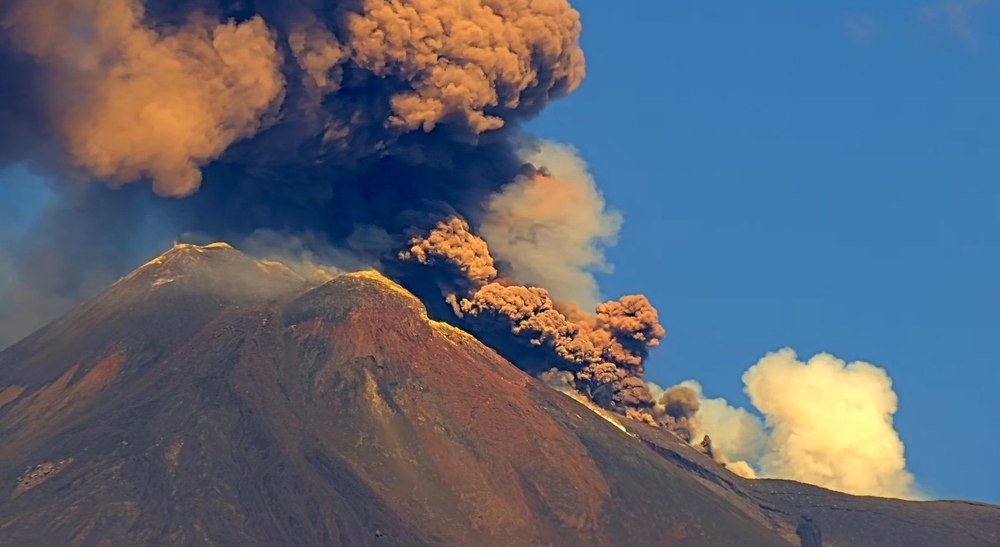
Mount Etna, Europe's tallest active volcano, erupted on Sunday, leading to the partial closure of airspace over Sicily and disruptions at Catania Airport due to volcanic ash emissions. The airport's managing company, SAC, announced the closure of airspace south of the volcano, designated as sector B2, affecting flight operations.
The measure, initially set to last until 7 PM local time, involved the suspension of all inbound flights to Catania. However, the airport maintained departure operations for aircraft already on the ground. The ash emissions commenced around 05:45 GMT and intensified by 06:45 GMT, creating an ash column roughly 1.5 kilometers high that was carried southward by the wind, according to the National Institute of Geophysics and Volcanology (INGV).
INGV scientists noted that weather forecast models indicated the ash cloud would continue to drift south in the coming hours. SAC advised passengers to contact their airlines for flight information before traveling to the airport. Etna began a new eruptive phase on June 26, characterized by lava flows, which had prompted authorities to raise their alert level. While lava flows observed in late June had stopped by July 4, this sudden ash emission has disrupted travel plans for thousands.
Due to eruptive activity and volcanic ash emissions into the atmosphere, the corresponding airspace south of the volcano (sector B2) has been closed.
DistantNews Editorial
Originally published by Adevărul in Romanian. Translated, summarized, and contextualized by our editorial team with added local perspective. Read our editorial standards.
More Stories

From Our Blog

What Gets Lost (and Found) When News Is Translated

The Critical Role of Diaspora Media in Global News

What Travellers Should Know About Countries with Restricted Press

A Digital Nomad's Guide to Following Local News

How the Same Story Looks Different in Different Countries
