


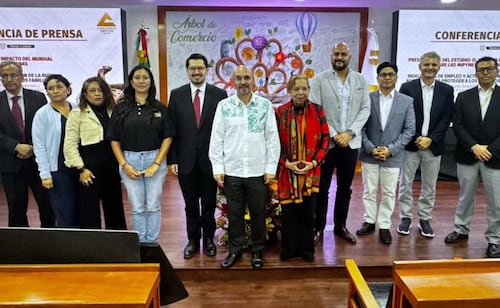
MSMEs in Mexico City trained for World Cup saw more foreign tourists: IP; attribute it to digital platform presence
Translated from Spanish, summarized and contextualized by DistantNews.
At a glance
News
Documents & data
Outcome reported
- Micro, small, and medium enterprises (MSMEs) in Mexico City that received training saw more foreign tourists during the World Cup.
- Digital presence on platforms became essential for competitiveness, with trained businesses attracting 29% of international clients compared to 17% for untrained ones.
- The World Cup's economic impact was not automatically distributed to small businesses, but training programs helped connect them to local and international demand.
Micro, small, and medium-sized enterprises (MSMEs) in Mexico City that participated in training programs before the World Cup experienced a significant increase in foreign tourist patronage compared to those that did not. An "Study on the Impact of the World Cup 2026 on Small Family Businesses in Mexico" revealed that businesses trained through the "Programa Mundial MiPymes" initiative attracted more international visitors.
Between January and April of this year, the Confederation of National Chambers of Commerce, Services, and Tourism (Conaco Servytur), the National Chamber of Small Commerce, Services, and Tourism (Canacope) in Mexico City, and the Airbnb platform jointly trained 400 small businesses through eleven free informational sessions. A comparative survey of 106 Mexico City businesses, including 41 participants and 58 non-participants, highlighted the benefits of digital transformation. "We also found that digital transformation is no longer an advantage but an indispensable condition for competing," stated Ada Irma Cruz, president of Canacope CDMX.
We also found that digital transformation is no longer an advantage but an indispensable condition for competing.
The study indicated that 29% of businesses involved in the program successfully attracted international clients during the World Cup, whereas only 17% of non-participating businesses did. This difference is attributed to having an online presence on platforms geared towards international visitors, effectively connecting them with local neighborhood businesses that might otherwise struggle to reach them. Furthermore, 56% of businesses in the training program reported receiving more new customers during the sporting event, compared to 43% of those without the training.
An additional benefit observed was that participating businesses were more likely to retain newly hired staff. Half of the new hires in the trained businesses were permanent, meaning their employment continued after the World Cup concluded. Despite these positive outcomes, the report concluded that the World Cup's economic benefits were not automatically distributed to small family businesses. However, programs like this proved crucial in connecting neighborhood businesses with both local and international demand, fostering greater economic inclusion.
Almost three in ten businesses in the program served foreign clients, compared to less than two in ten outside of it. It's the effect of having a presence on digital platforms aimed at the international visitor: bringing that visitor closer to a neighborhood business that, on its own, would hardly have reached them.
DistantNews Editorial
Originally published by El Universal in Spanish. Translated, summarized, and contextualized by our editorial team with added local perspective. Read our editorial standards.
More Stories

From Our Blog

What Press Freedom Means for the News You Read

What Gets Lost (and Found) When News Is Translated

The Critical Role of Diaspora Media in Global News

What Travellers Should Know About Countries with Restricted Press

A Digital Nomad's Guide to Following Local News
