


Narva's May 9 Commemorations Reveal Deep Divides in Historical Memory
Translated from Estonian, summarized and contextualized by DistantNews.
TLDR
- The 9th of May in Narva reveals a deep division in people's historical memory regarding the Soviet occupation.
- While Tallinn honors the Bronze Soldier with flowers, Narva has multiple sites for remembrance, even without a central monument.
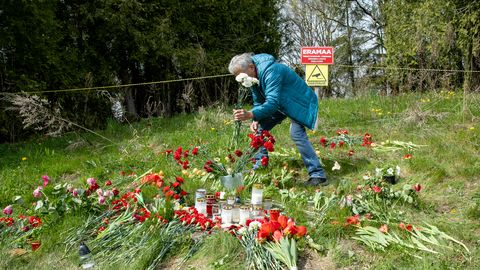
- Memorials for the Meriküla landing, a Soviet naval operation in 1944, were removed in 2022, leading to informal tributes.
Postimees highlights the starkly contrasting commemorations of May 9th in Estonia, revealing a profound rift in how the past is remembered. In Tallinn, the focus remains on the Bronze Soldier, a potent symbol for many, drawing thousands of red carnations and candles. However, in Narva and its surrounding areas, the landscape of remembrance is more complex and fragmented, reflecting a different historical narrative and a more localized approach to honoring the past.
The removal of the Meriküla landing memorial stones in 2022 signifies a broader societal shift in Estonia's engagement with its Soviet past. While official state commemorations may evolve, the article points to the enduring human need to remember. In Narva, this manifests as tributes laid by the roadside, a quiet but persistent acknowledgment of events that hold deep personal significance for a segment of the population.
This divergence in commemoration practices underscores the deep historical divisions within Estonia, particularly between the capital and the eastern regions with a significant Russian-speaking population. Postimees frames this not just as a difference in opinion, but as a clash of historical memories, where the same date evokes vastly different emotions and interpretations. For Estonians, May 9th often represents the end of one occupation and the beginning of another, while for others, it remains a day of victory and remembrance of the Soviet fight against Nazism. This article captures the localized, and at times poignant, ways in which these differing historical narratives continue to shape public life in Estonia.
DistantNews Editorial
Originally published by Postimees in Estonian. Translated, summarized, and contextualized by our editorial team with added local perspective. Read our editorial standards.
More Stories
/nginx/o/2026/05/04/17611299t1h4b32.jpg)
/nginx/o/2026/05/05/17612854t1h8709.jpg)
/nginx/o/2026/02/14/17444368t1hf1ff.jpg)
From Our Blog

What Gets Lost (and Found) When News Is Translated

The Critical Role of Diaspora Media in Global News

What Travellers Should Know About Countries with Restricted Press

A Digital Nomad's Guide to Following Local News

How the Same Story Looks Different in Different Countries
