

NATO Faces Rupture as US Scales Back Military Role, Demands European Burden-Sharing
Translated from Romanian, summarized and contextualized by DistantNews.
At a glance
News
Named sources
Ongoing story
- The US is reducing its military contribution to NATO's force model, urging European allies and Canada to increase their air and naval capabilities.
- This shift aims to address a "unhealthy dependence" on American assets and prepare for potential simultaneous conflicts.
- European nations must rapidly supply more manned and unmanned aircraft, as well as warships, to fill the gap left by the US.
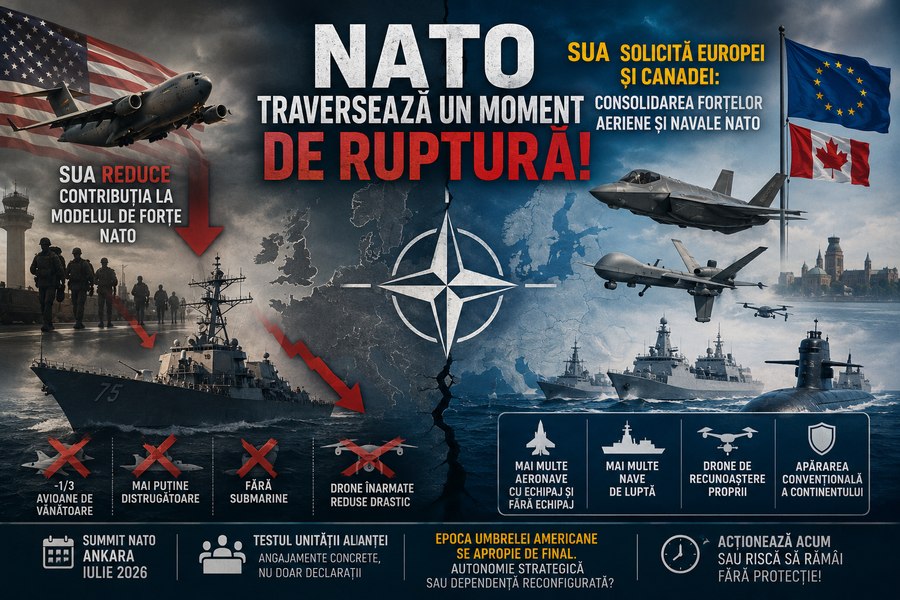
NATO faces a critical juncture as the United States signals a significant reduction in its military contributions to the alliance's force model. General Alexus Grynkewich, the commander of Allied forces in Europe, has urged European allies and Canada to swiftly bolster their air and naval capabilities.
This strategic shift, driven by directives from Washington, aims to lessen what Grynkewich described as an "unhealthy dependence" on American military assets within NATO. The US is calling on its European partners and Canada to assume key roles in the conventional defense of the continent, particularly in providing manned and unmanned aircraft, and naval vessels.
European allies and Canada must rapidly increase the number of manned and unmanned aircraft, as well as military vessels, they make available to the Alliance.
The urgency stems from the potential for simultaneous conflicts in multiple theaters, referencing security challenges in both the Indo-Pacific and Eastern Europe. The US is progressively withdrawing from certain collective defense commitments, necessitating a redistribution of responsibilities. Reports suggest substantial cuts to American fighter jets available to NATO, fewer destroyers, and no submarines in the crisis force pool.
This move also impacts the provision of reconnaissance drones, with the US intending to drastically reduce its supply of armed models. General Grynkewich's statement provides the first official public indication of the specific areas where US cuts will be most pronounced and where allies are expected to compensate, addressing concerns that have circulated unofficially in European capitals.
There is an 'unhealthy dependence' of the NATO Force Model on American capabilities, and this reality must change.
DistantNews Editorial
Originally published by Adevărul in Romanian. Translated, summarized, and contextualized by our editorial team with added local perspective. Read our editorial standards.
More Stories
From Our Blog

What Gets Lost (and Found) When News Is Translated

The Critical Role of Diaspora Media in Global News

What Travellers Should Know About Countries with Restricted Press

A Digital Nomad's Guide to Following Local News

How the Same Story Looks Different in Different Countries
