


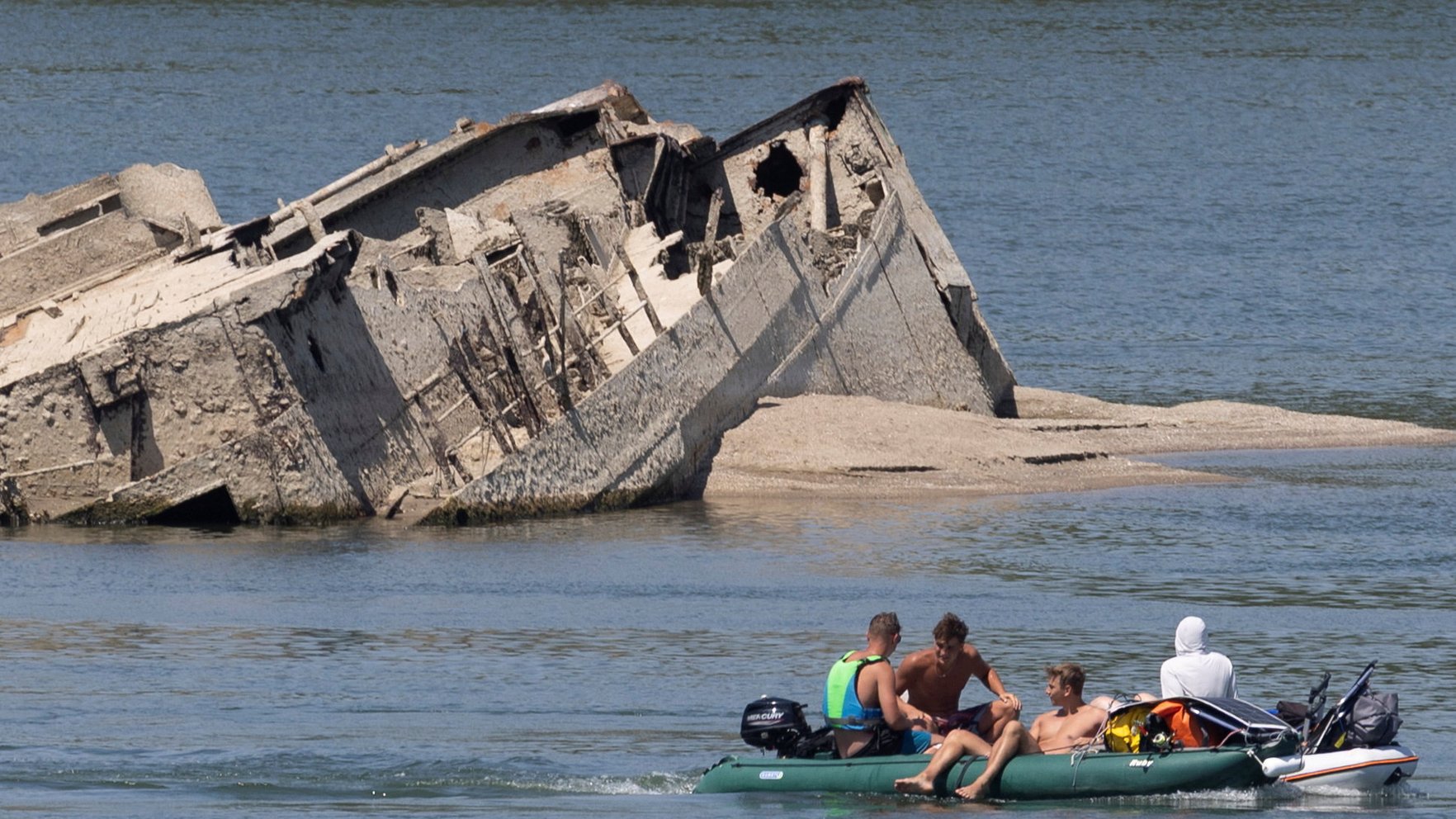
Nazi-Era German Warships Emerge from Danube Due to Low Water Levels
Translated from Latvian, summarized and contextualized by DistantNews.
At a glance
News
Documents & data
Approved/passed
- Nazi-era German fleet ships, sunk in the Danube River in 1944, have re-emerged due to low water levels.
- Over 200 vessels, including barges and patrol boats, were scuttled by the German army during their retreat to impede Soviet forces.
- The European Union is funding a project to salvage 21 of the most hazardous wrecks, costing an estimated 5 million euros annually in lost shipping revenue.
Sunken Nazi-era German fleet ships have reappeared in the Danube River as unusually low water levels expose the remnants of a wartime scuttling. In the autumn of 1944, the German army deliberately sank over 200 vessels, including barges, patrol boats, and hospital ships, along this vital European waterway during their retreat. The aim was to obstruct the advancing Red Army.
More than 80 years after the end of World War II, these submerged wrecks continue to pose a significant hazard to navigation on the Danube, one of Europe's most crucial inland transport routes. During dry summers, parts of the sunken fleet become visible above the water, severely disrupting shipping and cargo transport.
To address this persistent problem, the European Union is financing a project to remove 21 of the most dangerous wrecks. The salvage operation, which began in 2024, is scheduled for completion by 2028. According to the European Investment Bank, the submerged vessels cost Serbia's economy approximately 5 million euros each year in lost revenue due to restricted navigation. The bank has allocated a 16 million euro grant for the project.
DistantNews Editorial
Originally published by Delfi Latvia in Latvian. Translated, summarized, and contextualized by our editorial team with added local perspective. Read our editorial standards.
More Stories



From Our Blog

What Gets Lost (and Found) When News Is Translated

The Critical Role of Diaspora Media in Global News

What Travellers Should Know About Countries with Restricted Press

A Digital Nomad's Guide to Following Local News

How the Same Story Looks Different in Different Countries
