

New species of frog discovered in Costa Rica
Summarized and contextualized by DistantNews.
At a glance
News
From a news agency
Context piece
- A new species of nocturnal frog, nicknamed the 'spring frog,' has been discovered in Costa Rica's central Pacific region.
- The tiny amphibian, measuring less than four centimeters, thrives in coffee plantations but faces risks from agrochemicals.
- Scientists note that males have a translucent throat and call from coffee shrubs at night.
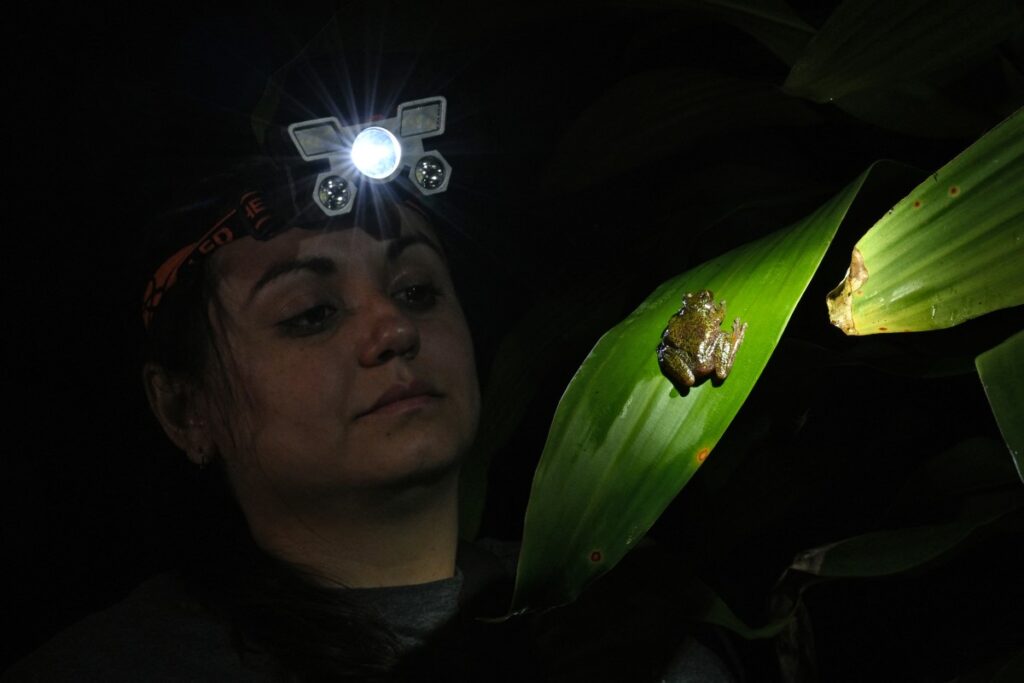
A tiny, greenish, nocturnal frog has been discovered in Costa Rica's central Pacific region, adding a new species to the country's biodiversity. Nicknamed the 'spring frog' and measuring less than four centimeters, the amphibian thrives in coffee plantations, a habitat that also presents risks due to the use of agrochemicals.
It’s a new species of tree frog for science, and endemic to Costa Rica.
Researchers from the National University of Costa Rica and Argentina's National Council for Scientific and Technical Research identified the frog as a new species endemic to Costa Rica. Dubbed the 'coffee frog' by some, it exhibits a distinctive trait: males possess a translucent throat that inflates when they emit their short, high-pitched calls. During the night, when they are most active, these frogs can be heard singing from coffee shrubs.
At night, when they are most active, you can hear them singing and perched on coffee shrubs.
While frogs generally seek shade, moisture, and insects within crops, they do not feed on coffee berries. The discovery highlights the delicate balance of ecosystems within agricultural areas. However, scientists like Wagner Chaves-Acuna warn that pesticide use on these plantations poses a potential threat to these small amphibians. The chemicals can travel through the air, seep into the soil, and contaminate aquatic systems where the tadpoles develop.
These poisons travel through the air…they seep through the soil, and that’s where they enter the aquatic systems where the tadpoles develop.
DistantNews Editorial
Originally published by Jamaica Observer. Summarized and contextualized by our editorial team with added local perspective. Read our editorial standards.
More Stories


From Our Blog

What Gets Lost (and Found) When News Is Translated

The Critical Role of Diaspora Media in Global News

What Travellers Should Know About Countries with Restricted Press

A Digital Nomad's Guide to Following Local News

How the Same Story Looks Different in Different Countries
