


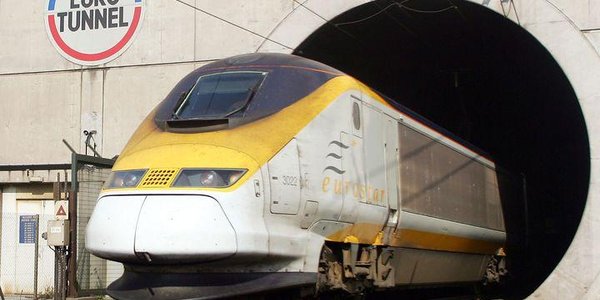
New trains ready for extreme heat in Europe. Eurostar changes order.
Translated from Polish, summarized and contextualized by DistantNews.
At a glance
News
Named sources
New plan
- Eurostar is upgrading its new Celestia train order with Alstom to withstand extreme temperatures up to 55 degrees Celsius.
- The decision was prompted by recent heatwaves in Europe, which exceeded the original 45-degree Celsius specification.
- The company is preparing for potential future climate conditions, acknowledging the higher cost but deeming it a necessary investment for trains designed to operate for thirty years.
Eurostar, the operator of train services through the Channel Tunnel, is enhancing its new Celestia train order with French manufacturer Alstom. The trains will now be specified to operate reliably in temperatures reaching 55 degrees Celsius, a significant increase from the previous requirement of 45 degrees Celsius.
Gwendoline Casenave, head of Eurostar, explained the decision was influenced by the recent severe heatwaves experienced across Europe. "We thought: This is Northern Europe. The UK, Germany, Switzerland... we don't go south of Paris in France, so 45 degrees will be enough," she told The Telegraph. "But a week ago, after the latest heatwave, we decided on the 55-degree option. We are buying trains that are meant to work for thirty years. So we thought that in the 2060s, even in the islands, temperatures could reach this level. It's more expensive, but it's worth it."
We thought: This is Northern Europe. The UK, Germany, Switzerland... we don't go south of Paris in France, so 45 degrees will be enough.
The company has termed these new specifications the "Sahara option." While the exact cost increase is not yet known, the original contract was valued at 2 billion euros. The decision comes as Europe has been experiencing unprecedented heat. In the latter half of June, nearly half of France saw temperatures exceed 40 degrees Celsius, with a record high of 44.3 degrees Celsius in Pissos. Even the UK experienced a high of 37.7 degrees Celsius.
Extreme heat poses significant challenges for rail transport. Some railway lines, like those in the Netherlands, have had to reduce services during peak heat. High temperatures, coupled with thunderstorms, can damage power supply systems and infrastructure, as seen in Italy. In Sweden, tracks have deformed due to heat, creating safety hazards. Passengers also suffer, as evidenced by the over 34 degrees Celsius temperatures on London Underground platforms and trains during a recent heatwave, and instances of trains breaking down in the sun without air conditioning in Belgium. Poland has also seen trains become potential death traps due to heat. Eurostar's proactive measure aims to prevent such failures and ensure passenger safety.
But a week ago, after the latest heatwave, we decided on the 55-degree option. We are buying trains that are meant to work for thirty years. So we thought that in the 2060s, even in the islands, temperatures could reach this level. It's more expensive, but it's worth it.
DistantNews Editorial
Originally published by Rzeczpospolita in Polish. Translated, summarized, and contextualized by our editorial team with added local perspective. Read our editorial standards.
More Stories

From Our Blog

What Gets Lost (and Found) When News Is Translated

The Critical Role of Diaspora Media in Global News

What Travellers Should Know About Countries with Restricted Press

A Digital Nomad's Guide to Following Local News

How the Same Story Looks Different in Different Countries
