


Nigeria: Growing Debt Burden and Fiscal Realities
Summarized and contextualized by DistantNews.
TLDR
- Nigeria's public debt has surpassed N159.3 trillion ($111 billion), exacerbated by naira depreciation and the formalization of central bank overdrafts.
- Federal revenue remains constrained, with debt servicing consuming a significant portion, sometimes exceeding total government revenue.
- The Tinubu administration faces a fiscal challenge, balancing aggressive reforms with continued reliance on debt financing.
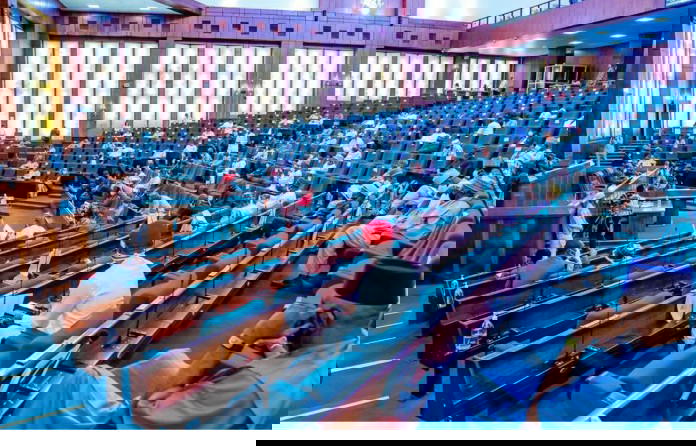
Nigeria's fiscal landscape is increasingly defined by a precarious imbalance: soaring debt obligations clash with persistently weak revenue generation. The recent approval of another $516 million loan request by the House of Representatives, intended to connect Lagos to Sokoto, pushes the nation's public debt to a staggering N159.3 trillion (approximately $111 billion). This alarming figure is further inflated by the depreciation of the naira and the conversion of substantial central bank overdrafts into long-term liabilities. The stark reality is that Nigeria's federal revenue, hovering between N10 trillion and N15 trillion annually in recent years, is insufficient to cover expenditures, forcing a heavy reliance on borrowing.
The consequences are dire. Debt servicing has, in some fiscal periods, consumed the entirety, or even more, of the government's total revenue. This leaves a severely limited fiscal space for crucial development spending. Economists associate Nigeria's 2024 fiscal position with acute stress, where the federal government spent virtually all its revenue on debt servicing, with some analyses indicating this figure exceeded 100%, and in some cases, 110% of federally retained revenue. This means that for every N100 earned, at least N100 was allocated to loan repayments, leaving nothing for capital projects or essential social services. Every naira spent on infrastructure, healthcare, education, or security must, therefore, be financed through new borrowing.
This fiscal predicament forms the crux of the economic debate under President Bola Ahmed Tinubu's administration. While the government pursues aggressive reforms, it simultaneously continues its heavy reliance on debt financing. A critical, yet often misunderstood, aspect of Nigeria's debt situation is the divergence between naira and dollar figures. While the external debt in dollar terms has remained relatively stable, fluctuating between $105 billion and $113 billion, the naira value has skyrocketed due to exchange rate depreciation. A $10 billion debt, for instance, translated to N4.6 trillion when the naira traded at N460 to the dollar in early 2023, but ballooned to over N15 trillion by 2025 when the naira surpassed N1,500 to the dollar. This highlights that a significant portion of Nigeria's apparent debt increase is not due to new borrowing but is an arithmetic consequence of currency devaluation. ThisDay, as a publication deeply invested in Nigeria's economic discourse, emphasizes the need for a sustainable fiscal path that addresses both revenue generation and debt management to unlock true development potential.
DistantNews Editorial
Originally published by ThisDay. Summarized and contextualized by our editorial team with added local perspective. Read our editorial standards.
More Stories


From Our Blog

How the Same Story Looks Different in Different Countries

What Gets Lost (and Found) When News Is Translated

The Critical Role of Diaspora Media in Global News

What Travellers Should Know About Countries with Restricted Press

A Digital Nomad's Guide to Following Local News
