

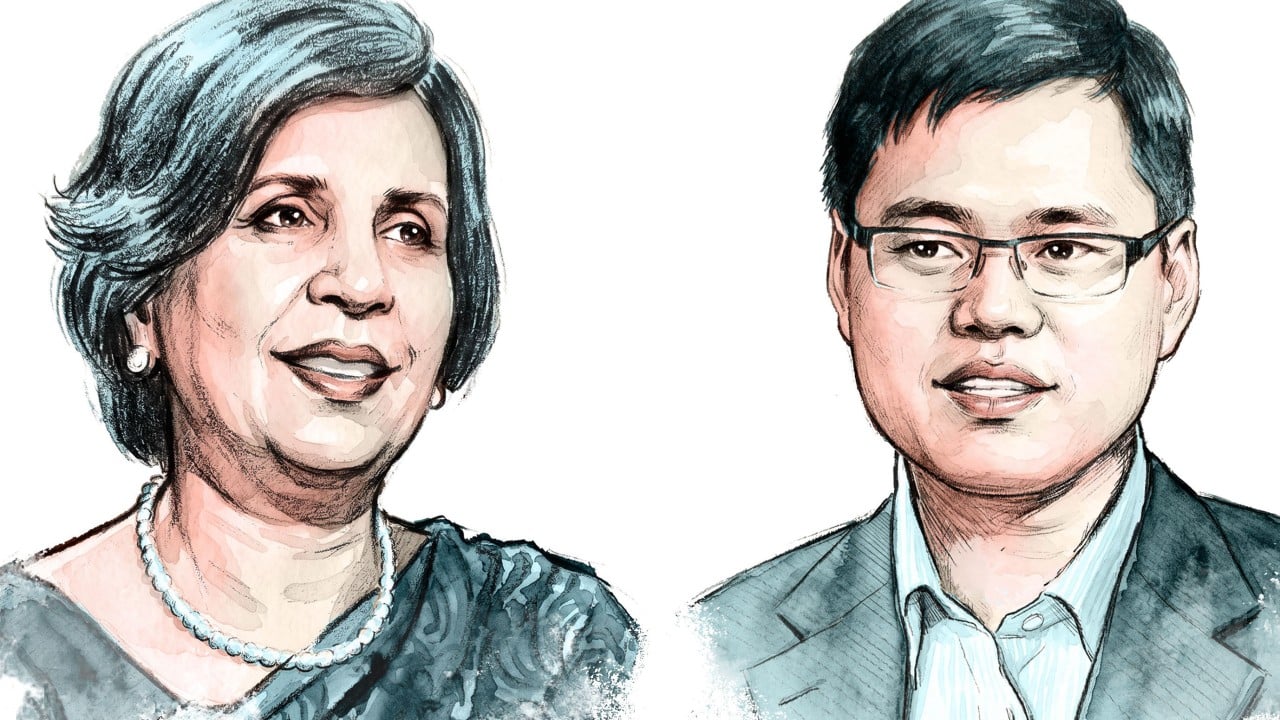
Nirupama Rao and Lin Minwang on the great India-China face-off
Summarized and contextualized by DistantNews.
At a glance
Interview
Named sources
Context piece
- A discussion between a Chinese scholar and a former Indian diplomat explored deep divisions in India-China relations.
- They debated whether history or politics, border clashes, and Pakistan's role are the main barriers to improved ties.
- Both Chinese and Indian perceptions of each other have become increasingly negative, influenced by historical conflicts and accessible information.
Deep fault lines in India-China relations are being debated by leading voices, including a Chinese scholar of South Asian affairs and a former Indian foreign secretary and ambassador to China. The discussion, part of the South China Morning Post's Open Dialogue series, delves into whether historical grievances or current political dynamics pose the greatest obstacle to better ties. Specific points of contention include border clashes, Pakistan's relationship with India, and India's alignment with the United States.
Lin Minwang, a professor at Fudan University, suggests that India's national identity is deeply intertwined with the history of the 1962 conflict, portraying China as an expansionist power. He argues that changing this deeply rooted narrative is difficult for India. Conversely, he notes a growing negative perception of India among Chinese citizens, partly due to increased access to information about how India views China, particularly after the COVID-19 pandemic.
Part of the reason is that the history of 1962 has become an important part of India’s national identity. Indian leaders, when explaining India’s history – or even discussing the mistakes made by Indian decision-makers at that time – have often had to describe China as an expansionist power. That is why I think it is very difficult to change this perception. Because if you want to change, you have to change all your narratives, which have been deep-rooted in the national identity narratives.
Nirupama Rao, a former Indian foreign secretary, brings her extensive diplomatic experience to the conversation. She previously served as India's ambassador to China and has authored a book on India-Tibet-China relations. The exchange highlights the complex and often suspicious nature of the relationship between the two Asian giants, examining whether Beijing and New Delhi can overcome mutual distrust in an evolving multipolar world.
Now, we are also seeing more and more Chinese people develop negative perceptions of India. One reason is that it has become much easier for Chinese people to understand how the outside world views China. Especially after Covid-19, many Chinese internet users have found it easier to access information about how Indians perceive China.
DistantNews Editorial
Originally published by South China Morning Post. Summarized and contextualized by our editorial team with added local perspective. Read our editorial standards.
More Stories

From Our Blog

Countries Without a Free Press: What You Need to Know

What Press Freedom Means for the News You Read

What Gets Lost (and Found) When News Is Translated

The Critical Role of Diaspora Media in Global News

What Travellers Should Know About Countries with Restricted Press
