


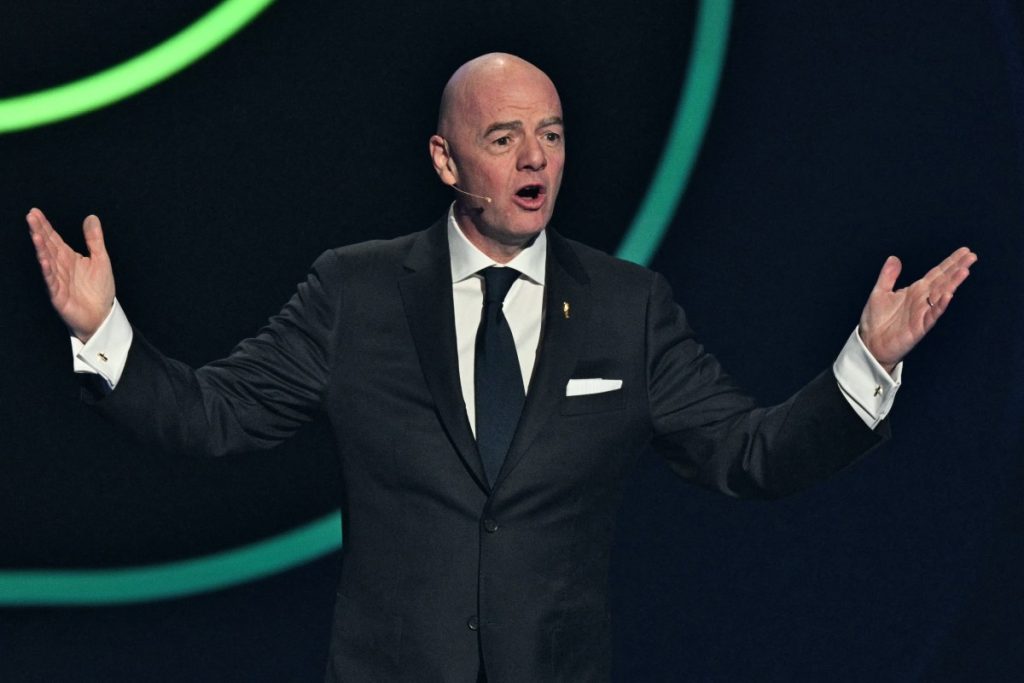
‘Nobody is selling football’ — FIFA reacts to UEFA World Cup boycott threat
Summarized and contextualized by DistantNews.
At a glance
News
Official statement
Context piece
- FIFA is defending its proposal to bring private investment into the FIFA World Cup, despite threats of boycott from UEFA and other confederations.
- The governing body insists that "nobody is selling football" and that the proposed FIFA Forward Enterprise (FFE) aims to benefit all member associations.
- FIFA states the project will not proceed without majority backing from its member associations and is committed to an open consultation process.
Global football's governing body, FIFA, is standing firm on its controversial plan to introduce private investment into the FIFA World Cup. This initiative, aimed at creating a commercial subsidiary called the FIFA Forward Enterprise (FFE) to manage the World Cup and other major tournaments, has drawn sharp criticism and threats of boycotts from UEFA and several continental confederations. Despite the mounting opposition, FIFA released a statement asserting that "nobody is selling football."
We have heard the feedback provided by the respective confederations. We respect the feedback and concern aired in public and reaffirm our commitment to an open and democratic consultation.
FIFA acknowledged the feedback from confederations and reaffirmed its commitment to a transparent and democratic consultation process. The organization emphasized that the FFE is designed to allow all 211 member associations to capitalize on football's commercial growth without compromising the sport's governance. "FFE has been proposed solely to ensure that all FIFA Member Associations have the opportunity to take meaningful ownership of the commercial opportunity of football in their respective countries, and that this does not come at the cost of either the spirit or the governance of FIFA or football itself," the statement read.
We will proceed with this consultation process to ensure that each member association has the ability to express its vote based on facts.
The governing body also refuted claims that a decision had already been made, stressing that the project requires majority support from its member associations to proceed. "Each Member Association should be allowed to review the proposal and have a say in shaping their own future," FIFA declared. This statement comes just a day after UEFA's 55 member associations unanimously voted to boycott all FIFA competitions if the plan moves forward. CONCACAF has also rejected the proposal, while the Asian Football Confederation expressed concerns over a lack of consultation.
Nobody is selling football. This is not something FIFA would ever entertain.
The backlash stems from FIFA President Gianni Infantino's proposal, with American investment firm Thrive Eternal reportedly leading a consortium interested in a minority stake in the FFE. FIFA maintains that this venture would generate unprecedented development funding for its member associations and insists the consultation process is ongoing. The organization aims to ensure that all members can benefit from commercial expansion while upholding the integrity and governance of the sport.
FFE has been proposed solely to ensure that all FIFA Member Associations have the opportunity to take meaningful ownership of the commercial opportunity of football in their respective countries, and that this does not come at the cost of either the spirit or the governance of FIFA or football itself.
DistantNews Editorial
Originally published by Vanguard. Summarized and contextualized by our editorial team with added local perspective. Read our editorial standards.
More Stories


From Our Blog

How the Same Story Looks Different in Different Countries

What Gets Lost (and Found) When News Is Translated

The Critical Role of Diaspora Media in Global News

What Travellers Should Know About Countries with Restricted Press

A Digital Nomad's Guide to Following Local News
