


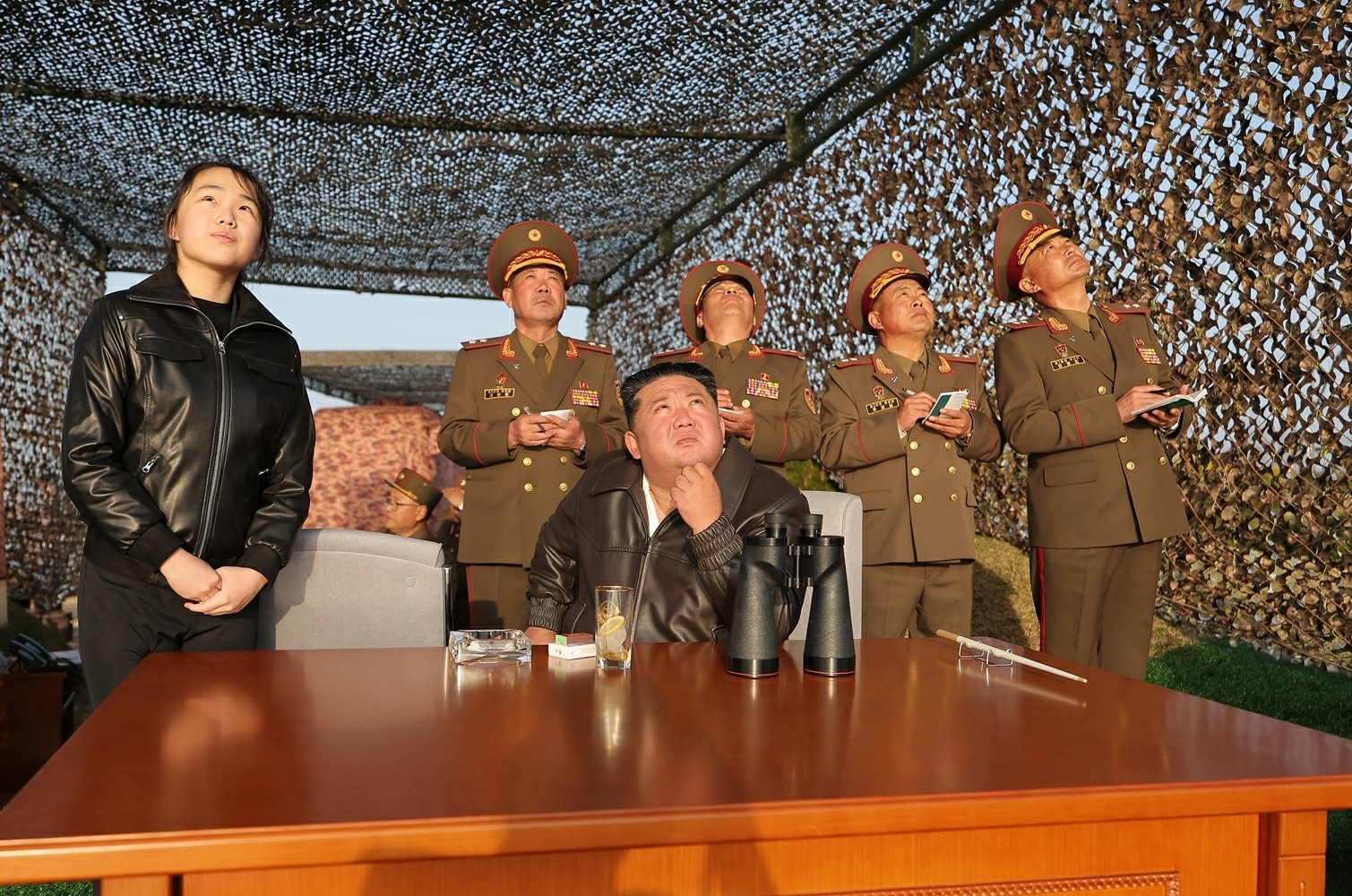
North Korea's Constitution Enshrines Kim Jong Un's Nuclear Command; Strengthening Deterrence is Urgent
Translated from Korean, summarized and contextualized by DistantNews.
TLDR
- North Korea has amended its constitution, removing references to unification and establishing territorial definitions that include its borders with China, Russia, and South Korea.
- The revised constitution significantly strengthens Kim Jong Un's authority, explicitly granting him nuclear command authority and the power to delegate it during emergencies.
- This constitutional overhaul reflects North Korea's shift towards solidifying its nuclear arsenal and severing ties with South Korea, viewing it as a separate, hostile state rather than a partner for reunification.
The Dong-A Ilbo, a leading South Korean newspaper, views North Korea's recent constitutional changes with grave concern, interpreting them as a definitive institutionalization of Kim Jong Un's nuclear ambitions and a complete abandonment of the inter-Korean unification policy. The editorial highlights the alarming deletion of terms like 'North' and 'national reunification' from the constitution, replaced by a territorial clause that explicitly acknowledges borders with China, Russia, and South Korea.
This move, the paper argues, signals Pyongyang's strategic shift from seeking a unified Korea to solidifying its status as a nuclear-armed state and treating South Korea as a distinct, hostile entity. The explicit inclusion of Kim Jong Un's nuclear command authority and the provision for delegating such power in emergencies are seen as particularly dangerous escalations, moving beyond mere threats to a codified doctrine of nuclear preparedness.
Dong-A Ilbo criticizes the South Korean government's perceived indecisiveness in its North Korea policy, contrasting it with North Korea's resolute actions. The paper points to the 'END plan' and recent attempts to reframe inter-Korean relations as ineffective and divisive. From a South Korean perspective, the article emphasizes the urgent need for strengthening deterrence, enhancing ROK-US strategic coordination, and adopting a more measured foreign policy approach, rather than pursuing potentially destabilizing engagement strategies.
The paper also notes North Korea's successful leveraging of international dynamics, particularly its deepening ties with Russia and China following its support in the Ukraine war, to bolster its global standing and defy international sanctions. This regional realignment, coupled with its nuclear advancements, makes North Korea a more dangerous and unpredictable actor, a reality that demands a robust and clear-headed response from Seoul.
DistantNews Editorial
Originally published by Dong-A Ilbo in Korean. Translated, summarized, and contextualized by our editorial team with added local perspective. Read our editorial standards.
More Stories


From Our Blog

What Gets Lost (and Found) When News Is Translated

The Critical Role of Diaspora Media in Global News

What Travellers Should Know About Countries with Restricted Press

A Digital Nomad's Guide to Following Local News

How the Same Story Looks Different in Different Countries
