


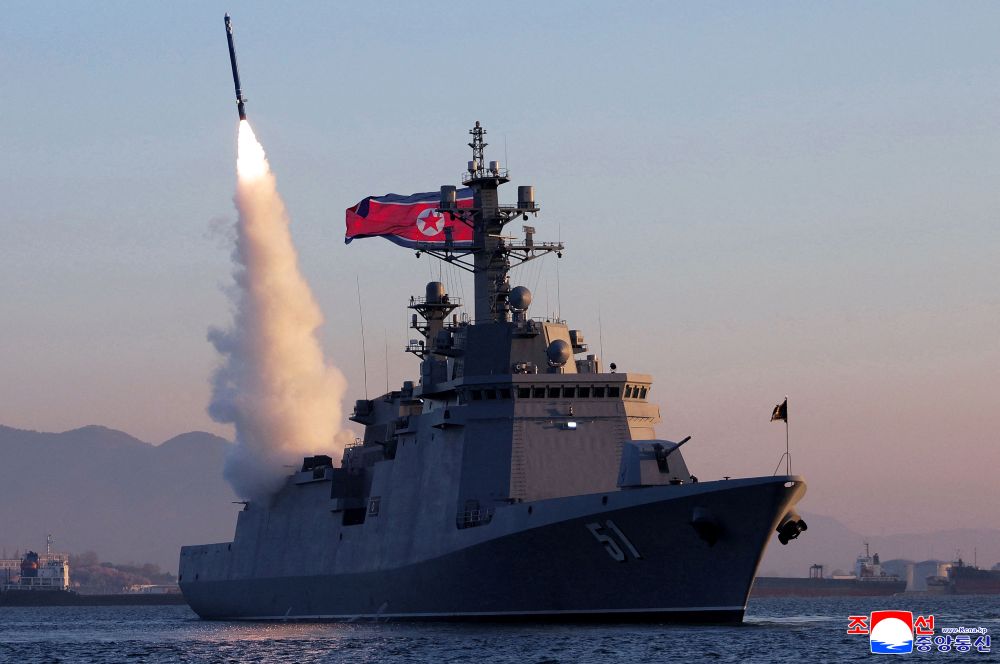
North Korea Shows Serious Advancements in Nuclear Weapons Production Capacity: IAEA Chief
Translated from Malay, summarized and contextualized by DistantNews.
TLDR
- The head of the International Atomic Energy Agency (IAEA), Rafael Grossi, stated that North Korea is showing serious advancements in its nuclear weapons production capacity.
- Grossi confirmed significant increases in activity at the Yongbyon nuclear complex, including a five-megawatt reactor and reprocessing unit.
- The agency estimates North Korea possesses several dozen nuclear warheads.
Utusan Malaysia reports on a grave development concerning North Korea's nuclear program, as stated by IAEA chief Rafael Grossi. The confirmation of serious advancements in the country's nuclear weapons production capacity, particularly at the Yongbyon complex, is a cause for significant concern. From a Malaysian perspective, regional stability is paramount, and any escalation of nuclear capabilities by North Korea poses a direct threat to peace and security in Southeast Asia and beyond.
North Korea is showing serious advancements in its nuclear weapons production capacity.
Grossi's specific mention of increased activity at the five-megawatt reactor, reprocessing unit, and other facilities at Yongbyon provides concrete evidence of North Korea's continued pursuit of nuclear weapons. The IAEA's estimate that North Korea possesses several dozen nuclear warheads underscores the urgency of the situation. This is not merely a theoretical concern; it represents a tangible increase in the potential for proliferation and conflict.
For Malaysia and other ASEAN nations, the situation in North Korea is a persistent challenge. While diplomatic efforts have been made over the years, the IAEA's findings suggest that these have not been sufficient to curb Pyongyang's ambitions. Utusan Malaysia would likely emphasize the need for a robust international response, urging greater vigilance and potentially stronger sanctions to deter further development. The proximity of North Korea to the region means that any instability or conflict stemming from its nuclear program would have immediate and severe repercussions for Malaysia.
There has been a rapid increase in activity at the five-megawatt reactor, a reprocessing unit, a light water reactor, and several other facilities at the Yongbyon nuclear complex in North Korea.
The IAEA's role as a monitoring body is crucial in providing objective assessments of such situations. Grossi's statements serve as a stark reminder that the international community must remain united and resolute in addressing the North Korean nuclear issue. Utusan Malaysia would likely call for renewed diplomatic engagement, coupled with strict adherence to international regulations and a commitment to denuclearization, to safeguard regional peace.
The country's nuclear program is estimated to have several dozen nuclear warheads.
DistantNews Editorial
Originally published by Utusan Malaysia in Malay. Translated, summarized, and contextualized by our editorial team with added local perspective. Read our editorial standards.
More Stories


From Our Blog

What Gets Lost (and Found) When News Is Translated

The Critical Role of Diaspora Media in Global News

What Travellers Should Know About Countries with Restricted Press

A Digital Nomad's Guide to Following Local News

How the Same Story Looks Different in Different Countries
