


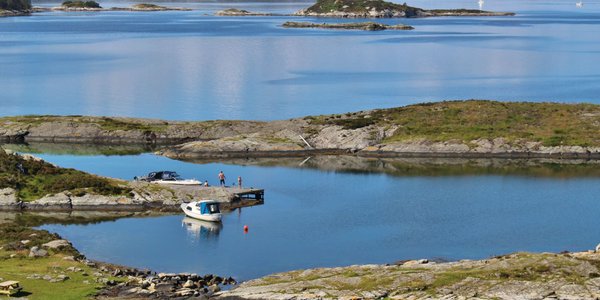
Norway to Build World's First Maritime Tunnel for Ships
Translated from Polish, summarized and contextualized by DistantNews.
At a glance
News
Sources not specified
Ongoing story
- Norway plans to build the Stad Ship Tunnel, a maritime tunnel on its west coast, to improve navigation safety in a notoriously dangerous area.
- The project, estimated to cost 8.6 billion Norwegian kroner, has faced political debate and cost increases but is now moving towards construction, potentially starting in early 2027.
- The tunnel will accommodate ships up to 16,000 gross tons, shortening journeys by 56 kilometers and featuring unique entrance designs by Snøhetta.
Norway is embarking on a groundbreaking engineering project to construct the Stad Ship Tunnel, a maritime passage designed to bypass the treacherous waters off the Stad peninsula on its west coast. This region is notorious for its harsh weather, with over 100 days annually experiencing hurricane-force winds, sudden storms, and high waves, making it one of the most dangerous stretches for shipping.
The concept of a tunnel or alternative passage has been discussed since the 19th century, with Vikings themselves reportedly dragging their boats overland to avoid the hazardous seas. After years of political debate and escalating costs, the Norwegian Parliament initially supported the project in 2017, but progress stalled. A recent re-evaluation by the government in May 2026 has led to a new budget agreement, paving the way for construction to potentially begin in early 2027.
The Stad Ship Tunnel is both a groundbreaking engineering project and a practical solution to improve transport safety.
With an estimated cost of 8.6 billion Norwegian kroner (approximately 782 million euros), the Stad Ship Tunnel is set to become a unique feat of engineering. It will be 49 meters high and 36 meters wide, with a water depth of 12 meters, capable of handling vessels up to 16,000 gross tons. This capacity is sufficient for coastal express ships like Hurtigruten, significantly improving safety and reducing travel distance by 56 kilometers.
The construction itself presents a significant challenge, involving a "drill and blast" process through a thick layer of gneiss. Approximately three million cubic meters of rock will need to be excavated, with materials primarily supplied by sea due to inadequate local road infrastructure. The tunnel entrances, designed by the Norwegian firm Snøhetta, will feature rough rock walls to blend with the natural landscape, complemented by walkways and a new road bridge for viewing ships entering and exiting the passage.
We’re also informally part of the team, we’re absolutely on your side. I’ve already discovered the most hated word of the year: still.
DistantNews Editorial
Originally published by Rzeczpospolita in Polish. Translated, summarized, and contextualized by our editorial team with added local perspective. Read our editorial standards.
More Stories


From Our Blog

What Gets Lost (and Found) When News Is Translated

The Critical Role of Diaspora Media in Global News

What Travellers Should Know About Countries with Restricted Press

A Digital Nomad's Guide to Following Local News

How the Same Story Looks Different in Different Countries
