


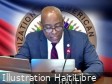
OAS Presents Progress in Supporting Haiti's Stability and Peace Efforts
Translated from French, summarized and contextualized by DistantNews.
TLDR
- The Organization of American States (OAS) presented its progress in supporting Haiti during a Permanent Council meeting.
- OAS Secretary General Albert R. Ramdin highlighted efforts in political facilitation, electoral preparation, security support, and international coordination.
- The OAS emphasized its role in supporting Haitian solutions, strengthening coordination, and advancing a roadmap for stability and peace.
During a crucial meeting of the Permanent Council of the Organization of American States (OAS) in Washington, D.C., on Wednesday, May 6, 2026, OAS Secretary General Albert R. Ramdin provided a comprehensive update on the organization's multifaceted support for Haiti. The presentation underscored concrete progress in key areas, including political facilitation, electoral preparedness, security assistance, international coordination, and the strengthening of the OAS's institutional presence within the crisis-stricken nation.
Le travail de l’OEA s’est concentré sur le soutien aux solutions haïtiennes, le renforcement de la coordination entre les acteurs nationaux et internationaux et l’avancement vers une phase de mise en œuvre plus structurée de la Feuille de route pour la stabilité et la Paix en Haïti.
Ramdin articulated that the OAS's work is fundamentally centered on bolstering Haitian-led solutions, fostering enhanced coordination among national and international stakeholders, and driving forward a more structured implementation phase of the "Roadmap for Stability and Peace in Haiti." A significant achievement highlighted was the OAS's role in providing political support during the critical period surrounding February 7, 2026. Through discreet diplomacy and effective coordination with Haitian, regional, and international actors, the organization played a vital part in ensuring the continuity of the executive power and averting a potentially deeper institutional collapse.
Grâce à ses bons offices, à une diplomatie discrète et à la coordination avec les acteurs haïtiens, régionaux et internationaux, l’Organisation a contribué à préserver la continuité du pouvoir exécutif et à prévenir un effondrement institutionnel plus profond.
Regarding electoral processes, Ramdin noted the pivotal adoption of the Electoral Decree in December 2025, which has transitioned the electoral preparation from a general intention to a more organized framework. The OAS, via its Department of Electoral Cooperation and Observation, is actively engaged with the Provisional Electoral Council (CEP) through a technical working group. This collaboration aims to address specific cooperation requests, particularly in electoral technology, IT systems, and institutional capacity building. In the security domain, OAS support has evolved towards more operational forms of monitoring, including assistance to the civilian component of the Gang Violence Reduction Force (FRG) and initiatives to enhance police capabilities, infrastructure, specialized training, financial investigations, and maritime/port security.
L’OEA, par l’intermédiaire du Département de coopération et d’observation électorale, maintient un groupe de travail technique avec le Conseil Électoral Provisoire (CEP) afin de répondre aux demandes de coopération, notamment dans les domaines liés à la technologie électorale, aux systèmes informatiques et aux capacités institutionnelles.
The Secretary General also drew attention to the development of the "Roadmap for Haiti Dashboard," an innovative tool designed to increase visibility, traceability, and clarity regarding the contributions and progress made by the international community. The initial phase, focusing on OAS projects, is complete, and the second phase will integrate information on support provided by member states. Ramdin urged delegations to submit pending information to ensure a comprehensive reflection of collective support for Haiti on the platform. This comprehensive approach demonstrates the OAS's sustained commitment to navigating Haiti's complex challenges through coordinated and practical assistance.
Le soutien de l’OEA a évolué vers des formes plus opérationnelles de suivi, y compris l’appui au volet civil de la Force de Répression des Gangs (FRG), ainsi que des initiatives visant à renforcer les capacités policières, les infrastructures, la formation spécialisée, les enquêtes financières et la sécurité maritime et portuaire.
DistantNews Editorial
Originally published by Haiti Libre in French. Translated, summarized, and contextualized by our editorial team with added local perspective. Read our editorial standards.
More Stories

From Our Blog

What Gets Lost (and Found) When News Is Translated

The Critical Role of Diaspora Media in Global News

What Travellers Should Know About Countries with Restricted Press

A Digital Nomad's Guide to Following Local News

How the Same Story Looks Different in Different Countries
