


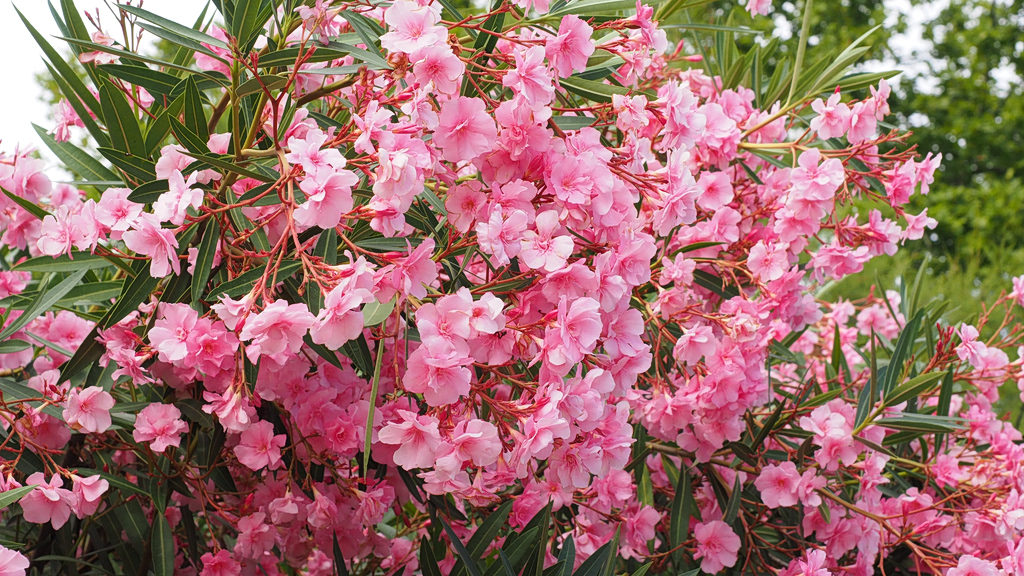
Oleander Removal at Schools Sparks Outcry: Experts Call EODY Directive 'Excessive'
Translated from Greek, summarized and contextualized by DistantNews.
TLDR
- Greek authorities are facing backlash over a directive to remove oleander plants from schools due to toxicity concerns.
- Environmental and botanical experts argue the directive is an overreaction, calling mass removal an "environmental crime" and citing low poisoning rates.
- The Hellenic Center for Diseases (EOYD) recommends removing the plants, while experts suggest milder measures like education and information.
A recent directive from the Hellenic Center for Diseases (EOYD) mandating the removal of oleander plants from schools has sparked significant controversy across Greece. While the EOYD cites the plant's toxicity, particularly its potential to cause severe cardiac issues or even sudden death due to compounds like oleandrin, experts in botany and environmental science are strongly opposing this measure. They argue that the directive represents an excessive reaction, potentially causing more harm than good.
Από τις δηλητηριάσεις, όπως αυτές καταγράφονται από το Κέντρο Δηλητηριάσεων, μόνο το 1,1% προκαλείται από φυτά· από αυτό το ποσοστό, μόλις το 5% οφείλεται στην πικροδάφνη.
Professional associations like the Panhellenic Association of Professional Geotechnicians and Green Businesses (PEGEP) have voiced their strong opposition. Stavroula Katsogianni, the president of PEGEP, described the proposal for mass uprooting of millions of plants as "economically, culturally, socially, and environmentally damaging." She pointed to data from the Poison Control Center indicating that only 1.1% of poisoning cases nationwide are caused by plants, and of those, a mere 5% are attributed to oleander. This suggests the risk, while present, is statistically low.
Σε ένα σχολείο ήμουν μπροστά σε έναν φοίνικα, ο ένας δάσκαλος έλεγε να τον βγάλουμε γιατί έχει αγκάθια, και ο άλλος ότι πρέπει τα παιδιά να μάθουν να μην τον πλησιάζουν. Έχει σημασία τι παιδιά θέλεις να μεγαλώσεις.
Instead of outright removal, experts like Katsogianni advocate for less drastic measures, such as educating students, teachers, and the public about the plant's potential dangers and how to handle it safely. The Hellenic Botanical Society echoed these sentiments, stating that the EOYD's circular creates "unnecessary panic and fear" rather than focusing on informed awareness. They argue that teaching children to respect and avoid potentially harmful plants, rather than eradicating them, is a more valuable life lesson. The debate highlights a tension between public health precautions and environmental preservation, with many feeling the EOYD's approach is disproportionate to the actual risk.
άσκοπο πανικό και φόβο
DistantNews Editorial
Originally published by Ta Nea in Greek. Translated, summarized, and contextualized by our editorial team with added local perspective. Read our editorial standards.
More Stories



From Our Blog

What Gets Lost (and Found) When News Is Translated

The Critical Role of Diaspora Media in Global News

What Travellers Should Know About Countries with Restricted Press

A Digital Nomad's Guide to Following Local News

How the Same Story Looks Different in Different Countries
