


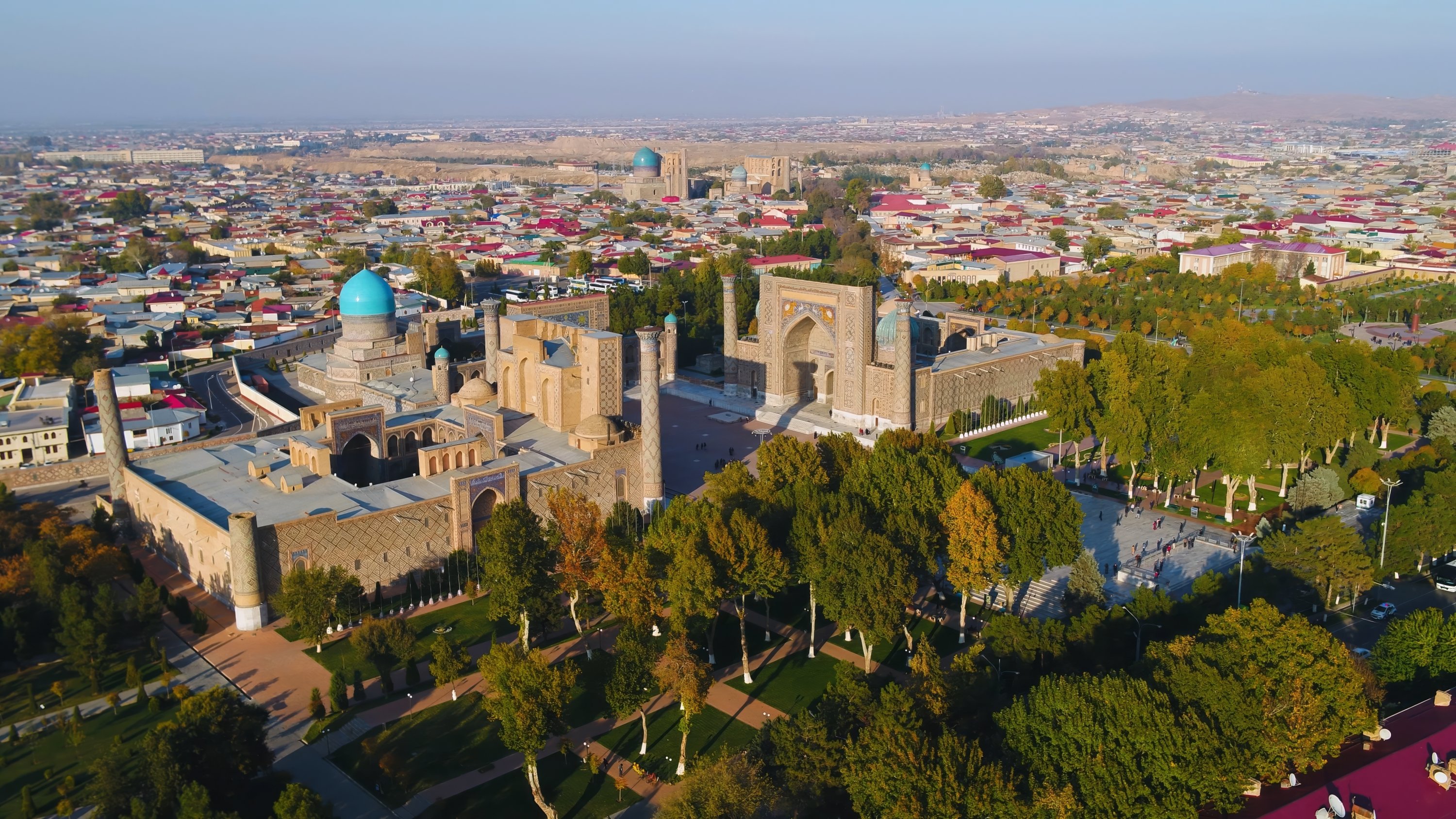
On 'Samarkand School of Mathematics and Astronomy'
Summarized and contextualized by DistantNews.
At a glance
In-depth
Sources not specified
Context piece
- The Samarkand School of Mathematics and Astronomy was a significant 15th-century scientific center in modern Uzbekistan.
- It fostered intellectual continuity across regions, influencing and being influenced by a network of scholarly centers.
- The school inherited legacies from the Maragha School and absorbed philosophical and theological traditions from figures like Ibn Sina and Fakhr al-Din al-Razi.
The "Samarkand School of Mathematics and Astronomy," a prominent 15th-century scientific hub in present-day Uzbekistan, played a crucial role in establishing intellectual continuity across diverse regions. This school was part of a wider network of scholarly centers that mutually influenced each other, demonstrating how intellectual traditions transcended shifting political structures.
As early as the 10th century, the regions of Transoxiana and Khorasan hosted numerous madrassas, creating an institutional infrastructure that predated the famous Niẓamiyya madrassas by about 165 years. This early foundation was vital for intellectual production and the dissemination of scholarly legacies throughout the Islamic world. From the late 14th to the early 16th centuries, this area became the most productive center for scientific and intellectual activity within the Islamic world.
The Samarkand School built upon the legacy of the Maragha School of Mathematics and Astronomy, founded in 1259. It particularly drew from the mathematical-philosophical traditions of Nasir al-Din al-Tusi and Qutb al-Din al-Shirazi. Furthermore, it integrated the philosophical heritage of Ibn Sina (Avicenna) and the theological legacy of Fakhr al-Din al-Razi, creating a rich synthesis of knowledge.
During the 14th century, Timur established his empire with Samarkand as its capital, blending Turkic, Mongol, and Persian elements. His son, Shah Rukh, later made Herat his capital, transforming it into a major center for Sunni religious sciences. This focus was supported by Sunni scholars within the madrassa system and the Naqshbandi order, which influenced the broader social sphere. Herat's commitment to strengthening the Sunni tradition led to the prominence of figures like al-Taftazani, a Muslim Persian polymath influential in linguistic and religious sciences. The al-Taftazani tradition adopted a critical stance toward Ibn Arabi's school and promoted the Naqshbandi path, distancing itself from speculative mystical metaphysics. Under Shah Rukh's son Baysunghur, Herat also flourished as a distinguished center for literature and the arts, producing scholars who shaped the city and a remarkable generation of intellectuals.
DistantNews Editorial
Originally published by Daily Sabah. Summarized and contextualized by our editorial team with added local perspective. Read our editorial standards.
More Stories


From Our Blog

What Gets Lost (and Found) When News Is Translated

The Critical Role of Diaspora Media in Global News

What Travellers Should Know About Countries with Restricted Press

A Digital Nomad's Guide to Following Local News

How the Same Story Looks Different in Different Countries
