


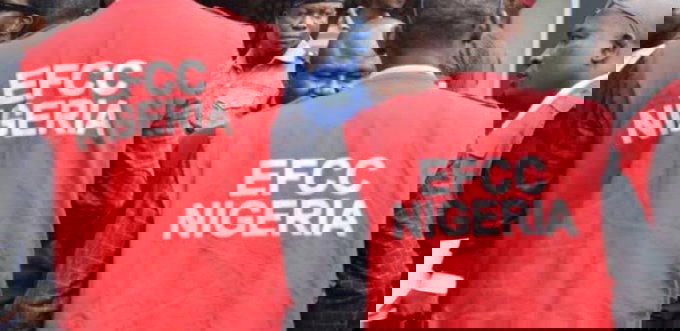
Osun funds: CISLAC backs EFCC account restriction
Summarized and contextualized by DistantNews.
At a glance
News
Named sources
Under investigation
- Civil Society Legislative Advocacy Centre (CISLAC) defended the EFCC's restriction of Osun State Government accounts.
- CISLAC stated that protecting public funds from potential diversion should be prioritized.
- The organization argued that temporary account restrictions are a necessary preventive measure for investigations.
The Civil Society Legislative Advocacy Centre (CISLAC), also acting as Transparency International Nigeria, has publicly supported the Economic and Financial Crimes Commission (EFCC) regarding its decision to restrict accounts belonging to the Osun State Government. CISLAC argues that safeguarding public funds takes precedence when credible concerns arise about their potential diversion or misuse.
Who protects the money of the people of Osun when alarm bells ring?
Auwal Rafsanjani, Executive Director of CISLAC and Head of Transparency International Nigeria, highlighted a central question in the ensuing controversy: "Who protects the money of the people of Osun when alarm bells ring?" The organization emphasized in a statement that public funds belong to the citizens, not to governors, political parties, or administrations. They stressed that essential services like salaries, pensions, healthcare, road projects, and school feeding programs depend on the availability of these protected resources.
CISLAC defended the EFCC's use of account restrictions as a crucial preventive measure. They stated that once public funds enter questionable channels, recovery can become exceedingly difficult. The organization's stance is that the EFCC's action aims to preserve funds and evidence while investigations proceed, framing it as a "pause first, audit second, prosecute third if necessary" approach. They rejected the notion that such restrictions inherently paralyze governance, questioning whether a temporary audit is more damaging than the potential disappearance of public funds.
The intent is simple: pause first, audit second, prosecute third if necessary.
The organization further noted that EFCC interventions have previously involved state government funds, citing examples in Edo, Benue, and Kogi states. In Edo's governorship election, the EFCC restricted state accounts following petitions about alleged contract inflation and diversion of federal allocations, reportedly preserving approximately N12 billion. CISLAC views the EFCC's intervention in Osun within its statutory mandate to prevent economic and financial crimes and preserve assets at risk during investigations.
What paralyses governance more, a temporary audit, or the disappearance of billions meant for public good?
DistantNews Editorial
Originally published by Vanguard. Summarized and contextualized by our editorial team with added local perspective. Read our editorial standards.
More Stories


From Our Blog

How the Same Story Looks Different in Different Countries

What Gets Lost (and Found) When News Is Translated

The Critical Role of Diaspora Media in Global News

What Travellers Should Know About Countries with Restricted Press

A Digital Nomad's Guide to Following Local News
