

Pakistan Considers Law Allowing Banks to Seize Mortgaged Homes After 90 Days Default
Translated from English, summarized and contextualized by DistantNews.
TLDR
- Pakistan's government is considering a new law that would allow commercial banks to seize mortgaged houses after 90 days of default.
- The proposed amendment to the "Financial Institutions (Recovery of Finances) Ordinance, 2001" aims to encourage lending to the housing sector.
- The National Assembly's Standing Committee on Finance has raised concerns about the potential for banks to gain excessive powers, deferring the bill for further review.
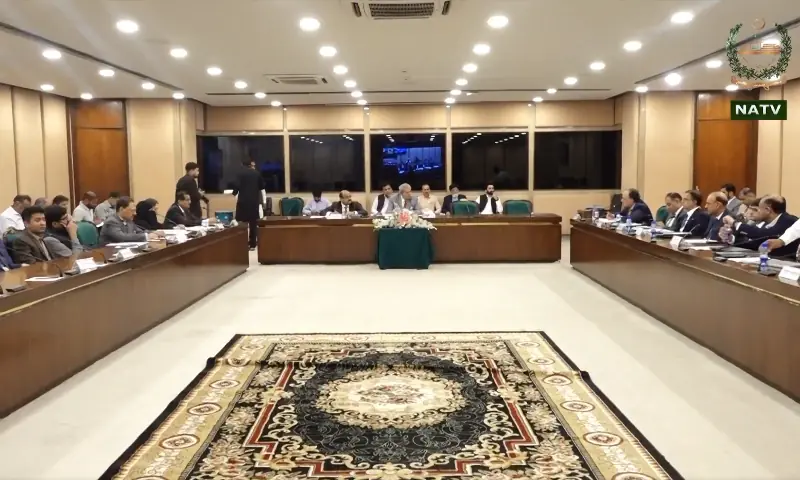
The Pakistani government is moving towards a significant shift in housing finance policy, proposing legislation that would empower commercial banks to take possession of mortgaged properties after a borrower defaults for 90 days. This move, aimed at stimulating the crucial housing sector and reassuring financial institutions, is currently under review by the National Assembly’s Standing Committee on Finance and Revenue. The proposed law seeks to amend the existing "Financial Institutions (Recovery of Finances) Ordinance, 2001."
In case of default in payment by a customer after service of the final (third) notice, the financial institution may proceed with the sale of the housing unit, provided that all notices have been duly served upon the mortgagor, who has remained in default of payment of mortgage dues or any part thereof.
Under the proposed framework, financial institutions would be permitted to initiate the sale of a housing unit after issuing three 30-day notices to the defaulter. This measure is intended to streamline the recovery process and mitigate risks for lenders, thereby encouraging greater investment in long-term housing finance. The government, alongside officials from the finance, housing, and justice ministries, also briefed the committee on the Prime Minister Apna Ghar Programme (PM-AGP), a subsidized housing initiative designed for low and middle-income families.
The committee “expressed concerns over provisions that could potentially grant banks excessive powers in the foreclosure process,”
However, the Standing Committee has voiced considerable reservations. Chaired by former finance minister Syed Naveed Qamar, the committee expressed concerns that the proposed conditions might grant banks excessive foreclosure powers, potentially at the expense of borrowers. Members stressed the need for a balanced legal framework that not only safeguards lenders' interests but also ensures adequate legal protections and due process for borrowers against arbitrary actions. This highlights a critical tension between facilitating financial sector growth and protecting consumer rights within Pakistan's developing mortgage market.
Members of the panel emphasised that while an effective legal framework was essential to promote mortgage financing and safeguard the interests of lending institutions, adequate legal protections and due process must also be ensured to protect borrowers from arbitrary or unfair actions.
Given these concerns, the committee has deferred the bill to its next meeting, requesting a revised draft for further deliberation. This pause underscores the importance of finding a consensus that promotes housing finance while upholding fairness for all parties involved. The government's push for robust foreclosure laws is seen as essential for strengthening Pakistan's underdeveloped mortgage finance sector and boosting confidence among financial institutions, but the path forward requires careful consideration of the potential impact on ordinary citizens.
Affordable housing finance must genuinely serve deserving low-income families through transparent, accountable and inclusive mechanisms, and stressed the urgent need for robust foreclosure and recovery laws to strengthen Pakistan’s underdeveloped mortgage finance sector and enhance the confidence of financial institutions in expanding long-term housing finance.
DistantNews Editorial
Originally published by Dawn in English. Translated, summarized, and contextualized by our editorial team with added local perspective. Read our editorial standards.
More Stories



From Our Blog

What Gets Lost (and Found) When News Is Translated

The Critical Role of Diaspora Media in Global News

What Travellers Should Know About Countries with Restricted Press

A Digital Nomad's Guide to Following Local News

How the Same Story Looks Different in Different Countries
