

Pakistan issues flood alert for northern regions as several areas remain cut off
Translated from English, summarized and contextualized by DistantNews.
At a glance
News
Named sources
Ongoing story
- Pakistan's Meteorological Department issued a glacial lake outburst flood (Glof) alert for Gilgit-Baltistan and Khyber Pakhtunkhwa for the first week of August.
- The alert is due to warming temperatures accelerating snow and ice melt, increasing water levels in rivers and potentially forming new glacial lakes.
- Vulnerable downstream areas face a high risk of sudden flood flows, with over 7.1 million people in the regions at risk.
Pakistan's Meteorological Department (PMD) has issued a critical alert for glacial lake outburst floods (Glofs) in the Gilgit-Baltistan (GB) and Khyber Pakhtunkhwa (KP) regions, warning of potential dangers through the first week of August. This warning follows a previous alert issued on July 17, highlighting the persistent threat posed by climate change.
This significant warming with intermittent rain will substantially accelerate snow and ice melt in the glaciated valleys of these regions.
The PMD attributes the increased risk to a significant warming trend combined with intermittent precipitation. These conditions are accelerating snow and ice melt in the region's extensive glaciated valleys. Consequently, water levels in river streams are expected to rise substantially. Existing glacial lakes may expand rapidly, and new ones could form due to the high volume of meltwater.
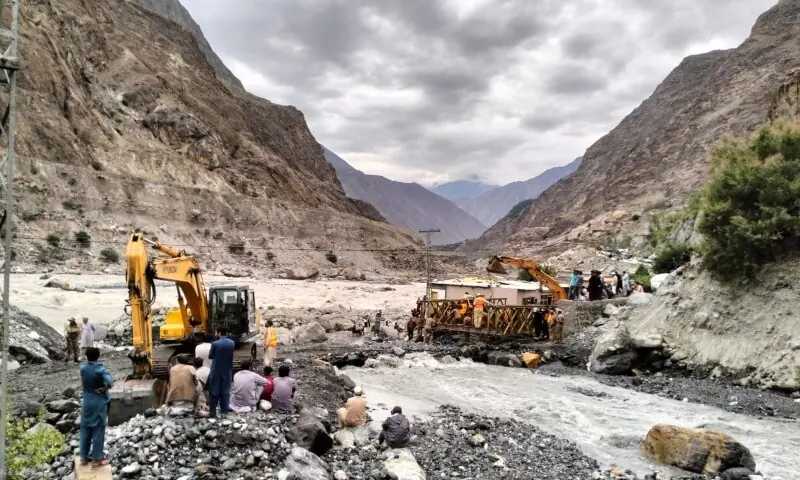
The potential impacts are severe, with vulnerable downstream locations and low-lying areas facing a high risk of sudden, powerful flood flows. Flash flooding is also forecast in narrow valleys. The rapid expansion and destabilization of glacial lakes pose a direct threat, potentially triggering catastrophic Glof incidents. Such events can result in significant loss of life, property, and livelihoods in mountain communities.
The possible impacts include: vulnerable downstream locations and low-lying areas adjacent to stream/riverbeds may face a high risk of sudden high flows.
Over 7.1 million people in GB and KP are identified as vulnerable to Glofs, according to the climate change ministry. Pakistan holds the largest concentration of glaciers outside the polar regions, with over 13,032 glaciers. However, experts are concerned that approximately 10,000 glaciers in Chitral and GB are receding due to rising global temperatures. The PMD also warned of increased landslide risks due to thawing permafrost and excess surface water.
The rapid expansion of glacial lakes can destabilise their natural ice and/or moraine damming, potentially triggering Glof incidents.
Authorities are urging residents in affected areas to take precautionary measures. These include staying away from riverbanks, stream beds, and nullahs, and closely monitoring water bodies for changes. People are advised against camping or trekking near these areas and to avoid steep, unstable slopes. Disaster management authorities are on alert, coordinating with community-based management committees to ensure preparedness and prevent untoward incidents.
The disaster management authorities and relevant line departments should ensure alertness 24/7 and take necessary measures to avoid any untoward situation.
DistantNews Editorial
Originally published by Dawn in English. Translated, summarized, and contextualized by our editorial team with added local perspective. Read our editorial standards.
More Stories
From Our Blog

What Gets Lost (and Found) When News Is Translated

The Critical Role of Diaspora Media in Global News

What Travellers Should Know About Countries with Restricted Press

A Digital Nomad's Guide to Following Local News

How the Same Story Looks Different in Different Countries
