


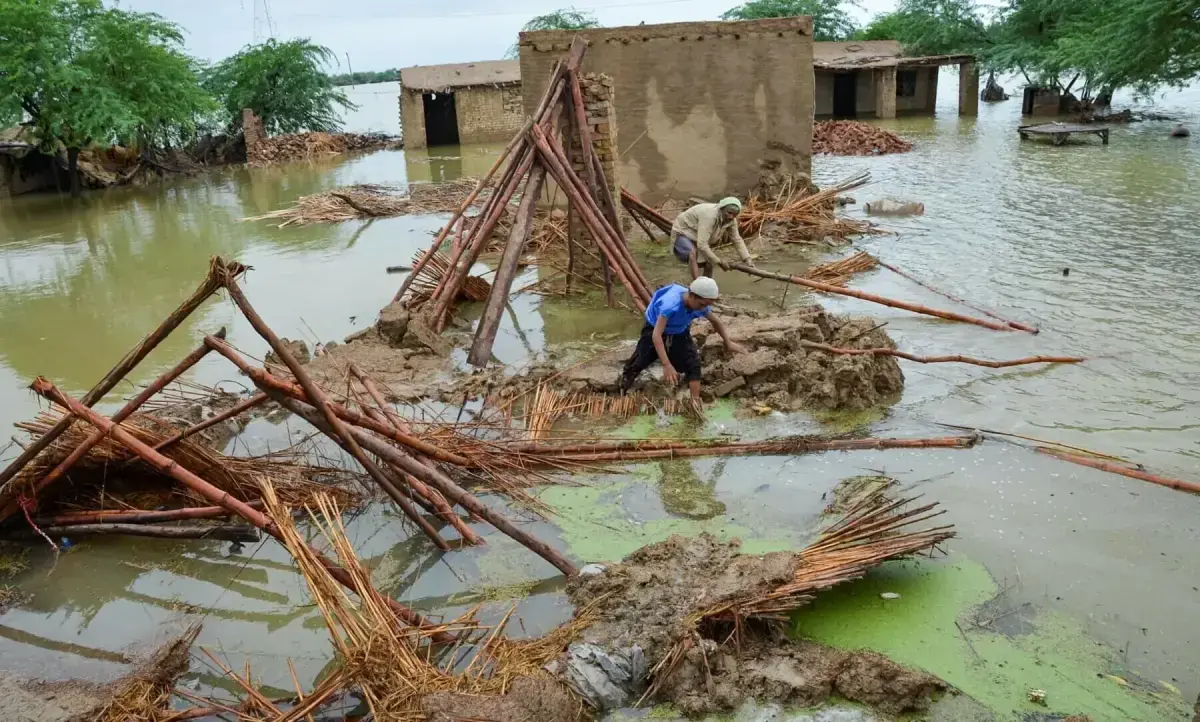
Pakistan quietly restructures World Bank housing project, leaving thousands without homes
Translated from English, summarized and contextualized by DistantNews.
At a glance
News
Sources not specified
Outcome reported
- The World Bank-funded Rs115 billion post-flood rehabilitation project in Pakistan has been restructured, reducing promised resilient homes for over 134,000 families in Balochistan.
- Investigations into alleged record tampering, duplicate claims, and attempted disruption of probes preceded the decision to cap the housing component and decline additional World Bank financing.
- The project steering committee redirected remaining funds to roads and irrigation, reversing Prime Minister Shehbaz Sharif's public commitment to rebuild every lost home.
Pakistan has quietly restructured a Rs115 billion World Bank-funded project aimed at rebuilding homes after the devastating 2022 floods. The move deprives over 134,000 verified flood-affected families in Balochistan of the resilient housing they were promised.
Official documents and background discussions reveal investigations into alleged record tampering, duplicate claims, and multiple payments for the same housing units. Attempts were reportedly made to disrupt these probes. The project steering committee, led by Planning Minister Ahsan Iqbal and Balochistan Chief Minister Sarfraz Bugti, has capped the housing component of the Integrated Flood Resilience & Adaptation Project (IFRAP) at approximately 69,000 homes. This decision led the World Bank to withdraw proposed additional financing that could have extended reconstruction to the remaining affected families.
The decision reverses Prime Minister Shehbaz Sharif's public commitment to provide a resilient house for every family that lost one. Despite over 134,000 families being surveyed and registered, the project steering committee unanimously redirected remaining housing funds towards roads and irrigation at a June meeting. This occurred despite conflicting arguments: one side claims misreporting to downgrade the housing project for redirecting funds to contractor-oriented infrastructure, while the other cites concerns over slow house completion due to issues like lack of land titles and transparency.
Both the planning minister and the chief minister ordered an independent high-level inquiry to ensure transparency and accountability. The committee also noted serious corruption charges against some officials, but a fact-finding committee reportedly could not access records in Balochistan. The planning commission has proposed using satellite imagery for verification. Discrepancies were noted between the ministries of planning and economic affairs, with the Economic Affairs Division recording the World Bank's concerns over changes in project leadership arrangements.
misreporting of completed houses
DistantNews Editorial
Originally published by Dawn in English. Translated, summarized, and contextualized by our editorial team with added local perspective. Read our editorial standards.
More Stories
From Our Blog

What Gets Lost (and Found) When News Is Translated

The Critical Role of Diaspora Media in Global News

What Travellers Should Know About Countries with Restricted Press

A Digital Nomad's Guide to Following Local News

How the Same Story Looks Different in Different Countries
