


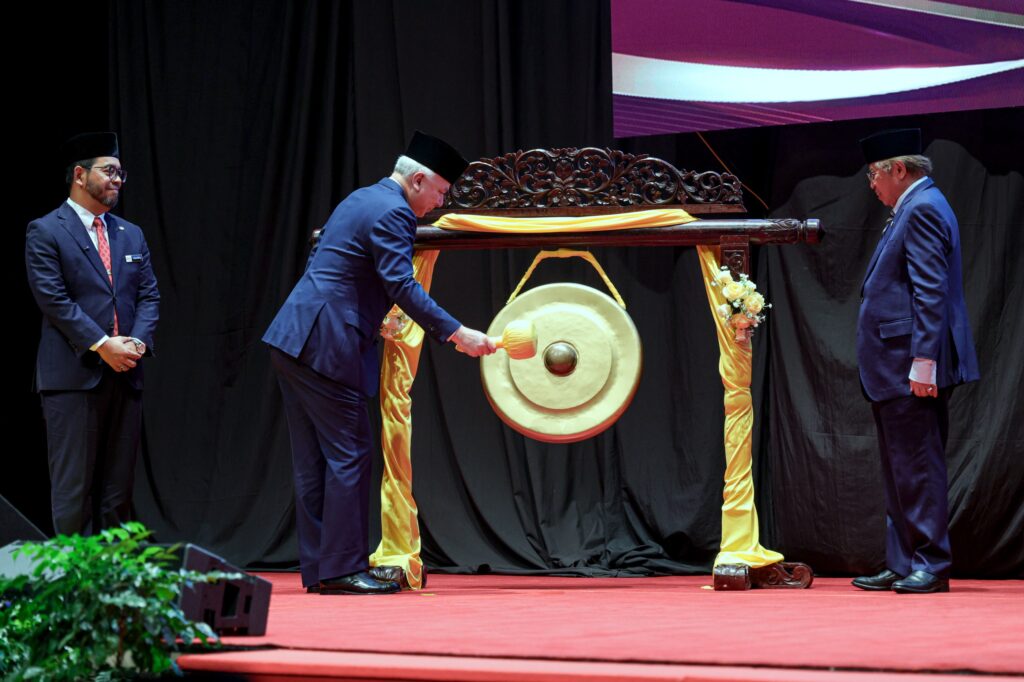
Perak Sultan Proposes Four Steps to Strengthen Waqf Institutions
Translated from Malay, summarized and contextualized by DistantNews.
At a glance
News
Named sources
Context piece
- The Sultan of Perak, Sultan Nazrin Muizzuddin Shah, proposed four strategic steps to enhance Malaysia's waqf institutions.
- These steps include forming an international working group for common principles, accelerating digital cash waqf platforms, launching a pilot project for environmental resilience, and ensuring waqf charters incorporate fairness and compassion.
- He urged waqf administrators to be innovative and forward-thinking to modernize governance and restore waqf's central role in supporting the community.
Sultan Nazrin Muizzuddin Shah of Perak has outlined a four-point strategy aimed at revitalizing Malaysia's waqf institutions, ensuring they remain competitive, progressive, and capable of meeting contemporary community needs. The proposals were presented at the International Dakwah Waqf Convention organized by PERKIM in Kuala Lumpur.
These common principles can be voluntarily adopted by any waqf institution and jurisdiction without prejudice to the constitutional powers of any state or country.
Firstly, the Sultan suggested establishing an international consultative working group. This group would aim to integrate principles from Indonesian cash waqf, AAOIFI standards, and Kazakhstan's framework into a unified set of core principles. These shared principles would be voluntary, respecting the constitutional authority of various jurisdictions.
Secondly, he emphasized accelerating the adoption of digital cash waqf platforms. This includes implementing real-time public dashboards to allow donors to track their contributions transparently. The third proposal involves launching a pilot project, 'Waqf for Peace and Planetary Resilience,' within ASEAN communities. This initiative would focus on financing solar energy and climate-resilient water infrastructure.
Secondly, accelerating the absorption of digital cash waqf platforms through real-time public dashboards that are transparent, enabling donors to track their contributions directly.
Finally, Sultan Nazrin stressed the importance of embedding principles of balance, justice, and compassion into waqf institution charters, drawing from the Al-Mizan framework. He called upon waqf administrators to embrace innovation, explore new methods, and translate ideas into action, ensuring long-term planning for their institutions.
Thirdly, launching the Waqf for Peace and Planetary Resilience pilot project in ASEAN mosque clusters and community centers to finance solar energy and climate-resilient water infrastructure.
The Sultan expressed his hope that the convention would inspire practical action, leading to modernized waqf governance, professional efficiency, integrity, and the utilization of new financial instruments. He aims to see waqf restored to its essential role in empowering and dignifying communities.
Fourthly, ensuring that waqf institution charters register the principles of balance, justice, and compassion from the Al-Mizan framework as binding governance criteria.
DistantNews Editorial
Originally published by Utusan Malaysia in Malay. Translated, summarized, and contextualized by our editorial team with added local perspective. Read our editorial standards.
More Stories



From Our Blog

What Gets Lost (and Found) When News Is Translated

The Critical Role of Diaspora Media in Global News

What Travellers Should Know About Countries with Restricted Press

A Digital Nomad's Guide to Following Local News

How the Same Story Looks Different in Different Countries
