


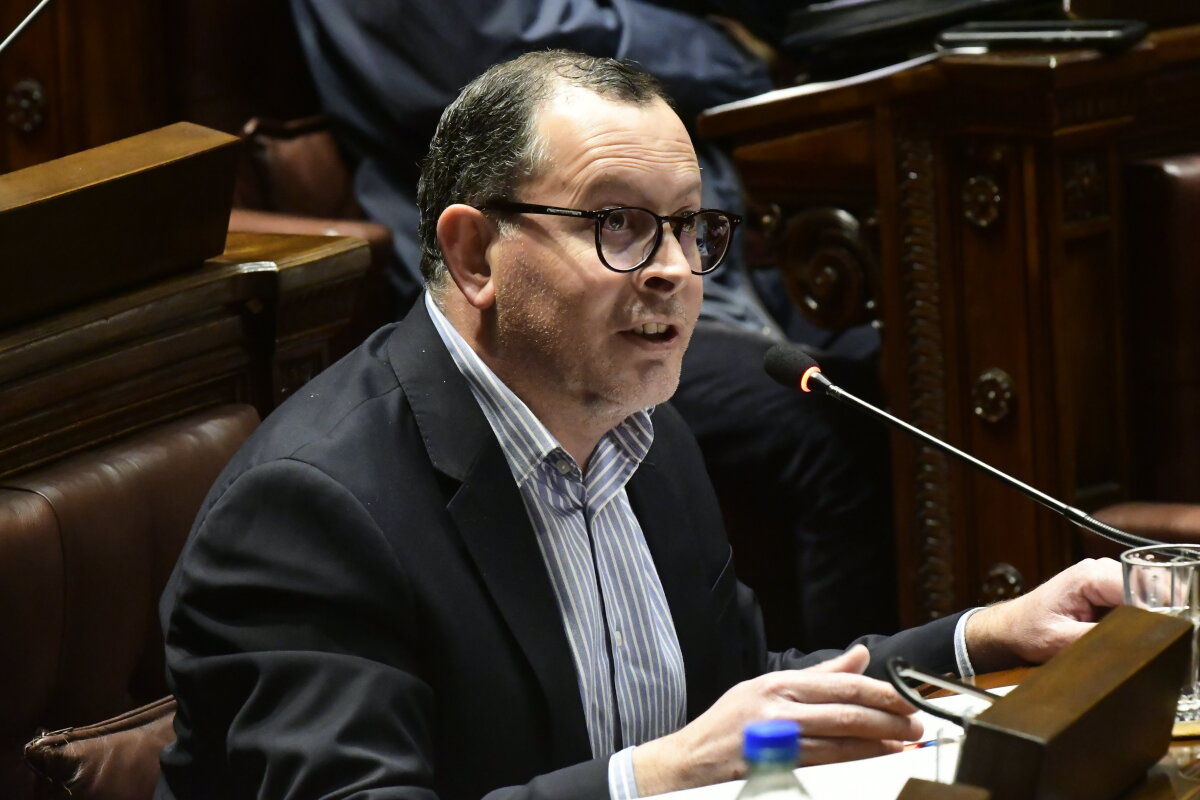
Perrone denounces parties for violating Constitution by not negotiating prosecutor appointment
Translated from Spanish, summarized and contextualized by DistantNews.
At a glance
News
Named sources
Context piece
- A legislator from Cabildo Abierto, Álvaro Perrone, has proposed a bill to change how the deputy prosecutor general is appointed, arguing the current system violates the Constitution.
- Perrone criticizes that the interim prosecutor general can serve indefinitely, unlike the appointed prosecutor general who has a fixed term.
- He urges political parties to negotiate and appoint a new prosecutor general, stating their failure to do so constitutes a constitutional violation.
Álvaro Perrone, a deputy from Cabildo Abierto, is championing a legislative proposal to reform the appointment mechanism for Uruguay's deputy prosecutor general. Perrone argues that the current system, under which Mónica Ferrero has served since early 2024, is unconstitutional because it lacks a defined term for the interim appointee.
The initiative, says the project, intends to resolve an incoherence in the current regime, by which the holder of the position has a legally established term to remain in it, while the substitute lacks the same, as they can remain improperly, without a mechanism being foreseen that promotes the regularization of the position.
His proposed bill aims to address what he calls an "incoherence in the current regime." Perrone explained that while the prosecutor general has a legally established term, the deputy prosecutor general can remain in the position indefinitely without a mechanism to regularize the role. "The interim prosecutor general has no deadline, something that is voted on with special majorities has a deadline (10 years), but the interim prosecutor general has no deadline," he stated.
The interim prosecutor general has no deadline, something that is voted on with special majorities has a deadline (10 years), but the interim prosecutor general has no deadline.
Perrone contends that political parties with parliamentary majorities are "violating the Constitution" by failing to negotiate and appoint a new prosecutor general. He believes the Constitution mandates they achieve a three-fifths majority for such an appointment. "My intention with this project is that [the parties] sit down to negotiate, because that is what they have to do, because the Constitution orders them to," he reiterated.
the parties with majorities in Parliament "are violating the Constitution", since it "obliges" them to appoint a new prosecutor general "with a three-fifths majority".
The legislator also criticized "very serious expressions" made by some senators, who he claims suggest that removing Ferrero would be akin to supporting drug trafficking. Perrone questioned this framing, asking what other prosecutors might think and how long Ferrero would remain in the role given her past experiences. He described the legislators' stance as "enormous irresponsibility" for not engaging in negotiations, noting that not even a meeting has been scheduled.
My intention with this project is that [the parties] sit down to negotiate, because that is what they have to do, because the Constitution orders them to.
DistantNews Editorial
Originally published by El País in Spanish. Translated, summarized, and contextualized by our editorial team with added local perspective. Read our editorial standards.
More Stories

From Our Blog

What Gets Lost (and Found) When News Is Translated

The Critical Role of Diaspora Media in Global News

What Travellers Should Know About Countries with Restricted Press

A Digital Nomad's Guide to Following Local News

How the Same Story Looks Different in Different Countries
