


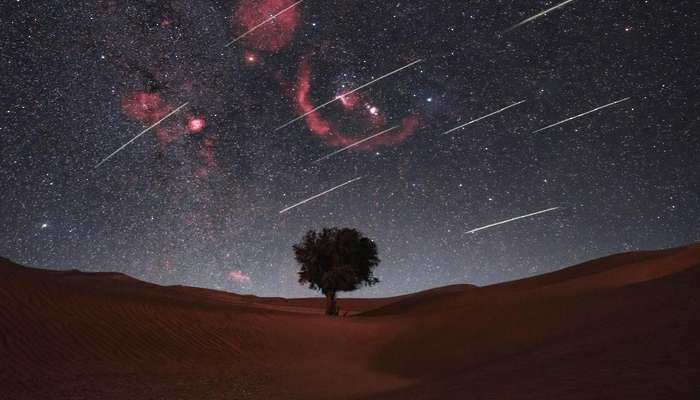
Perseid meteor shower to light up Oman’s skies
Summarized and contextualized by DistantNews.
At a glance
News
Named sources
Context piece
- Oman's skies are currently hosting the annual Perseid meteor shower, a notable astronomical event visible to the naked eye.
- The shower, originating from Comet Swift-Tuttle, peaks between August 12-13, potentially offering 80 to 100 meteors per hour under ideal conditions.
- Favorable viewing conditions this year include a new moon, enhancing visibility, with the shower continuing until August 24.
Oman's night sky is currently alive with the annual Perseid meteor shower, offering a dazzling celestial display for observers. This spectacular event, one of the year's most anticipated astronomical phenomena, is visible to the naked eye from dark locations away from city lights.
meteor showers occur as Earth passes through streams of debris left behind by comets.
The Perseids, originating from the debris trail of Comet Swift-Tuttle, reach their peak intensity on the night of August 12-13. During this period, stargazers in ideal conditions could witness between 80 and 100 meteors streaking across the sky each hour. The phenomenon occurs as Earth passes through the comet's debris, causing small particles to burn up upon entering the atmosphere at high speeds.
the Perseids are particularly known for producing fireballs, exceptionally bright meteors that can outshine ordinary meteors.
This year's peak viewing promises exceptional clarity due to its coincidence with a new moon. The absence of moonlight significantly reduces light pollution, allowing even fainter meteors to be observed more distinctly. While the peak offers the most intense display, the Perseids will remain visible, albeit with gradually declining activity, until August 24.
This year's peak offers particularly favourable conditions because it coincides with a new moon, meaning there will be virtually no moonlight to interfere with observations.
Ashwaq bint Nasser Al-Siyabi, Vice President of the Members' Affairs Committee of the Omani Society for Astronomy and Space, highlighted that the Perseids are particularly known for their bright fireballs. She also advised observers to seek open, elevated locations away from artificial lights and allow their eyes at least 20 minutes to adjust to the darkness for the best experience. No special equipment is needed, only clear skies and patience.
No special equipment is required to enjoy the Perseids. A dark location, clear skies and patience are sufficient to experience one of the year's most impressive natural astronomical displays.
DistantNews Editorial
Originally published by Times of Oman. Summarized and contextualized by our editorial team with added local perspective. Read our editorial standards.
More Stories



From Our Blog

What Gets Lost (and Found) When News Is Translated

The Critical Role of Diaspora Media in Global News

What Travellers Should Know About Countries with Restricted Press

A Digital Nomad's Guide to Following Local News

How the Same Story Looks Different in Different Countries
