


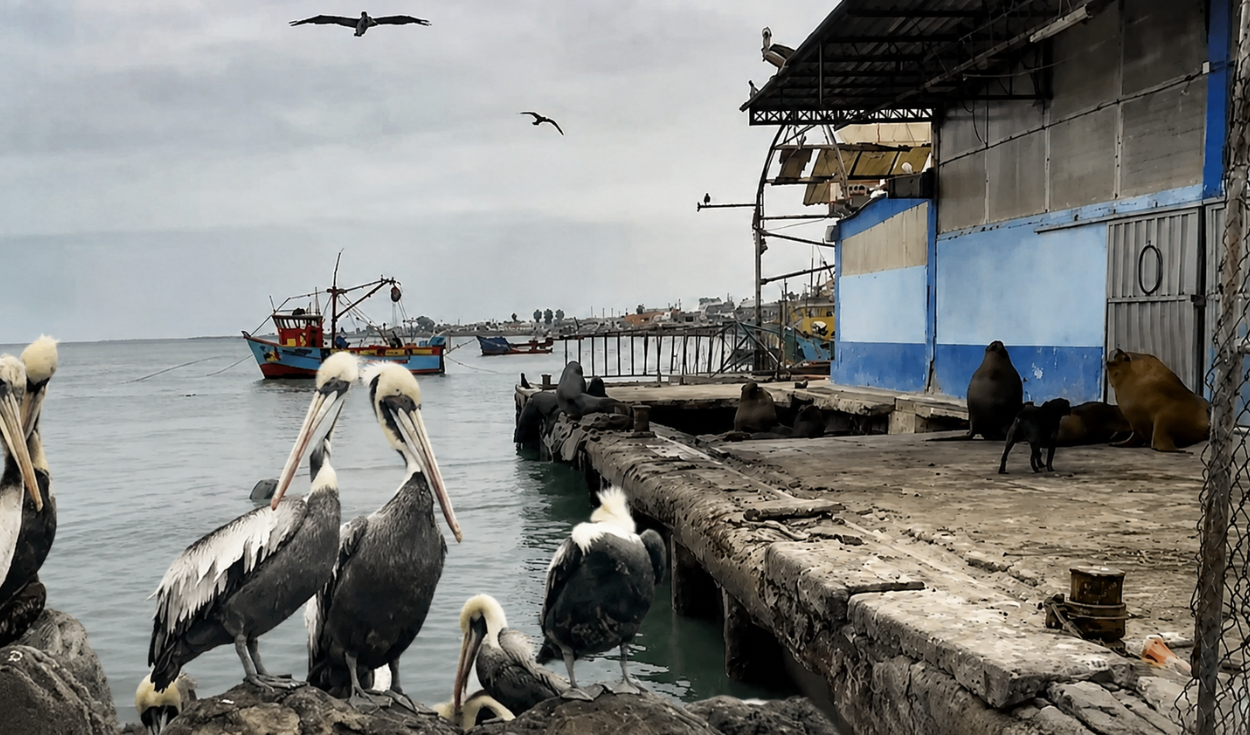
Peru's 'Niño Costero' causes marine life deaths as warming seas deplete anchovy stocks
Translated from Spanish, summarized and contextualized by DistantNews.
At a glance
News
Sources not specified
Ongoing story
- Pelicans, seagulls, and penguins are dying in Pisco, Peru, due to the "Niño Costero" phenomenon, which causes marine heatwaves and depletes food sources like anchovies.
- The warming waters have also driven sea lions ashore in search of food, paralyzing local fishing activities.
- Experts explain that the rising sea temperatures force anchovies into deeper waters or further south, weakening and killing the marine species that depend on them.
The "Niño Costero" phenomenon is causing a severe ecological crisis along Peru's coast, with alarming numbers of pelicans, seagulls, and penguins found dead in Pisco. This die-off is directly linked to the warming of ocean waters, which disrupts the marine food web by driving away anchovies, the primary food source for many seabirds and marine mammals.
The abnormal sea temperatures have not only decimated bird populations but also impacted marine mammals. Sea lions have been observed coming ashore near fishing ports like Desembarcadero José Olaya Balandra, desperately seeking sustenance from fishermen due to the scarcity of their natural prey. Local fishing activities in Pisco have consequently ground to a halt as the fish populations move away.
Silvia Aguilar Luna, a marine resources specialist from the National University of San Marcos, explained that the warming waters characteristic of "Niño Costero" cause anchovies to migrate or dive deeper. This scarcity leads to species like the Peruvian pelican and guanay flying long distances, becoming weakened, malnourished, and ultimately dying. The phenomenon also forces sea lions to alter their feeding routes, leading to increased reports of stranded animals resting on beaches to conserve energy.
In response, Peru's National Forest and Wildlife Service (Serfor) and the Ministry of Agrarian Development and Irrigation (Midagri) have increased coastal surveillance. They urge the public to maintain a safe distance from stranded animals, avoid touching or feeding them, and not force them back into the sea, as they may be resting due to exhaustion. Pet owners are also advised to keep their animals away from any affected wildlife.
DistantNews Editorial
Originally published by La República in Spanish. Translated, summarized, and contextualized by our editorial team with added local perspective. Read our editorial standards.
More Stories



From Our Blog

What Gets Lost (and Found) When News Is Translated

The Critical Role of Diaspora Media in Global News

What Travellers Should Know About Countries with Restricted Press

A Digital Nomad's Guide to Following Local News

How the Same Story Looks Different in Different Countries
