

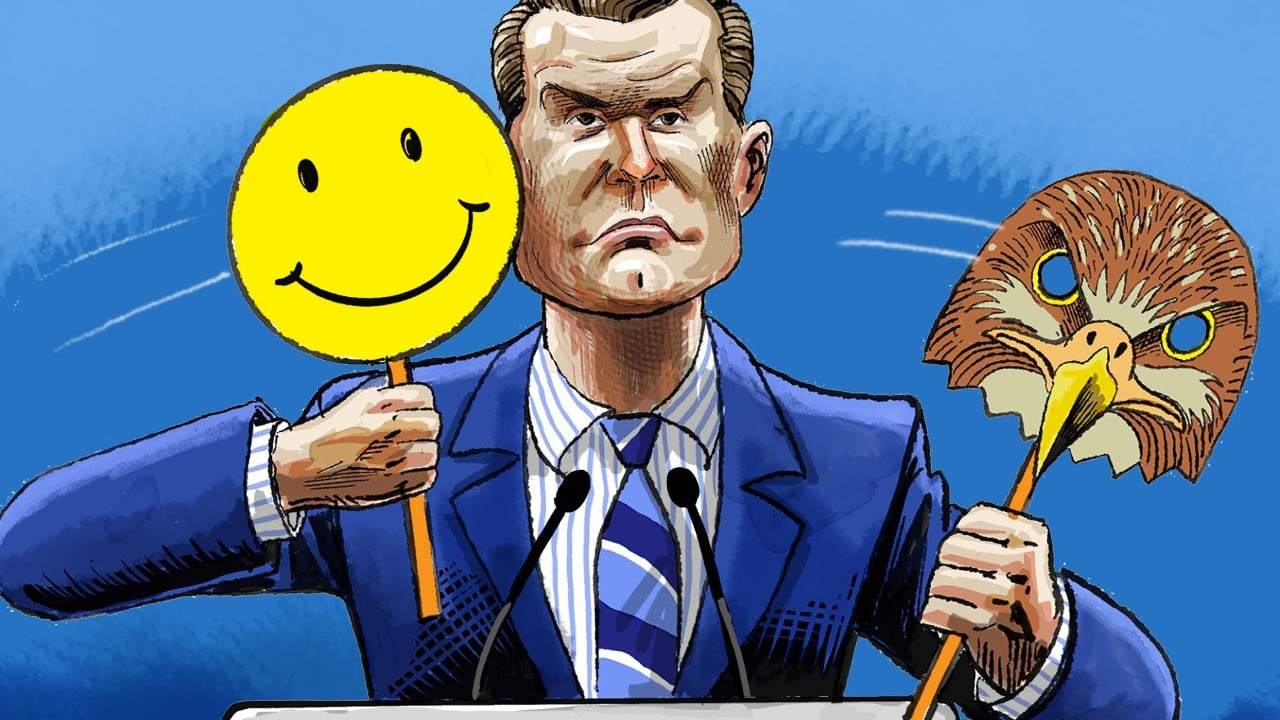
Pete Hegseth's shift on China reflects US policy change
Translated from English, summarized and contextualized by DistantNews.
At a glance
News
Sources not specified
New plan
- US Defense Secretary Pete Hegseth's recent speech at the Shangri-La Dialogue marked a significant shift in tone regarding China.
- Last year, Hegseth delivered strong criticisms of China, but this year he stated US-China relations are better under President Trump.
- This change is attributed to Trump's recent visit to Beijing and his approach to arms sales to Taiwan.
US Defense Secretary Pete Hegseth's recent address at the Shangri-La Dialogue in Singapore presented a stark contrast to his remarks from the previous year, signaling a notable shift in the Trump administration's stance on China.
Last year, Hegseth's speech was characterized by direct attacks on China. This year, however, he declared that under President Trump's leadership, relations between the United States and China have improved significantly. This apparent 180-degree turn is widely seen as a reflection of Donald Trump's recent visit to Beijing, which he described as a "tremendous success."
Under President Trump’s leadership, relations between the United States and China are better than they’ve been in many years.
Hegseth's speech notably omitted any mention of Taiwan, a departure from previous US policy discussions. This aligns with Trump's earlier comments indicating uncertainty about US arms sales to Taiwan, stating he was not "looking for" a war. The article suggests that as the power balance between China and the US shifts, Beijing possesses various retaliatory tools, including canceling purchases, imposing sanctions, and conducting military exercises, which could make future arms sales to Taiwan increasingly difficult for Washington to sustain.
we’re supposed to travel 9,500 miles (about 15,300km) to fight a war. I’m not looking for that.
DistantNews Editorial
Originally published by South China Morning Post in English. Translated, summarized, and contextualized by our editorial team with added local perspective. Read our editorial standards.
More Stories

From Our Blog

Countries Without a Free Press: What You Need to Know

What Press Freedom Means for the News You Read

What Gets Lost (and Found) When News Is Translated

The Critical Role of Diaspora Media in Global News

What Travellers Should Know About Countries with Restricted Press
