


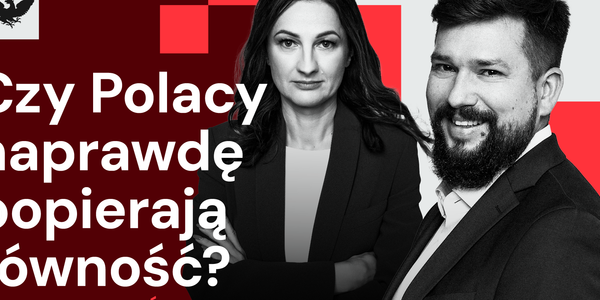
Podcast: Fear of Benefits and PiS Infighting Dominate Polish Political Discourse
Translated from Polish, summarized and contextualized by DistantNews.
TLDR
- A Polish political podcast discusses internal coalition disagreements over same-sex marriage recognition and public opinion shifts regarding social benefits.
- Analysts suggest public apprehension about resource scarcity, similar to reactions concerning Ukrainian refugees, influences attitudes towards expanding public services and rights.
- The conversation also delves into the internal conflicts within the Law and Justice party (PiS), examining leadership strategies and the potential for political maneuvering.
In Poland, the Rzeczpospolita podcast 'The Thing Is' tackles the complex interplay between public opinion, resource scarcity, and political strategy. The discussion highlights a growing disconnect between declared support for equality and practical concerns about access to public services and benefits. This sentiment, mirrored in attitudes towards Ukrainian refugees, suggests a societal anxiety about limited resources that politicians are keenly aware of.
I thought the surprise would be the other way around.
Michał Płociński, deputy editor-in-chief of Rzeczpospolita, points out that this fear of resource depletion, even if imagined, significantly shapes social attitudes and political decisions. The podcast argues that the perceived inadequacy of public services, from healthcare to childcare, fuels reluctance to extend rights to new groups, creating a 'too short a blanket' scenario.
It's a bit like the issue with Ukrainians.
The conversation then pivots to the internal dynamics of the Law and Justice (PiS) party, questioning whether the visible conflicts are genuine or strategic. Płociński analyzes Mateusz Morawiecki's attempts to maintain his standing with PiS voters without a formal break, suggesting a calculated political performance. The podcast also touches upon the unpredictable nature of internal party games and Jarosław Kaczyński's role as an arbiter.
I absolutely did not appreciate this fear of public resources.
Ultimately, the Rzeczpospolita podcast critiques a political landscape dominated by simplistic anti-opponent slogans, like 'Poland without Tusk,' arguing for a need for a more substantive political vision. This analysis offers a distinctly Polish perspective, emphasizing the local context of resource anxieties and the specific power plays within the national political arena, which often differ from how such dynamics are portrayed in Western media.
In a situation where there is no real conflict, it becomes an imagined conflict.
DistantNews Editorial
Originally published by Rzeczpospolita in Polish. Translated, summarized, and contextualized by our editorial team with added local perspective. Read our editorial standards.
More Stories


From Our Blog

What Gets Lost (and Found) When News Is Translated

The Critical Role of Diaspora Media in Global News

What Travellers Should Know About Countries with Restricted Press

A Digital Nomad's Guide to Following Local News

How the Same Story Looks Different in Different Countries
