

Poland Criticizes Ukraine's Naming of Military Unit After UPA, Citing Historical Grievances
Translated from Polish, summarized and contextualized by DistantNews.
At a glance
News
Named sources
Context piece
- Poland criticizes Ukrainian President Volodymyr Zelenskyy's decision to name an elite military unit after the UPA, viewing it as glorifying a totalitarian organization.
- Zelenskyy's move is seen as an internal political strategy to boost nationalist support and distract from domestic issues like corruption.
- The article argues that Ukraine's uncritical glorification of the UPA, particularly its actions against Polish civilians, overlooks historical complexities and raises questions about Ukraine's desired values.
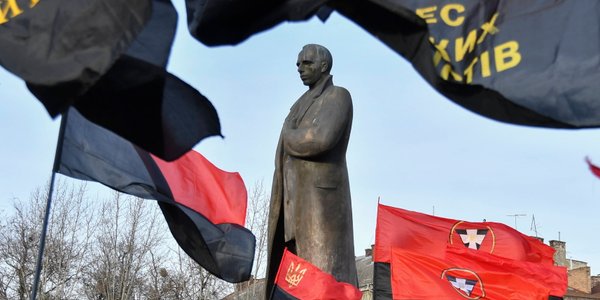
A decision by Ukrainian President Volodymyr Zelenskyy to name an elite military unit after the Ukrainian Insurgent Army (UPA) has ignited strong criticism from Poland, which views the move as a glorification of a totalitarian organization responsible for atrocities against Polish civilians.
He used historical policy as a tool to mobilize Ukrainian society around himself and to divert public attention from internal problems. It turned out to be extremely effective.
Wojciech Konończuk, director of the Centre for Eastern Studies, suggests Zelenskyy's decision was primarily driven by internal Ukrainian politics. He believes Zelenskyy aimed to mobilize support within nationalist circles, who have been critical of his leadership, and to divert public attention from domestic problems, including corruption allegations. The article points to leaked tapes involving Timur Mindzich, a friend of Zelenskyy's, as indirectly implicating the president, although his immunity currently protects him.
There is practically no reflection on the other side that Poles might be right and that glorifying a totalitarian organization is not a good idea.
Konończuk observes a lack of reflection in Ukraine regarding Poland's perspective on the UPA. He notes that the term "Banderism" was coined by the Soviets to discredit Ukrainian resistance. While Ukrainians often focus on the UPA's post-1944 fight against the Soviets as a symbol of resistance, knowledge of their massacres of Polish civilians is reportedly limited. The narrative of UPA's cult of personality, prevalent in Ukrainian Galicia, has increasingly spread nationwide and into textbooks, framing the UPA as a symbol of resistance against Russia.
It is worth remembering that this term was invented by the Soviets to discredit the Ukrainian underground. I would rather talk about the uncritical glorification of the UPA.
However, Konończuk questions the values Ukraine wishes to espouse, highlighting the UPA's totalitarian program, its planned ethnic cleansing of Poles, and its collaboration with the Nazis. He specifically mentions Roman Shukhevych's role in atrocities against Jews and civilians in Belarus and his subsequent organization of the ethnic cleansing in Volhynia and Eastern Galicia. The article concludes by stating that while Ukraine's victory in its current war is likely, other issues, including disputes with Poland, are of secondary importance to Kyiv in the face of this existential conflict.
The UPA's program was a totalitarian state. The formation and its leaders planned the ethnic cleansing of the Polish population and collaborated with the Germans.
DistantNews Editorial
Originally published by Rzeczpospolita in Polish. Translated, summarized, and contextualized by our editorial team with added local perspective. Read our editorial standards.
More Stories
From Our Blog

What Gets Lost (and Found) When News Is Translated

The Critical Role of Diaspora Media in Global News

What Travellers Should Know About Countries with Restricted Press

A Digital Nomad's Guide to Following Local News

How the Same Story Looks Different in Different Countries
