


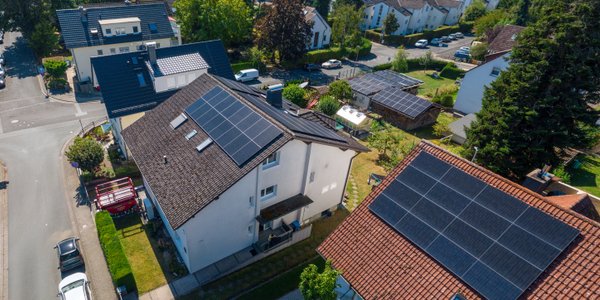
Poland curtails more renewable energy as annual record is broken in seven months
Translated from Polish and summarized by DistantNews. Read the original for the full story.
At a glance
News
Named sources
Ongoing story
- Poland’s grid operator curtailed renewable installations capable of producing 1.42 terawatt-hours in the first seven months of the year, above the previous full-year total of more than 1.37 TWh.
- The measures mainly affected solar plants and followed periods when electricity supply exceeded demand.
- The curtailments help maintain grid balance but reduce renewable producers’ revenues, while compensation payments remain limited by low market prices.
Poland has already curtailed more renewable energy this year than it did throughout the whole of the previous year. By the end of July, Polskie Sieci Elektroenergetyczne, the operator responsible for electricity supply security, had ordered reductions affecting installations that could have produced 1.42 terawatt-hours.
The figure exceeded the more than 1.37 TWh curtailed during the previous year. Solar farms accounted for most of the reductions, with wind installations affected to a lesser extent. Poland’s total electricity production in 2025 stood at about 157 TWh, providing a sense of the scale of the curtailed output.
PSE says the decisions are needed to keep the power system balanced at every moment. If production rises above consumption, the imbalance could lead to uncontrolled shutdowns and, eventually, outages affecting the local, national or regional system. When other balancing options are unavailable, the operator orders renewable installations to reduce production.
This double pressure, forced curtailment and unfavorable prices, creates a toxic combination. The cumulative effect of curtailment and negative prices can reduce the potential revenue of a PV farm by 50% to 60% in months with the highest generation, such as April and May. This is not a marginal adjustment, but a blow to the foundations of the business model.
Curtailment most often occurs during peak solar-generation hours, roughly between 10 a.m. and 2 p.m. Those periods can coincide with the lowest electricity prices, including negative prices. Michał Sztabler, a stock-market analyst at Noble Securities, said the combination could cut a photovoltaic farm’s potential revenue by 50% to 60% in high-generation months such as April and May.
Compensation is available to renewable producers whose output is curtailed, but the payments are calculated using market prices at the time of the operator’s decision. When renewable generation is high, those prices are often low. The result is growing compensation that still does not cover the losses, while onshore wind farms are described as more resilient because they produce across the day.
Without this balancing, the operation of the national and European electricity systems would be disrupted, creating a risk to their security and the possibility of a system failure at local, national or regional level.
About this summary
Originally published by Rzeczpospolita in Polish. Translated, summarized, and contextualized automatically by DistantNews, with a note on how the source frames the story. Not individually reviewed before publishing. How this works.
More Stories


From Our Blog

What Gets Lost (and Found) When News Is Translated

The Critical Role of Diaspora Media in Global News

What Travellers Should Know About Countries with Restricted Press

A Digital Nomad's Guide to Following Local News

How the Same Story Looks Different in Different Countries
