

Poland's appliance sector risks losing EU climate protection
Translated from Polish and summarized by DistantNews. Read the original for the full story.
At a glance
News
Named sources
Ongoing story
- Poland's large home appliance sector faces competitive pressure from imports due to differing CO₂ emission costs under EU regulations.
- Manufacturers are urging the EU to expand the Carbon Border Adjustment Mechanism (CBAM) to cover more products, as current proposals only include 47% of Polish large appliance production.
- Poland, the EU's largest producer of home appliances, risks losing its competitive edge if key categories like dishwashers and ovens are not included in the CBAM's protection.
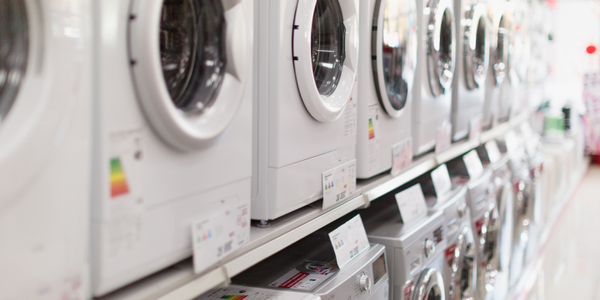
Poland's dominant position as the European Union's largest producer of home appliances is under threat as the bloc finalizes its Carbon Border Adjustment Mechanism (CBAM). The proposed regulation aims to level the playing field by imposing CO₂ costs on imported goods that match those faced by EU producers under the Emissions Trading System (ETS). However, the current proposal, focusing on washing machines, refrigerators, and dryers, would only cover 47% of Poland's large appliance output.
Polish manufacturers are urgently appealing for the CBAM to be expanded to include other critical categories, such as dishwashers, ovens, cookers, hoods, and hobs. Poland accounts for 60% of the EU's dishwasher production alone, highlighting the significant economic stakes. Without broader coverage, local producers will continue to bear climate-related costs that competitors outside the EU do not face, exacerbating pressure from rapidly growing imports, particularly from Asia.
Wojciech Konecki, president of APPLiA Polska, the home appliance manufacturers' association, warned of the increasing cost and competitive pressures. "The industry is under increasing cost and competitive pressure, resulting from, among other things, rising energy, steel, and aluminum costs covered by the ETS system, and the avalanche-like growth of imports of finished appliances from outside the EU, whose producers do not bear analogous CO₂ emission costs," he stated. Konecki noted a 22% drop in large appliance production in the EU over the last five years, with five Polish factories closing in 2025 alone.
Industry officials are concerned that if additional codes for components, such as steel, aluminum, and cement, are included in the CBAM, it could further increase production costs for EU manufacturers. This would mean Polish producers would not only remain unprotected against foreign competition for finished goods but also face new burdens from imported components. The Ministry of Climate and Environment stated that Poland is actively participating in negotiations and has submitted all requested codes, emphasizing the need for compromise to protect European industry's competitiveness.
The industry is under increasing cost and competitive pressure, resulting from, among other things, rising energy, steel, and aluminum costs covered by the ETS system, and the avalanche-like growth of imports of finished appliances from outside the EU, whose producers do not bear analogous CO₂ emission costs.
About this summary
Originally published by Rzeczpospolita in Polish. Translated, summarized, and contextualized automatically by DistantNews, with a note on how the source frames the story. Not individually reviewed before publishing. How this works.
More Stories


From Our Blog

What Gets Lost (and Found) When News Is Translated

The Critical Role of Diaspora Media in Global News

What Travellers Should Know About Countries with Restricted Press

A Digital Nomad's Guide to Following Local News

How the Same Story Looks Different in Different Countries
