


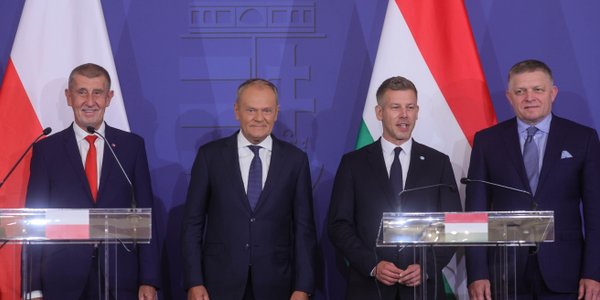
Poland: The linchpin of Eastern and Western Europe
Translated from Polish, summarized and contextualized by DistantNews.
At a glance
Analysis
Sources not specified
Context piece
- Poland is positioning itself as a crucial bridge between Eastern and Western Europe amidst a challenging geopolitical landscape.
- The article criticizes past Polish governments for weakening the EU and highlights the current government's constructive role in European cooperation.
- It emphasizes the need for a unified EU to counter global power dynamics and advocates for revitalizing international cooperation platforms like the Visegrad Group.
In a world marked by unpredictable geopolitics, Poland is strategically positioning itself as a vital link between Eastern and Western Europe. The author argues that while Russia's imperial ambitions and the potential disruption from figures like Trump and Xi Jinping are predictable, the European Union must learn to wield political power to secure its place on the global stage. The EU's unity and solidarity are seen as inconvenient for superpowers aiming to divide the world into spheres of influence, leading them to support politicians who weaken the bloc from within.
The article contrasts the current Polish government's constructive approach with the "undeclared systemic polexit" of the previous PiS administration, which it claims led to isolation, loss of influence, and EU funds. The current government, by participating in the Weimar Triangle and the Visegrad Group, is presented as a pivotal force for strategic sovereignty within the EU. This renewed engagement is crucial for restoring the significance of these international cooperation platforms.
The Visegrad Group, initially formed in 1991 by Poland, Czechoslovakia, and Hungary, aimed to foster regional security and economic cooperation following the collapse of the Soviet Union and the conflict in Yugoslavia. While its focus shifted towards relations with the EU in the late 1990s, national elections have significantly impacted its trajectory. The article suggests that Poland, under its current leadership, is poised to play a historic role, provided it strengthens its commitment to both the Visegrad Group and the Weimar Triangle, serving as a true bridge between East and West.
DistantNews Editorial
Originally published by Rzeczpospolita in Polish. Translated, summarized, and contextualized by our editorial team with added local perspective. Read our editorial standards.
More Stories


From Our Blog

What Gets Lost (and Found) When News Is Translated

The Critical Role of Diaspora Media in Global News

What Travellers Should Know About Countries with Restricted Press

A Digital Nomad's Guide to Following Local News

How the Same Story Looks Different in Different Countries
