

Poland-Ukraine relations strained by diplomat's remarks on historical grievances
Translated from Polish, summarized and contextualized by DistantNews.
At a glance
Analysis
Sources not specified
Context piece
- Poland's chargé d'affaires in Ukraine acknowledged Ukrainian victims of Polish state actions during a commemoration of the Volhynia massacre.
- Former ambassador Marek Magierowski criticized the remarks as inappropriate and lacking diplomatic tact.
- The incident highlights a tension between historical remembrance and demands for retribution, potentially fueled by national identity politics.
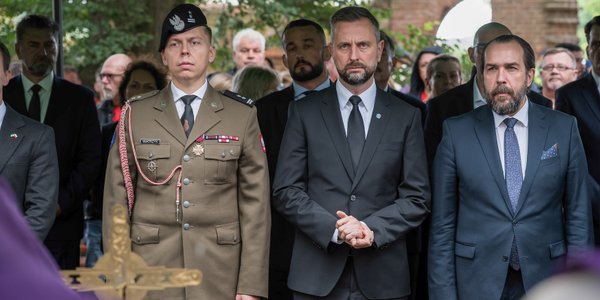
During a ceremony commemorating the anniversary of "Bloody Sunday," the culmination of the Volhynia massacre, Poland's chargé d'affaires in Ukraine, Piotr Łukasiewicz, paid tribute to Polish victims while also acknowledging Ukrainian suffering. "I cannot fail to mention the Ukrainian victims of the Polish state before and during the war. I am not creating symmetry, but we remember what was shameful and unworthy," he stated.
I cannot fail to mention the Ukrainian victims of the Polish state before and during the war. I am not creating symmetry, but we remember what was shameful and unworthy.
His remarks drew immediate criticism from former ambassador Marek Magierowski, who argued on social media that such comparisons were inappropriate for Poland's highest representative during official ceremonies. Magierowski characterized the comments as "incompetence and lack of diplomatic feeling" at best. Łukasiewicz's statement echoed sentiments expressed by Pope John Paul II in Lwów in 2001, who called for releasing oneself from painful pasts and using forgiveness as a balm for the heart, advocating for a future built on mutual respect.
Incompetence and lack of diplomatic feeling.
The incident has ignited a debate, with some seeing Łukasiewicz's words as a step towards reconciliation and others, like Magierowski and many internet users, viewing them as an affront. The controversy reveals a shift from mourning and symbolic atonement towards assertive demands for reckoning and retribution. By referencing the Pope's message, Łukasiewicz touched upon a sensitive historical taboo, sparking anger and accusations of historical revisionism.
Forgiveness – granted and obtained – should become a balm for every heart.
The author posits that the spiral of historical and identity politics transforms nations into "criminal avatars." Collective memory, when activated by past tragedies, can mobilize public opinion and legitimize a government's pursuit of historical reckonings. This process, termed "soul-swapping" by the author, involves leaders embodying historical heroes or victims, and casting entire nations as avatars of past wrongdoers while their own nation becomes an avatar of historical nobility. This dynamic, the author argues, stifles debate and leaves only hateful monologues in the political and media spheres, echoing Professor Omer Bartov's observation that "collective memory rights always concern what should be remembered and what should be forgotten."
Collective memory rights always concern what should be remembered and what should be forgotten.
DistantNews Editorial
Originally published by Rzeczpospolita in Polish. Translated, summarized, and contextualized by our editorial team with added local perspective. Read our editorial standards.
More Stories

From Our Blog

What Gets Lost (and Found) When News Is Translated

The Critical Role of Diaspora Media in Global News

What Travellers Should Know About Countries with Restricted Press

A Digital Nomad's Guide to Following Local News

How the Same Story Looks Different in Different Countries
