

Polish Lawmakers Clash Over Historical Comments and National Identity
Translated from Polish, summarized and contextualized by DistantNews.
At a glance
News
Named sources
Context piece
- Polish lawmakers engaged in a heated exchange in parliament, stemming from criticism of a deputy prime minister and accusations of hypocrisy.
- The debate escalated with accusations of betrayal and insults directed at government members, particularly concerning historical events and national interests.
- A key point of contention involved comments by a deputy minister comparing Ukrainian Insurgent Army members to Polish "cursed soldiers," sparking outrage.
A fiery parliamentary session in Poland saw a sharp exchange between lawmakers, ignited by criticism directed at Deputy Prime Minister Władysław Kosiniak-Kamysz and subsequent accusations of hypocrisy.
You are parasites, traitors to the Polish nation and the interests of the Polish nation.
The dispute began when MP Dariusz Matecki sharply criticized Kosiniak-Kamysz and fellow PSL party member Jarosław Rzepa. Matecki accused Kosiniak-Kamysz of disrespecting Poles by downplaying the Volhynia massacre. Rzepa retaliated, calling Matecki a "political parasite" and accusing him of exploiting base instincts.
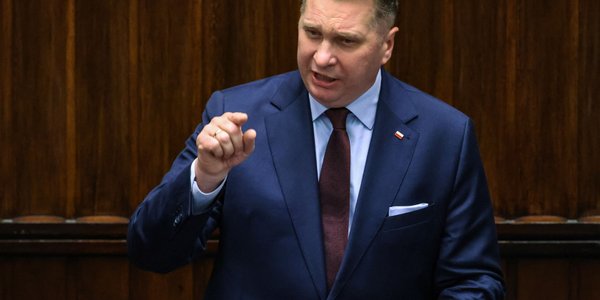
Former education minister Przemysław Czarnek then entered the fray, labeling Rzepa and his party as "traitors to the Polish nation." Czarnek's main attack focused on remarks made by Deputy Minister of Science Andrzej Szeptycki. Szeptycki had compared members of the Ukrainian Insurgent Army (UPA) to Poland's "cursed soldiers," acknowledging their fight for Ukrainian independence while also referencing the UPA's role in the Volhynia massacre.
This was a formation that – regardless of what you say about the Volhynia massacre – fought for the independence of Ukraine, fought within that Ukrainian imaginarium primarily against the Soviets and it was a hopeless fight. They were a bit like, with all the positive and negative connotations of the word, a bit like Ukrainian cursed soldiers.
Czarnek vehemently condemned Szeptycki's comments, calling the UPA perpetrators of genocide against Poles. He questioned why Szeptycki remained in the government, suggesting the current administration had frozen a previous law aimed at combating "Banderism" and "Volhynian lies" to accommodate such views. Czarnek demanded a recess to address why "Ukrainians insulting Poles" were still part of the government, referencing Szeptycki's Ukrainian heritage.
The government claims, Mr. Szeptycki is from this government, that Ukrainian genocidal nationalists from OUN-UPA are like cursed soldiers.
Following Czarnek, independent MP Janusz Kowalski broadened the inquiry, initiating parliamentary checks across ministries to investigate the "Ukrainization of public administration and government."
I demand a recess in the proceedings and the convening of a convention of seniors to clarify this matter, why there are still Ukrainians in this government who insult Poles.
DistantNews Editorial
Originally published by Rzeczpospolita in Polish. Translated, summarized, and contextualized by our editorial team with added local perspective. Read our editorial standards.
More Stories

From Our Blog

What Gets Lost (and Found) When News Is Translated

The Critical Role of Diaspora Media in Global News

What Travellers Should Know About Countries with Restricted Press

A Digital Nomad's Guide to Following Local News

How the Same Story Looks Different in Different Countries
