


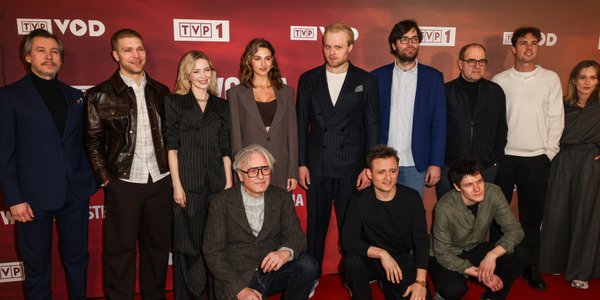
Polish Official Slams TV Series "Proxy War" as Pro-Russian, Anti-Polish
Translated from Polish, summarized and contextualized by DistantNews.
TLDR
- A Polish military official criticizes the new TV series "Wojna zastępcza" (Proxy War), calling it pro-Russian and anti-Polish.
- The official argues the series inaccurately and caricatures the training of Polish intelligence officers, distorting historical realities and portraying trainers offensively.
- He also dismisses the plot involving the theft of nuclear warheads by a Russian general as pure fiction, citing historical context of Soviet-era security measures.
The recent television series "Wojna zastępcza" (Proxy War) has sparked considerable controversy, with senior military officials like Lt. Col. Marcin Faliński of the Polish Army strongly condemning its portrayal of Polish intelligence services. In an interview with Rzeczpospolita, Faliński asserts the series is not only factually inaccurate but also carries a pro-Russian and anti-Polish agenda.
The image is distorted, and that's a mild term. The training is shown as a caricature. Nothing is true.
Faliński meticulously deconstructs the series' depiction of the training of young intelligence officers, labeling it a "caricature" and a gross misrepresentation of reality. He points to absurdities such as the recruitment of officers in dental offices and the involvement of former communist-era military figures in training, which he deems offensive to those who served honorably. The series' depiction of intelligence training methods, including the use of listening devices and scent-analysis labs, is also dismissed as sensationalized and unrealistic.
It becomes unserious when the head of UOP goes to a dentist's office to recruit someone for the service.
Beyond the training inaccuracies, the series' central plot, involving a Russian general stealing nuclear warheads, is characterized as pure fantasy. Faliński emphasizes that during the transitional period of the early 1990s, the Soviet Union and later Russia were extremely cautious with nuclear assets, especially to prevent them from falling into the wrong hands, such as in Ukraine. The notion of such a theft being possible, let alone hidden in a Warsaw church, is presented as a baseless narrative.
The training cadre is shown as dull officers straight from the UB times of the 1950s. This is highly insulting to many of my colleagues who were and are involved in training at this center.
From a Polish perspective, the series' alleged inaccuracies and its perceived anti-Polish framing are deeply concerning. It risks misinforming the public about the history and professionalism of Polish intelligence services, potentially playing into narratives that undermine national security institutions. The criticism highlights a broader concern in Poland about foreign media potentially distorting historical events and national narratives, especially in the context of ongoing geopolitical tensions.
This is fiction. The Russians, or Soviets, because it was a transitional period, were very careful with the warheads because they didn't want them to fall into the hands of other states, for example, not to remain in Ukraine.
DistantNews Editorial
Originally published by Rzeczpospolita in Polish. Translated, summarized, and contextualized by our editorial team with added local perspective. Read our editorial standards.
More Stories

From Our Blog

What Gets Lost (and Found) When News Is Translated

The Critical Role of Diaspora Media in Global News

What Travellers Should Know About Countries with Restricted Press

A Digital Nomad's Guide to Following Local News

How the Same Story Looks Different in Different Countries
