

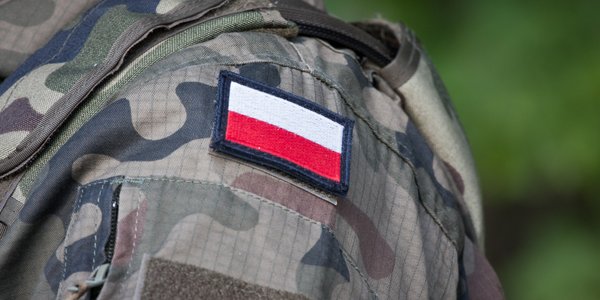
Polish soldiers will continue guarding railways after presidential and defence decision
Translated from Polish and summarized by DistantNews. Read the original for the full story.
At a glance
News
Official statement
New plan
- Poland extended Operation Horizon from September 1 through November 30, keeping military support for police protection of critical and railway infrastructure.
- Territorial Defence forces will patrol and monitor railway infrastructure using unmanned systems.
- The operation began after sabotage incidents damaged tracks near Mika and forced a passenger train near Gołąb to brake suddenly.
Polish soldiers will continue patrolling and monitoring railway infrastructure through November 30 under an extension of Operation Horizon.
The decision came from President Karol Nawrocki and Deputy Prime Minister and Defence Minister Władysław Kosiniak-Kamysz. The armed forces will support police efforts to strengthen protection of critical infrastructure, improve railway security, and prevent sabotage and acts of diversion between September 1 and November 30, according to the Operational Command of the Armed Forces.
Territorial Defence troops will use unmanned systems to maintain monitoring of railway infrastructure. The command said the operation combines military personnel, technology, and surveillance capabilities to help detect and respond to potential threats. It is intended to improve security along railway lines and at transport hubs, as well as deter possible terrorists.
Operation Horizon extended. Under the decision of the President of the Republic and on the basis of the decision of the Minister of National Defence, from September 1, 2026, to November 30, 2026, the Polish Armed Forces will continue supporting the Polish police.
Operation Horizon, alongside the police Operation Tor, followed sabotage incidents on Polish rail lines last November. In Mika, in the Masovian region, an explosive device destroyed part of a track. Near the Gołąb railway station in the Lublin region, a train carrying 475 passengers had to brake suddenly after damage to the line was discovered.
The Operational Command can draw on up to 10,000 soldiers from different branches, including Territorial Defence, Special Forces, Cyber Defence Forces, engineering units, and drone units. It will decide where to deploy personnel according to the situation. Military support also reflects the armed forces’ access to reconnaissance capabilities, including drones that other services currently do not possess.
Side by side, we unite forces, technology and skills in observing, detecting and neutralising potential threats.
About this summary
Originally published by Rzeczpospolita in Polish. Translated, summarized, and contextualized automatically by DistantNews, with a note on how the source frames the story. Not individually reviewed before publishing. How this works.
More Stories
From Our Blog

What Gets Lost (and Found) When News Is Translated

The Critical Role of Diaspora Media in Global News

What Travellers Should Know About Countries with Restricted Press

A Digital Nomad's Guide to Following Local News

How the Same Story Looks Different in Different Countries
