


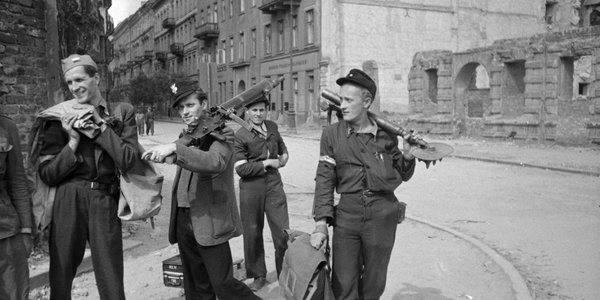
Polish Underground's Clandestine Arms Industry Fueled Warsaw Uprising
Translated from Polish, summarized and contextualized by DistantNews.
At a glance
News
Sources not specified
Context piece
- The Polish Underground State established the largest clandestine arms production system in occupied Europe.
- This significant technical and organizational effort formed a cornerstone of the Home Army's armament during the Warsaw Uprising.
- German occupiers exploited and Germanized Polish industrial facilities after the 1939 defeat, confiscating companies and forcing millions into labor.
The Polish Underground State developed an extensive clandestine arms production network, the most significant in German-occupied Europe. This remarkable feat of technical and organizational prowess provided crucial armaments for the Home Army (AK) during the Warsaw Uprising.
Following Poland's defeat in September 1939, Germany seized control of the nation's industrial capabilities, which had been built with considerable financial and organizational effort during the Second Polish Republic. Similar to its actions in Czechoslovakia after its annexation, Germany systematically exploited and Germanized Polish industrial sites. By the spring of 1942, approximately 230,000 Polish production and commercial firms had been confiscated, along with 187,000 urban properties.
Major German industrial conglomerates, including Krupp AG, IG Farben, and Steyr-Daimler-Puch, took over key manufacturing facilities, integrating them into Germany's war machine. Concurrently, around two million Poles were deported for forced labor in the Reich, supplying manpower for German war industries. The article notes that 96% of its content is not provided, leaving further details about the underground's efforts and the broader context of the occupation unavailable.
DistantNews Editorial
Originally published by Rzeczpospolita in Polish. Translated, summarized, and contextualized by our editorial team with added local perspective. Read our editorial standards.
More Stories


From Our Blog

What Gets Lost (and Found) When News Is Translated

The Critical Role of Diaspora Media in Global News

What Travellers Should Know About Countries with Restricted Press

A Digital Nomad's Guide to Following Local News

How the Same Story Looks Different in Different Countries
