

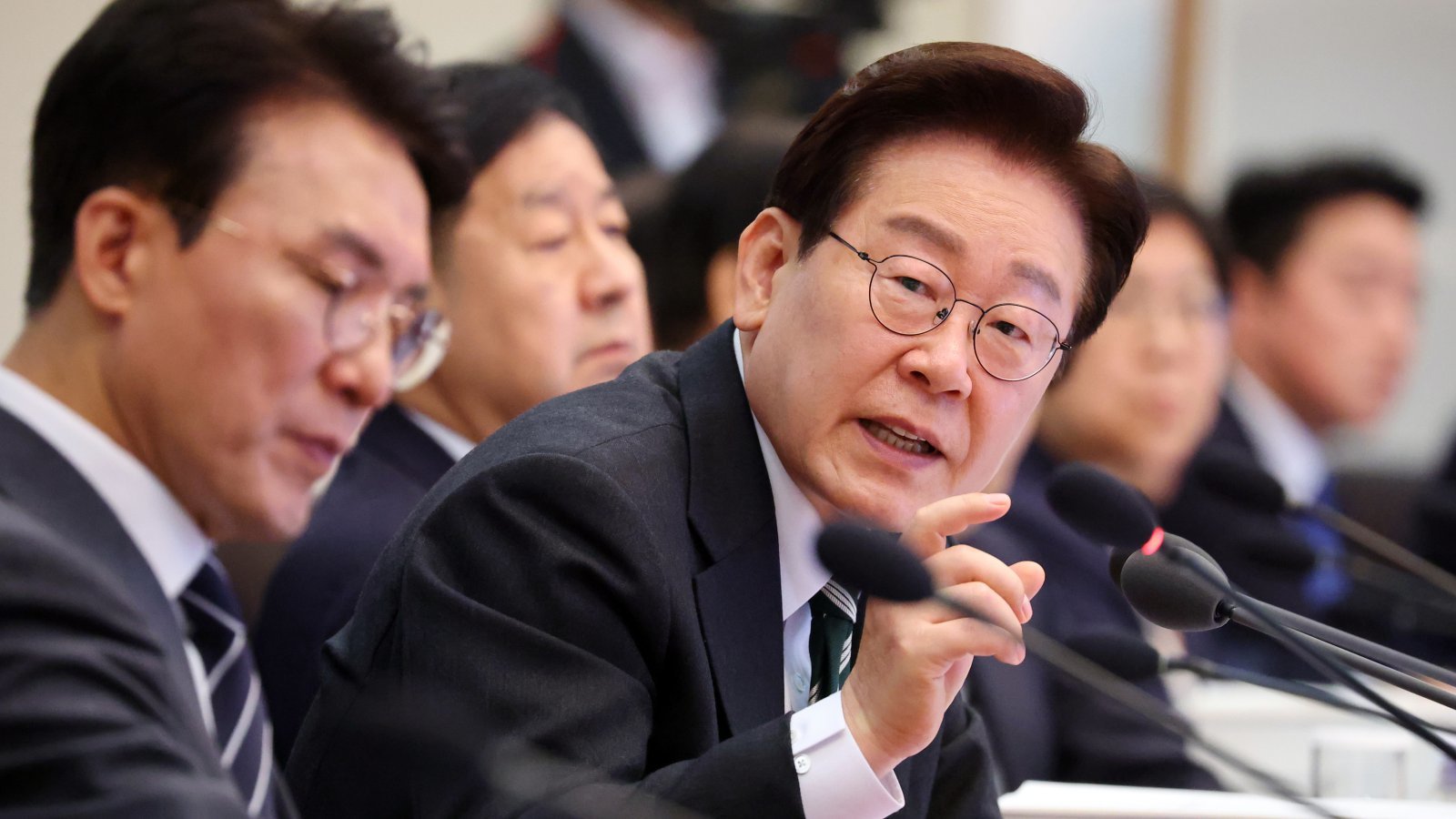

President Lee: Illegal loans exceeding legal limits are void and need not be repaid
Translated from Korean, summarized and contextualized by DistantNews.
TLDR
- South Korean President Lee Jae-myung declared that illegal loans exceeding legal interest rates are void and do not need to be repaid.
- This statement aligns with a revised enforcement decree of the Loan Business Act, which passed the State Council.
- The new regulations stipulate that interest exceeding 20% annually is void, and contracts exceeding 60% are entirely null, meaning neither principal nor interest needs repayment.
President Lee Jae-myung's firm stance on illegal private lending, declaring that usurious loans exceeding legal limits are void, offers a crucial lifeline to vulnerable citizens struggling under the weight of predatory financial practices. As reported by the Hankyoreh, this decisive action, reinforced by the revised Loan Business Act enforcement decree, signals a strong government commitment to protecting the financially distressed.
The President's clear message—that individuals do not need to repay loans with interest rates surpassing legal thresholds—directly addresses the exploitation faced by many. The current legal framework, which renders interest above 20% annually void and entire contracts null if exceeding 60%, is now being emphatically communicated to the public. This is not merely a legal technicality; it is a statement of economic justice, aimed at preventing debt from becoming an inescapable trap.
Illegal loans exceeding the legally permissible limit are void, and there is no need to repay them.
This initiative, previously highlighted by President Lee through social media channels, reflects a consistent policy focus on alleviating the burdens of those living on the margins. The principle articulated—'preventing loans taken out for survival from becoming shackles that bind one's life'—resonates deeply within a society where economic precarity can drive individuals to seek high-interest loans. The Hankyoreh, committed to reporting on issues impacting ordinary citizens, emphasizes the significance of this consumer protection measure.
While international reporting might frame this as a regulatory update, from a South Korean perspective, it represents a vital social safety net. It empowers citizens by clarifying their rights and offering recourse against exploitative lenders. The enforcement of these regulations is paramount, ensuring that the law provides tangible relief and prevents the cycle of debt from perpetuating poverty. This policy underscores a national priority to foster a more equitable financial environment.
We will prevent loans taken out for survival from becoming shackles that bind one's life.
DistantNews Editorial
Originally published by Hankyoreh in Korean. Translated, summarized, and contextualized by our editorial team with added local perspective. Read our editorial standards.
More Stories


From Our Blog

What Gets Lost (and Found) When News Is Translated

The Critical Role of Diaspora Media in Global News

What Travellers Should Know About Countries with Restricted Press

A Digital Nomad's Guide to Following Local News

How the Same Story Looks Different in Different Countries
