

Prospects of US-Iran talks in Islamabad "rapidly fading" as Tehran still "not ready" to meet US delegation
Summarized and contextualized by DistantNews.
TLDR
- Prospects for U.S.-Iran peace talks in Islamabad are diminishing as Tehran remains unwilling to meet the U.S. delegation, according to Kamran Khan of ARY News.
- Iran has set a precondition for resuming negotiations: the U.S. must lift its blockade on Iranian ports in the Strait of Hormuz.
- The U.S. delegation, including Special Envoy Steve Witkoff and Jared Kushner, was expected in Pakistan, while Iran's Foreign Minister Abbas Araghchi had already arrived.
The anticipated second round of U.S.-Iran peace talks in Islamabad appears to be rapidly losing steam, with sources indicating Tehran's reluctance to engage with the visiting American delegation. Kamran Khan, chairman of Pakistan-based ARY News, reported that informed sources suggest significant uncertainty surrounding the continuation of these crucial diplomatic engagements, which were scheduled to take place in the Pakistani capital over the weekend.
Khan's post on X revealed that Iran has stipulated a firm precondition for resuming negotiations: the lifting of the U.S. Navy's blockade on Iranian ports, specifically referencing the strategic Strait of Hormuz. This demand places a substantial hurdle in the path of dialogue, as Iran insists on the U.S. ending its maritime blockade before any second round of talks can commence.
Prospects for the resumption of the second round of U.S.-Iran talks in Islamabad today are rapidly fading, as Tehran is still not ready to meet the U.S. delegation, which was expected to arrive late tonight from Washington.
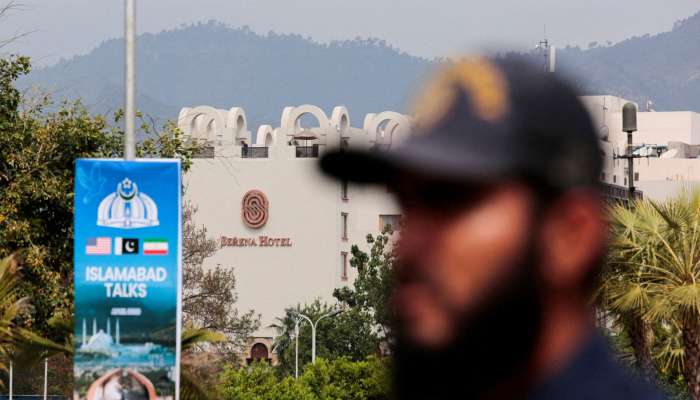
The situation unfolds against a backdrop of heightened regional tensions and a fresh push for dialogue initiated by the White House. The U.S. delegation, comprising Special Envoy Steve Witkoff and Senior Adviser Jared Kushner, was slated to arrive in Pakistan, while Iran's Foreign Minister Abbas Araghchi had already arrived in Islamabad, raising initial hopes for a breakthrough. However, Iran's stance on the blockade has cast a shadow over these efforts, with the city of Islamabad itself under a "suffocating security lockdown" in anticipation of the talks.
This development is particularly significant from Pakistan's perspective, as Islamabad has been positioning itself as a neutral venue for mediating between Tehran and Washington. The potential collapse of these talks, due to preconditions set by Iran, could have implications for Pakistan's diplomatic role and its efforts to foster regional stability. The previous round of talks in Islamabad, which lasted 21 hours, failed to yield a breakthrough, underscoring the deep-seated challenges in U.S.-Iran relations.
Iran continues to insist that the Americans end their blockade of the Strait of Hormuz as a precondition for opening the second round of negotiations.
DistantNews Editorial
Originally published by Times of Oman. Summarized and contextualized by our editorial team with added local perspective. Read our editorial standards.
More Stories

From Our Blog

What Gets Lost (and Found) When News Is Translated

The Critical Role of Diaspora Media in Global News

What Travellers Should Know About Countries with Restricted Press

A Digital Nomad's Guide to Following Local News

How the Same Story Looks Different in Different Countries
