


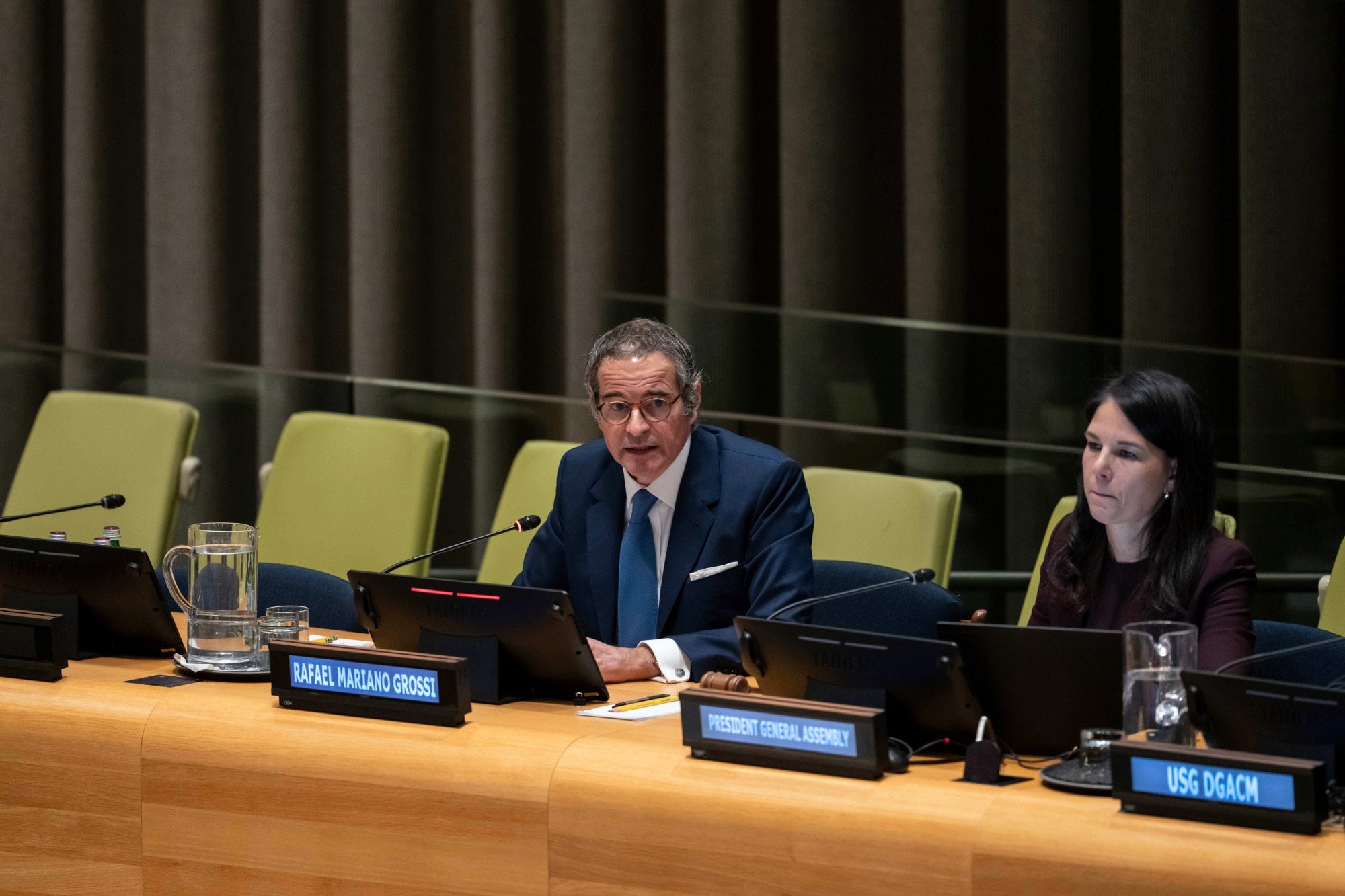
Rafael Grossi gathers support, but government debt to the UN complicates his aspirations
Translated from Spanish, summarized and contextualized by DistantNews.
TLDR
- Argentina's Rafael Grossi is gaining support for the UN Secretary-General position, with praise from the US and Russia.
- His candidacy faces geopolitical hurdles, including potential opposition from France, China, and the UK, particularly concerning the Falklands sovereignty dispute.
- The Argentine government is actively campaigning for Grossi, but faces challenges related to its own funding of international organizations and Grossi's efforts to avoid being perceived as a right-wing candidate.
The Argentine government, under President Javier Milei, is throwing its weight behind Rafael Grossi's bid for the United Nations Secretary-General position, a move that could mark a historic first for Argentina. The diplomatic corps is buzzing with optimism following endorsements from key global players like the United States and Russia. This backing, coupled with Grossi's established reputation from his work at the International Atomic Energy Agency (IAEA), positions him as a strong contender.
The powers realize that it is better to have someone impartial in that place than someone who is a friend.
However, the path to the UN's top job is paved with complex geopolitical considerations. Grossi's candidacy must navigate the sensitivities of permanent Security Council members, notably France, China, and the United Kingdom. The historical dispute over the Falkland Islands sovereignty remains a significant point of friction with the UK, raising questions about London's potential stance. Furthermore, Grossi is actively working to broaden his appeal beyond any perceived right-wing alignment, seeking to present himself as an impartial candidate amidst global conflicts.
Russia had a 'good opinion of Grossi'.
Domestically, the campaign is managed by a dedicated unit within Argentina's Ministry of Foreign Affairs. Yet, the government's own approach to international funding, mirroring a skepticism towards multilateral institutions seen in some global powers, presents a curious backdrop. Federico Pinedo, Argentina's G20 Sherpa, suggests that major powers might prefer an impartial figure over an ally. The article highlights Grossi's own words, expressing confidence in securing broad support, while acknowledging the aspiration itself. The international media often focuses on the broader geopolitical implications, but for Argentina, this is a matter of national pride and a potential significant elevation on the world stage, albeit one fraught with diplomatic challenges.
I need everyone's support and I believe I will have it, but that is my aspiration.
DistantNews Editorial
Originally published by La Nación in Spanish. Translated, summarized, and contextualized by our editorial team with added local perspective. Read our editorial standards.
More Stories


From Our Blog

What Gets Lost (and Found) When News Is Translated

The Critical Role of Diaspora Media in Global News

What Travellers Should Know About Countries with Restricted Press

A Digital Nomad's Guide to Following Local News

How the Same Story Looks Different in Different Countries
