

Rare 'alien' cloud born from French wildfire sparks dozens more fires
Translated from Greek, summarized and contextualized by DistantNews.
At a glance
News
Named sources
Context piece
- A massive wildfire in southwestern France generated a rare pyrocumulonimbus cloud, creating its own weather system.
- This phenomenon produced lightning strikes that sparked new fires and strong winds that altered the fire's path, complicating firefighting efforts.
- Experts note that while rare in Europe, such extreme fire events are becoming more likely due to increasing heatwaves and drought.
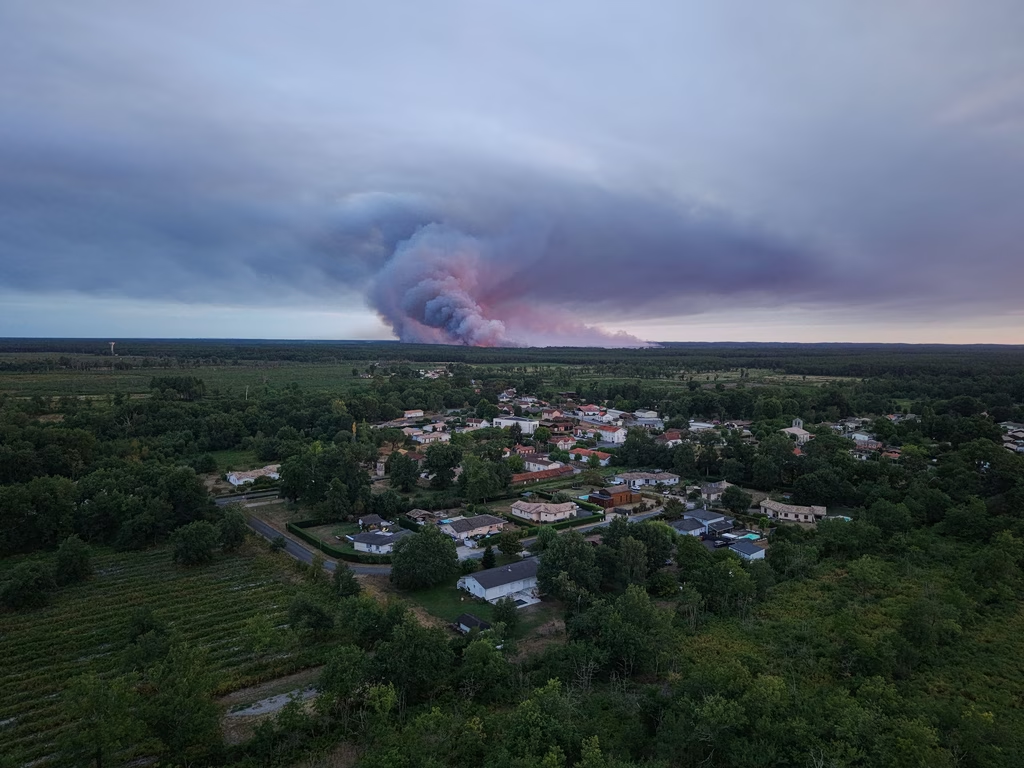
A devastating wildfire in southwestern France has produced an extraordinary phenomenon: a pyrocumulonimbus cloud, essentially a thunderstorm generated by the fire itself. This rare weather event, also known as a pyroCb, has created its own weather system, intensifying the crisis.
The immense cloud of smoke and heat generated lightning, which in turn ignited new blazes. Furthermore, powerful winds circulating around the cloud repeatedly changed the fire's direction, severely hindering the work of firefighters. The fire, which began near Somme in the Gironde region on July 22, has since consumed over 420 square kilometers of forest and low vegetation.
More than 240 homes have been damaged or destroyed, and approximately 220,000 residents have been evacuated as a precaution. French firefighters describe the situation as unprecedented, noting this is the first recorded instance of a pyrocumulonimbus cloud forming in France solely from the heat of a wildfire.
Meteorologists explain that extreme heat lifts smoke, ash, and water vapor to high altitudes, where ice crystals form, creating electrical charges that lead to lightning. This creates a dangerous feedback loop, as the lightning can start fires miles away, and the turbulent air movements cause unpredictable wind shifts. Scientists warn that while pyroCb events remain relatively uncommon in Europe, increasingly frequent heatwaves and prolonged droughts are fostering conditions for more extreme wildfires.
We have never seen anything like it before.
DistantNews Editorial
Originally published by Ta Nea in Greek. Translated, summarized, and contextualized by our editorial team with added local perspective. Read our editorial standards.
More Stories
From Our Blog

What Gets Lost (and Found) When News Is Translated

The Critical Role of Diaspora Media in Global News

What Travellers Should Know About Countries with Restricted Press

A Digital Nomad's Guide to Following Local News

How the Same Story Looks Different in Different Countries
