

Rebuilding Military Church: Garnisonkirche Receives Ton-Heavy Columns for Tower Spire
Translated from German, summarized and contextualized by DistantNews.
TLDR
- Ton-heavy steel columns have been installed as part of the reconstruction of Potsdam's controversial Garnisonkirche (Garrison Church).
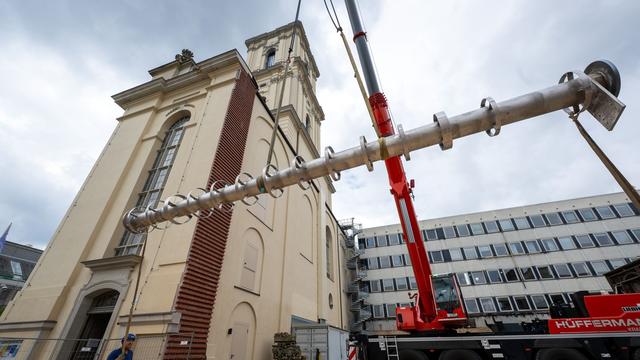
- These 24 columns form the substructure for the approximately 27-meter-high spire, which will be clad in wood and copper.
- The church, originally built in 1735 and destroyed in WWII, has been a subject of debate due to its historical association with the Nazi era.
Potsdam's historic Garnisonkirche is steadily progressing towards its controversial reconstruction, with the recent installation of massive steel columns marking a significant milestone. These ton-heavy components are crucial for supporting the approximately 27-meter-high spire, the crowning feature of the church's tower. Once erected, the spire's framework will be encased in wood and finally clad in copper, topped with a weather vane, completing the exterior.
The columns are part of the substructure of the approximately 27-meter-large tip of the tower.
The church, a structure with roots dating back to 1735, met its end during World War II, with the remaining ruins demolished in 1968. However, its proposed reconstruction has been fraught with debate for years, largely due to its symbolic association with a dark chapter in German history. The church gained notoriety for hosting the infamous "Day of Potsdam" in March 1933, where Reich President Paul von Hindenburg symbolically extended his hand to Adolf Hitler, cementing the church's image as a nexus of Prussian militarism and Nazism.
Modern engineering plays a key role in the rebuilding effort. Unlike the original spire, which utilized oak logs, the new structure incorporates advanced insights into statics and engineering, employing steel columns. The total weight of the completed spire, including the steel columns, is estimated at around 60 tons. The project, with an estimated cost exceeding 3 million euros, is funded through a combination of public grants, donations from numerous small contributors, and a significant donation from a major benefactor.
The goal is to have the spire fully constructed here on the ground by spring 2027 and then to place it on the tower.
While the tower itself was completed and opened in 2024, the spire's construction faced a year-long delay due to a legal challenge during the tendering process. The goal is to have the spire fully constructed on the ground by spring 2027, ready for its eventual placement atop the tower. For us, this reconstruction represents more than just rebuilding a church; it's a complex negotiation with history, attempting to reconcile a contested past with a vision for the future, even as debates about its symbolism continue.
What is new today compared to 300 years ago? There are new findings in statics and dimensioning, and back then the columns were made of oak. It was similar to shipbuilding.
DistantNews Editorial
Originally published by Die Zeit in German. Translated, summarized, and contextualized by our editorial team with added local perspective. Read our editorial standards.
More Stories

From Our Blog

What Gets Lost (and Found) When News Is Translated

How the Same Story Looks Different in Different Countries

The Critical Role of Diaspora Media in Global News

What Travellers Should Know About Countries with Restricted Press

A Digital Nomad's Guide to Following Local News
