


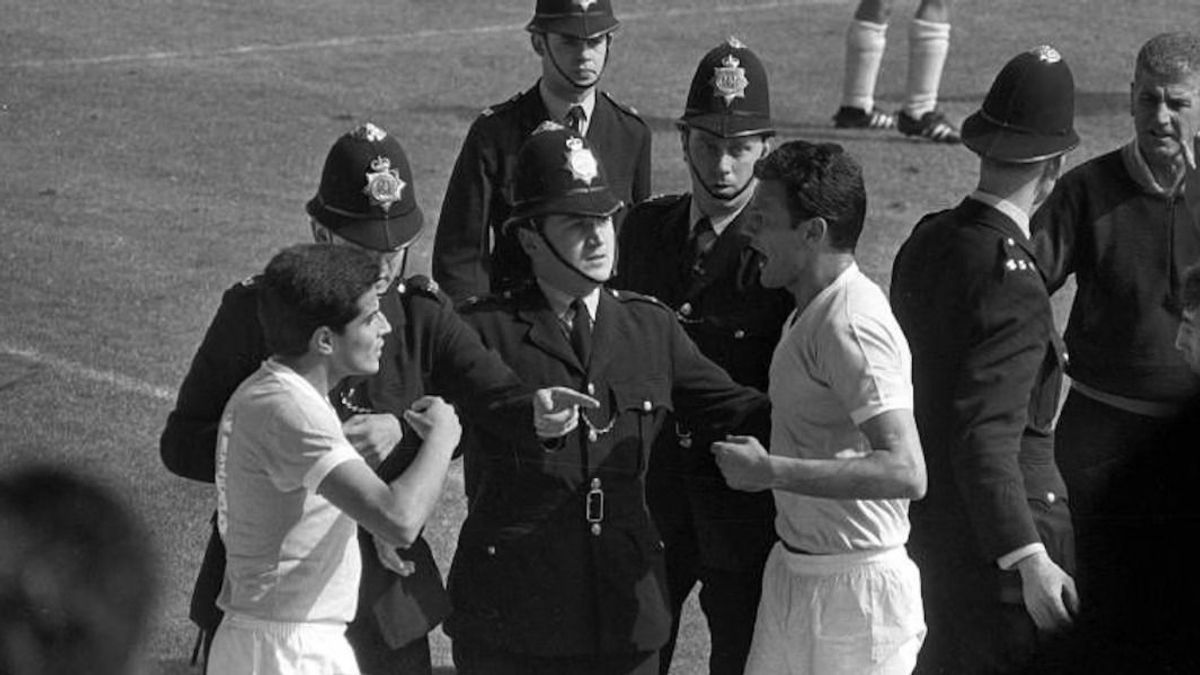
Referee's controversial decisions spark outrage and threats of FIFA withdrawal after 1966 World Cup quarter-final
Translated from Hungarian, summarized and contextualized by DistantNews.
TLDR
- A controversial 1966 World Cup quarter-final match between England and Argentina, officiated by West German referee Rudolf Kreitlein, led to significant backlash from South American football authorities.
- Argentina's captain, Rattin, was controversially sent off, sparking a ten-minute stoppage and widespread accusations of biased officiating against the English team.
- Following the match, both Uruguay and Argentina threatened to withdraw from FIFA, citing "European fraud" and demanding repercussions against the referee and the English team.
The 1966 World Cup quarter-final between England and Argentina remains a contentious chapter in football history, particularly for South American nations. The match, decided by a single goal from England's Geoff Hurst, was marred by controversy surrounding the officiating of West German referee Rudolf Kreitlein. The decision to send off Argentine captain Antonio Rattin in the 37th minute, leading to a prolonged stoppage and accusations of bias, ignited fury among the South American delegations.
From the perspective of the Argentine Football Association, represented by its president Dr. Menéndez Bethy, the outcome was a direct result of Kreitlein's "strange" favoritism towards the English. Bethy vehemently defended his players, arguing that Rattin's actions were not unsportsmanlike but a request for a translator, and that the referee's biased performance was the sole cause of the match's unfortunate turn. This viewpoint highlights a deep-seated frustration within South American football regarding perceived European dominance and unfair treatment in international competitions.
Who can give assurances about sportsmanship in advance? In my opinion, our team was not unsportsmanlike in England; the sole responsibility for the events unfolding this way lies with the West German referee Kreitlein.
The fallout extended beyond the pitch, with both Uruguayan and Argentine football authorities threatening to withdraw from FIFA. They alleged a "FIFA mafia" and "organized European fraud," signaling a profound distrust in the international governing body's impartiality. The subsequent FIFA statement, which included a demand for assurances of fair play from Argentina for the 1970 World Cup and a potential ban, only intensified the outrage. The imposition of a seemingly minor fine of 1000 Swiss francs was overshadowed by the perceived insult and lack of understanding from FIFA regarding the South American perspective.
This incident underscores a recurring theme in international football: the tension between European and South American footballing cultures and their respective governing bodies. While Western media might focus on England's advancement and the referee's difficult task, the South American narrative emphasizes injustice, a fight against a perceived corrupt system, and a passionate defense of national pride. The events of that day in 1966 continue to be remembered as a symbol of this enduring conflict.
The FIFA officially requested the organizing committee of the 1970 Mexico World Cup to reject Argentina's participation application if the Argentine Football Association does not provide assurances that its team, players, and officials will behave in the spirit of fair play.
DistantNews Editorial
Originally published by Magyar Nemzet in Hungarian. Translated, summarized, and contextualized by our editorial team with added local perspective. Read our editorial standards.
More Stories


From Our Blog

Countries Without a Free Press: What You Need to Know

What Press Freedom Means for the News You Read

What Gets Lost (and Found) When News Is Translated

The Critical Role of Diaspora Media in Global News

What Travellers Should Know About Countries with Restricted Press
