


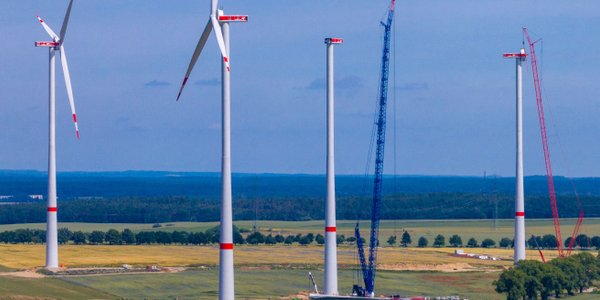
Renewable Energy Powers Record 58% of German Electricity in First Half of 2026
Translated from Polish, summarized and contextualized by DistantNews.
At a glance
News
From a news agency
New plan
- Renewable energy sources supplied 58% of Germany's electricity in the first half of 2026, a record high.
- Wind power, particularly offshore wind, drove the increase, with onshore wind up 7% and offshore up 28.3%.
- Solar energy production rose 3.7%, while hydropower decreased by 7.7%.
Germany achieved a historic milestone in renewable energy, with green sources supplying 58% of the nation's electricity consumption in the first half of 2026. This record figure represents a 3 percentage point increase compared to the same period in the previous year, according to a report by the Center for Solar and Hydrogen Research Baden-Württemberg (ZSW) and the German Association of Energy and Water Industries (BDEW).
The significant growth was primarily fueled by wind power. Production from onshore wind farms increased by 7%, while offshore wind farms saw a remarkable surge of 28.3%. Photovoltaics also contributed positively, with solar energy production rising by 3.7%.
The development of renewable energy sources reduces Germany's dependence on imported fossil fuels and increases the country's resilience to energy price fluctuations.
However, hydropower generation experienced a decline of 7.7% during the first six months of the year. Despite this, the overall increase in renewables marks a substantial step towards energy independence and climate goals.
Frithjof Staiss, CEO of ZSW, highlighted that the expansion of renewable energy sources is crucial for reducing Germany's reliance on imported fossil fuels and enhancing its resilience against energy price volatility. He further emphasized that green energy remains a key tool in combating climate change.
Green energy remains one of the most effective tools in the fight against climate change.
DistantNews Editorial
Originally published by Rzeczpospolita in Polish. Translated, summarized, and contextualized by our editorial team with added local perspective. Read our editorial standards.
More Stories

From Our Blog

What Gets Lost (and Found) When News Is Translated

The Critical Role of Diaspora Media in Global News

What Travellers Should Know About Countries with Restricted Press

A Digital Nomad's Guide to Following Local News

How the Same Story Looks Different in Different Countries
