

Ukraine builds new energy model with focus on resilience and diversification
Translated from Polish, summarized and contextualized by DistantNews.
At a glance
News
Named sources
Ongoing story
- Ukraine is developing a new energy model focused on competitiveness, resilience, and diversification.
- International financial institutions are supporting Ukraine's energy sector reforms and investments.
- Attracting private capital requires a stable regulatory environment and predictable reforms.
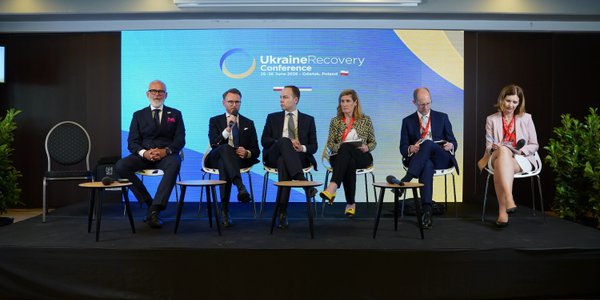
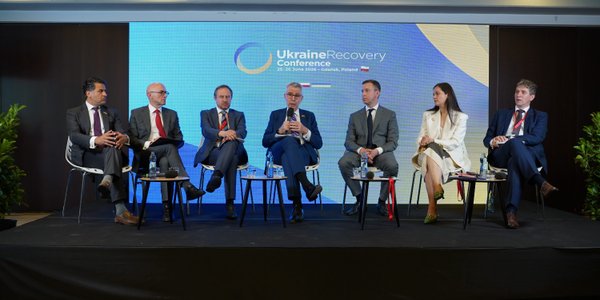
Rebuilding Ukraine's energy sector has become a central theme in discussions about the country's future, particularly during the Ukraine Recovery Conference. A dedicated panel, "Dialogue on Sustainable Energy: Investment Frameworks, Reforms, and Market Transformation," addressed the challenges and opportunities.
Energy is the foundation of any economy. We must find a way to create a system that is simultaneously competitively priced, resilient, and diversified.
For investors, this presents not only a challenge of reconstruction but also a chance to enter a market poised to become a laboratory for European energy transformation. "Energy is the foundation of any economy. We must find a way to create a system that is simultaneously competitively priced, resilient, and diversified," stated Cheryl Edleson Hanway, director for infrastructure, energy, and mining in Europe, Latin America, and the Caribbean at the International Finance Corporation.
Polish companies, like Orlen, have a long-standing presence in Ukraine, primarily in the fuel and gas sectors. Orlen has been active for two decades, supplying significant volumes of LNG and seeing potential for further cooperation. "This is not the moment we are entering Ukraine. We have been present there for 20 years. It is a developed market for us, where we see huge potential for further cooperation," said Sławomir Staszak, a member of Orlen's management board.
This is not the moment we are entering Ukraine. We have been present there for 20 years. It is a developed market for us, where we see huge potential for further cooperation.
Staszak emphasized that the war has underscored that energy security cannot solely depend on raw material supplies. "The Russian invasion is not just a war against a state. It is a war against the energy sector," he noted. Consequently, the future system must rely on multiple energy sources and decentralized production, focusing on building infrastructure resilient to future crises.
The Russian invasion is not just a war against a state. It is a war against the energy sector.
Attracting private capital remains a major hurdle. Financial institutions stress that while interest in investing in Ukraine is high, a stable and trustworthy regulatory environment is essential. The European Bank for Reconstruction and Development (EBRD) has committed over 10 billion euros to Ukraine since the war's start, with 3.5 billion euros directed to the energy sector. Harry Boyd-Carpenter, EBRD's Managing Director for Sustainable Infrastructure Group, highlighted that Ukraine's energy sector, though functional due to immense effort and foreign support, remains vulnerable. He stressed that transparent and trustworthy regulations are crucial for attracting large-scale investments, alongside necessary reforms to ensure predictability for investors.
The most important risk mitigation mechanism is a transparent regulatory system that can be trusted. Without it, it will be difficult to attract large-scale investments.
DistantNews Editorial
Originally published by Rzeczpospolita in Polish. Translated, summarized, and contextualized by our editorial team with added local perspective. Read our editorial standards.
More Stories
From Our Blog

What Gets Lost (and Found) When News Is Translated

The Critical Role of Diaspora Media in Global News

What Travellers Should Know About Countries with Restricted Press

A Digital Nomad's Guide to Following Local News

How the Same Story Looks Different in Different Countries
