

Rhine River's Record Lows Threaten German Industry
Translated from Romanian, summarized and contextualized by DistantNews.
At a glance
News
Named sources
Context piece
- German companies face increasing disruptions due to record-low water levels on the Rhine River.
- Industries like chemicals, utilities, and steel report rising costs, transport blockages, and reduced production.
- The low water levels threaten to cripple logistics and supply chains, forcing companies to seek costly alternatives.
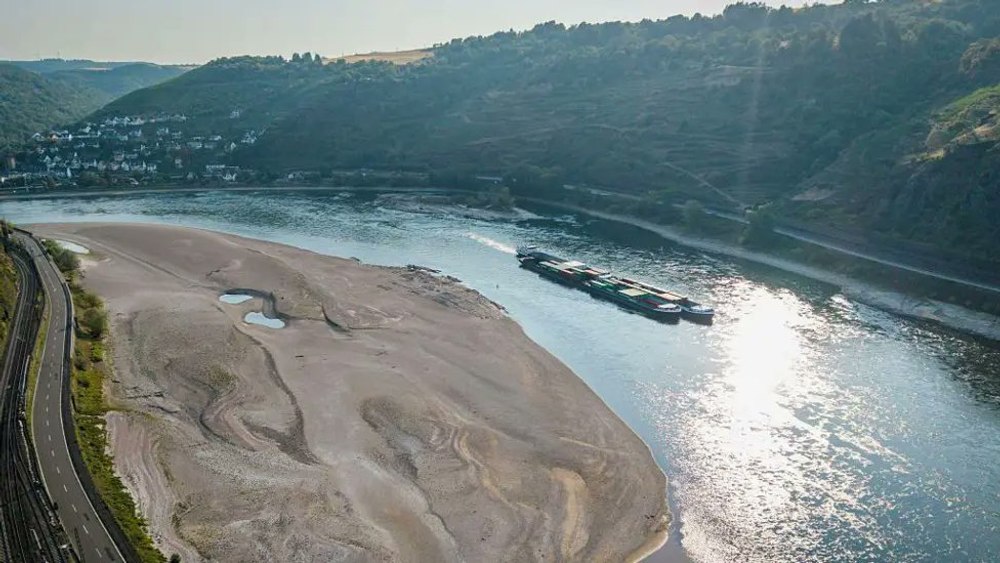
German industries are sounding the alarm as the Rhine River's water levels plummet to record lows, causing significant disruptions. Chemical manufacturers, utility companies, steel producers, and agricultural traders are all reporting escalating costs, transportation bottlenecks, and production cuts.
While widespread production shutdowns have not yet occurred, as seen in previous Rhine crises, logistics companies are struggling to book cargo shipments. Weeks of drought have led to increasing operational problems for many businesses. Covestro, a chemical company, stated that the lack of transport capacity could not be fully compensated, even with shifts to road and rail where possible. The company declared force majeure for several products, including polyether-polyols used in mattresses and refrigerator insulation.
The Rhine is a vital artery for transporting goods like grain, fuel, minerals, and manufactured products across Europe. Shallower waters are forcing companies to bear higher transport costs and limiting their options. "The alarm bells are ringing louder and louder: the extremely low water level is pushing logistics and supply chains to their limits," said Wolfgang Grosse Entrup, CEO of the German chemical industry association VCI.
The alarm bells are ringing louder and louder: the extremely low water level is pushing logistics and supply chains to their limits.
Evonik's chemical industrial park in Marl has seen reduced shipments via the Rhine, impacting production. State-owned utility Uniper reported lower output from its German hydroelectric plants, mirroring similar statements from local company EnBW. Steel producer Salzgitter has resorted to transporting coal by train from Rotterdam to its HKM division due to the low river levels.
"The current situation shows that we must pay more attention to waterways as part of our critical transport infrastructure," said Tim-Oliver Mueller, head of the German Construction Industry Federation. He noted that some construction materials are difficult to transport by road or rail due to capacity limitations, with one barge potentially requiring up to 150 trucks for replacement transport.
The current situation shows that we must pay more attention to waterways as part of our critical transport infrastructure.
DistantNews Editorial
Originally published by Adevărul in Romanian. Translated, summarized, and contextualized by our editorial team with added local perspective. Read our editorial standards.
More Stories

From Our Blog

What Gets Lost (and Found) When News Is Translated

The Critical Role of Diaspora Media in Global News

What Travellers Should Know About Countries with Restricted Press

A Digital Nomad's Guide to Following Local News

How the Same Story Looks Different in Different Countries
