


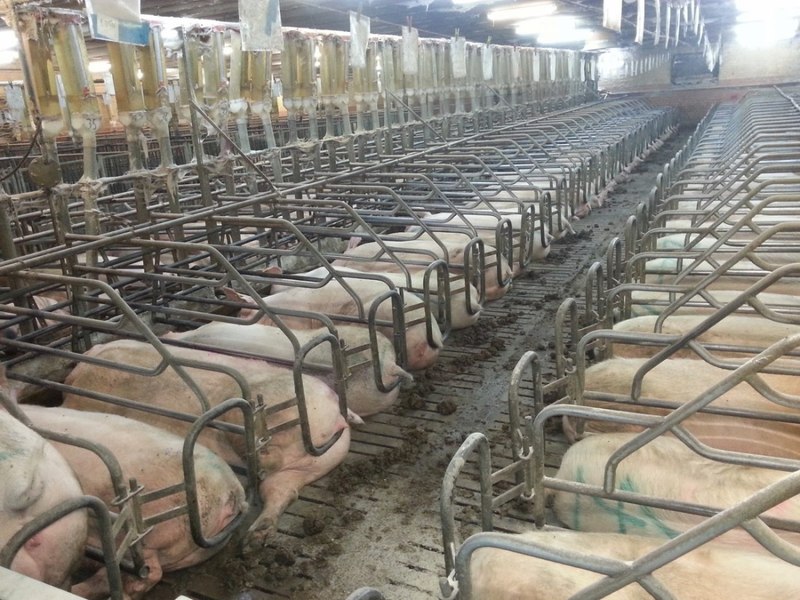
Romanian Pig Farms Risk Closure Amid Falling Prices and Rising Costs
Translated from Romanian, summarized and contextualized by DistantNews.
TLDR
- Romanian pig farmers face closure due to selling prices below production costs.
- The Association of Pig Producers warns the sector is on the verge of collapse, with losses mounting.
- Imports exacerbate the problem, with Romania's domestic production meeting less than half of national consumption.
The Romanian pig farming sector is in a critical state, with producers warning of potential closures as selling prices for pork carcasses fall below the cost of production. The Association of Pig Producers of Romania (APCPR) has issued a stark warning that the industry is "on the verge of collapse."
In continuation of the situation reported at the beginning of the year, the Association of Pig Producers of Romania (APCPR) warns of a critical situation in the pig farming sector, where a significant portion of commercial farms operate below the cost of production and risk closure in the immediate period.
According to the APCPR, pigs are being sold at the farm gate for approximately 5-5.5 lei per kilogram, while the actual cost of production exceeds 6.5 lei per kilogram. This significant loss is making it unsustainable for many commercial farms to continue operations in the short and medium term. The situation has been exacerbated by a recent accelerated drop in prices, even as demand and consumption begin to increase.
Data from the European Union's Pig Observatory reveals that in the first quarter of 2026, the average price for pig carcasses (Class E) in Romania decreased by 17.8% compared to the same period in 2025. This price is also 11.4% below the EU average, placing Romania among the countries with the lowest pig prices in Europe and significantly lower than major exporting nations.
Currently, the price of live pigs at the farm gate is around 5-5.5 lei/kg, while the actual production cost exceeds 6.5 lei/kg, generating direct losses for farmers and severely affecting their ability to sustain activity in the short and medium term.
The association also points to the persistent impact of African Swine Fever (ASF), which has severely affected herds, led to trade restrictions, and discouraged investment in recent years. Furthermore, the rise of pig farming in household gardens, often without rigorous biosecurity standards, poses a significant risk for the spread of disease. This structural imbalance is evident: commercial farms produce around 3.3 million pigs annually, while national consumption exceeds 7 million. This deficit is covered by massive imports, which further pressure local producers and increase reliance on foreign supply, estimated at over one billion euros annually.
The structural imbalance of the market is evident: the commercial sector produces approximately 3.3 million pigs annually, while national consumption exceeds the equivalent of 7 million heads. This deficit is covered by massive imports, which accentuates the pressure on local producers and makes the food chain vulnerable.
DistantNews Editorial
Originally published by Adevărul in Romanian. Translated, summarized, and contextualized by our editorial team with added local perspective. Read our editorial standards.
More Stories


From Our Blog

What Gets Lost (and Found) When News Is Translated

The Critical Role of Diaspora Media in Global News

What Travellers Should Know About Countries with Restricted Press

A Digital Nomad's Guide to Following Local News

How the Same Story Looks Different in Different Countries
