


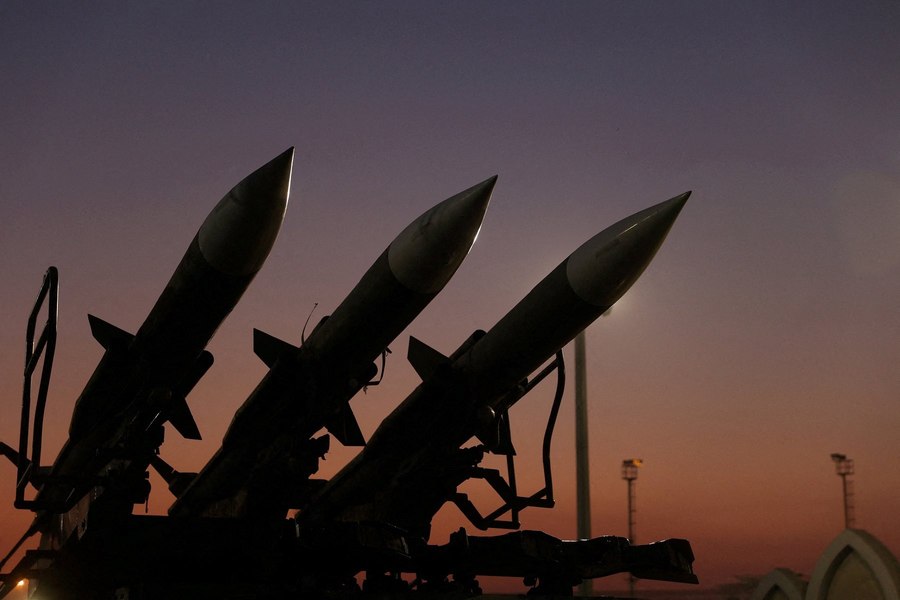
Russia secretly helping Iran develop supersonic cruise missiles, Financial Times reports
Translated from Romanian and summarized by DistantNews. Read the original for the full story.
At a glance
News
Named sources
Ongoing story
- Russia has reportedly assisted Iran since 2023 with the C430L program, which aims to develop a ramjet engine for supersonic cruise missiles.
- The Financial Times based its investigation on leaked Russian correspondence, engineers’ travel data and analysis of military patents.
- Experts said the technology could support anti-ship and land-attack missiles, but there is no evidence that an Iranian missile developed with Russian help has entered service.
Russia has secretly supported Iran’s development of a new generation of weapons since 2023, according to an investigation by the Financial Times. The program, code-named C430L, involves some of Russia’s most experienced missile specialists and focuses on technology that could threaten U.S. aircraft carriers and other military vessels in the Middle East.
The investigation drew on leaked Russian correspondence, travel data involving engineers and analysis of military patents. The documents indicate that the program continued into 2026, including after the start of the war involving the United States and Israel on one side and Iran on the other.
Russian officials prepared technical reports for Tehran, while the two sides discussed the next stage of the program. A June 2026 letter from Rosoboronexport showed that they were still negotiating elements of that stage and planning further discussions on the Russian reports. It was not clear whether the next phase had begun.
It is a transfer by Russia of military technology that is extremely sensitive from a strategic perspective, which the Iranians have tried to obtain for decades.
The central objective is to help Iran develop a ramjet engine, allowing a cruise missile to travel several times faster than sound. Missile experts cited by the Financial Times said the technology was almost certainly intended for anti-ship and land-attack cruise missiles. Supersonic missiles can combine high speed with low-altitude flight, leaving modern air and missile defenses less time to detect and intercept them.
Iran has already built and flight-tested a ramjet-powered installation, but there is no evidence that a supersonic cruise missile produced with Russian assistance has entered service. Fabian Hinz, an Iranian missile expert and analyst at Conflict Armament Research, called the alleged transfer highly sensitive and said it would have required approval at the highest political level in Russia. Jim Lamson, a former CIA military analyst specializing in Iran, said success would give Iran a strategically important weapons system.
A program of this scale would have required political approval at the highest level in Russia.
About this summary
Originally published by Adevărul in Romanian. Translated, summarized, and contextualized automatically by DistantNews, with a note on how the source frames the story. Not individually reviewed before publishing. How this works.
More Stories

From Our Blog

What Gets Lost (and Found) When News Is Translated

The Critical Role of Diaspora Media in Global News

What Travellers Should Know About Countries with Restricted Press

A Digital Nomad's Guide to Following Local News

How the Same Story Looks Different in Different Countries
