

Russian Army's Rout on the Masurian Lakes: Samsonov's Forces Crushed in 1914
Translated from Polish and summarized by DistantNews. Read the original for the full story.
At a glance
News
Sources not specified
Context piece
- In late August 1914, the Russian 2nd Army advanced into German territory on the Masurian Lakes, causing destruction.
- Despite Russian confidence in Petersburg, the army was walking into a trap that would result in a major defeat.
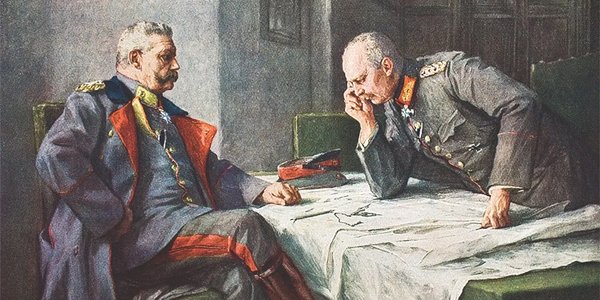
- German commanders Paul von Hindenburg and Erich Ludendorff concentrated forces to achieve a spectacular victory over Samsonov's army.
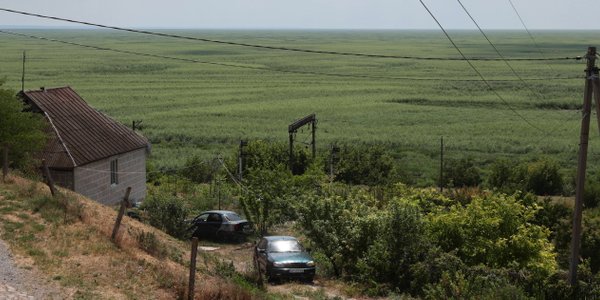
The Masurian Lakes region became the scene of a devastating defeat for the Russian army in late August 1914. General Alexander Samsonov's 2nd Army was advancing deep into German territory, leaving a trail of destruction. Back in Petersburg, a confident belief prevailed that the grand Russian offensive was proceeding successfully, with the road to Berlin seemingly open.
However, this optimism masked a grim reality. The Russian forces were unknowingly marching into a meticulously planned trap. This would culminate in one of the most significant defeats suffered by the Tsarist army in the initial months of the Great War, a stark contrast to the perceived progress.
The German defense was masterfully orchestrated by the command duo of Paul von Hindenburg and Erich Ludendorff. Their combined experience, calm demeanor, and strategic acumen allowed them to concentrate their forces effectively against Samsonov's advancing army. This strategic concentration led to the spectacular victory at the Battle of Tannenberg.
Eastern Prussia held not only strategic importance for Germany but also deep historical and symbolic value, tied to the Teutonic Knights and the Hohenzollern dynasty. The Russian offensive, therefore, represented not just a military challenge but a blow to German national prestige. The Russian advance came from two directions: General Pavel Rennenkampf's 1st Army attacked from the east, while Samsonov's 2nd Army pushed from the south. Theoretically, a coordinated assault could have delivered a decisive blow to the Germans. In practice, their cooperation was virtually nonexistent, exacerbated by personal animosity between Rennenkampf and Samsonov stemming from the Russo-Japanese War.
About this summary
Originally published by Rzeczpospolita in Polish. Translated, summarized, and contextualized automatically by DistantNews, with a note on how the source frames the story. Not individually reviewed before publishing. How this works.
More Stories

From Our Blog

What Gets Lost (and Found) When News Is Translated

The Critical Role of Diaspora Media in Global News

What Travellers Should Know About Countries with Restricted Press

A Digital Nomad's Guide to Following Local News

How the Same Story Looks Different in Different Countries
