

S&P Affirms Guatemala's Solid Economic Profile, Cautions on Institutional Gaps
Translated from Spanish, summarized and contextualized by DistantNews.
TLDR
- Standard & Poor's confirmed Guatemala's sovereign credit rating at BB+ with a stable outlook, citing macroeconomic stability and resilience.
- The rating agency noted that while Guatemala's economic profile is solid, institutional lags remain a challenge.
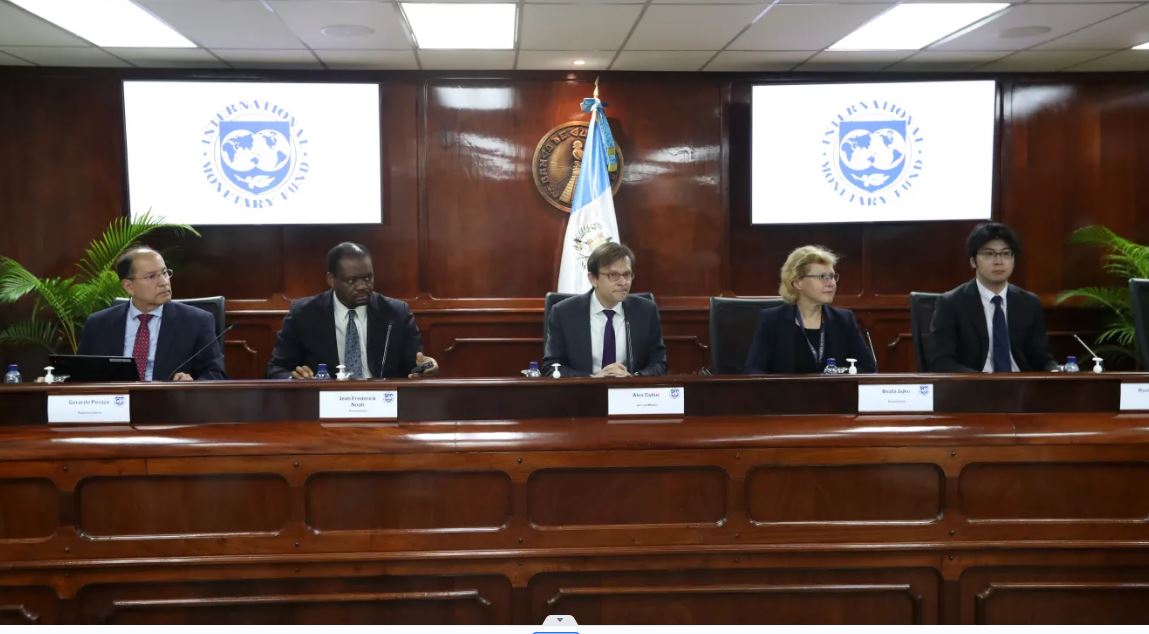
- Guatemala's economic performance and future prospects will be further assessed by an International Monetary Fund mission in late May and early June.
Guatemala's economic standing has been reaffirmed by the international risk rating agency Standard & Poor's (S&P), which maintained the country's credit rating at BB+ with a stable outlook. This decision underscores Guatemala's macroeconomic stability and economic resilience, even amidst a challenging global economic environment. The confirmation suggests that external observers perceive favorable conditions for Guatemala over the next twelve months, a testament to prudent fiscal and monetary policies.
The stability is clearly recognized in what this rating communicates implicitly. To make the definitive leap to investment grade, Guatemala must demonstrate that its macroeconomic strength can translate into sustained growth, greater investment in strategic infrastructure, attraction of foreign direct investment, and structural improvements in the institutional sphere.
However, S&P's report also highlights persistent challenges, particularly concerning institutional lags. While the legal framework for improving governance, infrastructure investment, and transparency has seen progress with the approval of key laws like the Priority Road Infrastructure Law and the Public-Private Partnership Law, the effective implementation of these measures is crucial. Experts emphasize that approving laws without execution does not translate into tangible improvements and can negatively impact future evaluations.
Juan Carlos Zapata, executive director of the Foundation for Development of Guatemala (Fundesa), noted that while stability is factored into the current rating, achieving investment grade requires demonstrating that macroeconomic strength can be converted into sustained growth, increased strategic infrastructure investment, and the attraction of foreign direct investment. The focus must now shift from legislative action to demonstrable execution capacity, a point echoed by other major rating agencies like Moody's and Fitch.
The legal framework is improving; what follows is demonstrating execution capacity.
The upcoming mission from the International Monetary Fund (IMF) for its Article IV consultation, scheduled from May 27 to June 5, will provide a deeper examination of Guatemala's economic indicators and its outlook for 2026 and 2027. This assessment will be critical in evaluating the country's progress in addressing its institutional weaknesses and translating its macroeconomic strengths into broader economic development and improved social conditions.
The Government continues to face challenges in fully executing its infrastructure plan to boost investment and improve social conditions. We confirm Guatemala's long-term sovereign credit ratings at 'BB+' with a stable outlook.
DistantNews Editorial
Originally published by Prensa Libre in Spanish. Translated, summarized, and contextualized by our editorial team with added local perspective. Read our editorial standards.
More Stories



From Our Blog

What Gets Lost (and Found) When News Is Translated

The Critical Role of Diaspora Media in Global News

What Travellers Should Know About Countries with Restricted Press

A Digital Nomad's Guide to Following Local News

How the Same Story Looks Different in Different Countries
