


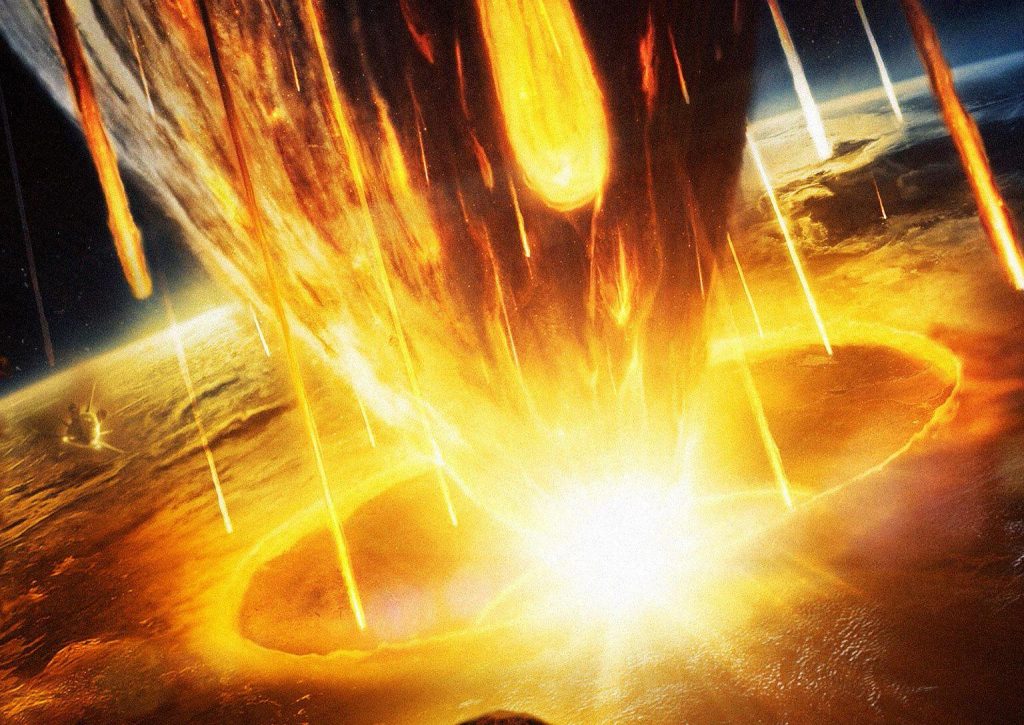
Sahara Meteorite May Reveal Unknown Lost World of Our Solar System
Translated from Greek, summarized and contextualized by DistantNews.
At a glance
News
Named sources
Context piece
- A rare meteorite found in the Sahara Desert may provide the first solid evidence of a lost planet in our solar system, potentially comparable in size to the Moon.
- The meteorite, known as Northwest Africa (NWA) 12774, was discovered in 2019 and belongs to the angrite group, extremely rare volcanic rocks from the early solar system.
- Its unusual chemical signature suggests some early planets developed differently from Earth and Mars, offering insights into planetary formation processes.
A rare meteorite discovered in the Sahara Desert could be the first definitive proof of a lost planet within our solar system. Scientists believe this celestial body, possibly as large as the Moon, formed shortly after the solar system's creation about 4.5 billion years ago.
The meteorite, designated Northwest Africa (NWA) 12774, was found in 2019 and weighs about a kilogram. It is classified as an angrite, an exceptionally rare type of meteorite considered among the oldest volcanic rocks in the solar system. The sample exhibits a unique chemical signature, indicating that some early planets evolved distinctively from Earth and Mars.
"The materials that formed the angrite parent body are fundamentally different from the constituents of Earth and Mars," stated lead study author Aaron Bell, a geoscientist at the University of Colorado Boulder. "These meteorites preserve evidence of a completely different pathway through which early planets developed."
Radioactive elements, acting as natural clocks, reveal that angrities formed over 4.5 billion years ago, concurrently with the young Sun. This makes them invaluable for understanding planetary formation and evolution, according to NASA. Only 68 of the over 80,000 meteorites found on Earth belong to this category, highlighting their rarity. The analysis of NWA 12774 revealed clinopyroxene crystals rich in aluminum, suggesting formation under immense pressure, far exceeding that at the bottom of the Mariana Trench. This points to a parent body significantly larger than a small asteroid, potentially with a radius exceeding 1,800 kilometers.
The materials that formed the angrite parent body are fundamentally different from the constituents of Earth and Mars. These meteorites preserve evidence of a completely different pathway through which early planets developed.
DistantNews Editorial
Originally published by Ta Nea in Greek. Translated, summarized, and contextualized by our editorial team with added local perspective. Read our editorial standards.
More Stories


From Our Blog

What Gets Lost (and Found) When News Is Translated

The Critical Role of Diaspora Media in Global News

What Travellers Should Know About Countries with Restricted Press

A Digital Nomad's Guide to Following Local News

How the Same Story Looks Different in Different Countries
