


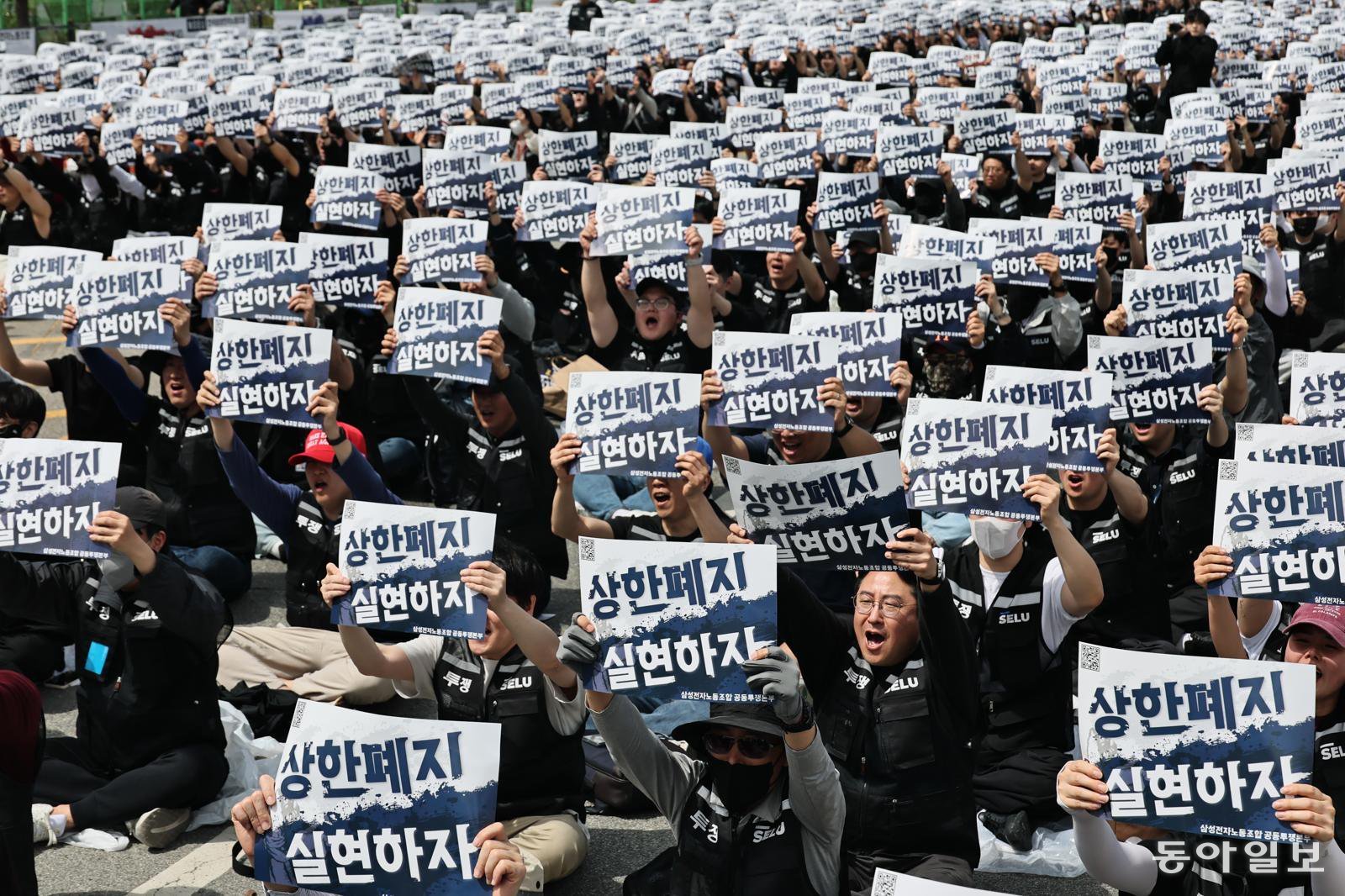
Samsung Union's Strike Threat Over Performance Pay Sparks National Economic Concerns
Translated from Korean, summarized and contextualized by DistantNews.
TLDR
- Samsung Electronics' labor union is threatening a strike over performance pay, demanding 15% of annual profits, or up to 45 trillion won.
- The South Korean government and industry experts warn that a strike would severely damage the nation's crucial semiconductor industry, which requires constant reinvestment and cannot afford disruptions.
- Public opinion, with nearly 70% opposing the union's demands, and the union leader's recent vacation further fuel criticism of the union's perceived irresponsibility amidst national economic concerns.
The Dong-A Ilbo, reflecting a common sentiment among South Korean media and the public, views the Samsung Electronics labor union's demands for performance pay as a serious threat to the nation's vital semiconductor industry. The editorial emphasizes the immense capital required for continuous reinvestment in the face of global competition, citing Taiwan's TSMC as a model that prioritizes R&D and facility investment before distributing profits.
I cannot even imagine a strike in such a grave situation.
The article highlights the government's strong concerns, with the Minister of Trade, Industry and Energy warning against the 'unimaginable' consequences of a strike in the current 'grave situation.' The minister's questioning of whether company profits should be solely considered the 'fruit of its members' underscores a broader societal debate about fair profit distribution versus the long-term health of a strategically important industry.
Can Samsung Electronics' profits truly be considered the fruits of its members alone?
Public opinion, as indicated by a Realmeter poll showing nearly 70% deeming the union's demands 'unreasonable' and a cause for concern regarding industrial competitiveness, further isolates the union leadership. The reported behavior of the union leader, taking a vacation while threatening a strike and issuing warnings to non-striking employees, is criticized as 'irresponsible.'
It is essential to harmonize the extent to which we enjoy profits at the current stage and what we leave for future generations and future competitiveness.
This perspective is uniquely Korean in its intense focus on the semiconductor industry as a national strategic asset. While Western media might cover labor disputes, the framing here is one of national economic survival and future competitiveness. The article implicitly argues that South Korea, unlike other global tech giants facing similar profit-sharing issues, cannot afford such internal disruptions due to its reliance on this single industry for global standing. The potential damage to supply chain reliability, once broken, is presented as irreparable, urging a more 'mature and wise dialogue' for the sake of the company's survival and future generations.
The majority of respondents (69.3%) answered that the union's performance pay demands and strike plans are 'inappropriate due to unreasonable demands and concerns about weakening industrial competitiveness.'
DistantNews Editorial
Originally published by Dong-A Ilbo in Korean. Translated, summarized, and contextualized by our editorial team with added local perspective. Read our editorial standards.
More Stories


From Our Blog

What Gets Lost (and Found) When News Is Translated

The Critical Role of Diaspora Media in Global News

What Travellers Should Know About Countries with Restricted Press

A Digital Nomad's Guide to Following Local News

How the Same Story Looks Different in Different Countries
